Gloucester County Officials Searching for Second Raccoon After Rabies-Positive Animal Attacks NJ Man
Authorities search for a second raccoon after a rabies-positive attack in Glassboro, New Jersey.

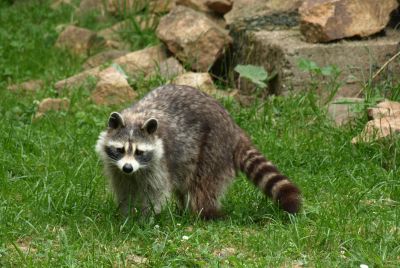
Gloucester County officials are searching for a second raccoon after another animal involved in a recent attack outside a Glassboro, New Jersey, home tested positive for rabies.
The investigation began after an incident Sunday morning outside the home of Kevin Tucker, who described being ambushed by the animal as he was leaving his property. "I was walking to leave when a raccoon came out of the shrubbery and charged me," Tucker said. "I kind of fell backward, and I think that's when it bit the front part of my right leg."
The raccoon was eventually captured by authorities, but not before it chased several other neighbors in the area, according to Tucker. Officials later confirmed that the animal responsible for biting Tucker had tested positive for rabies, a viral disease that attacks the central nervous system and is nearly always fatal in humans and animals once symptoms appear, though it is highly preventable with prompt treatment following exposure.
Authorities said the infected raccoon had been observed fighting with a second raccoon shortly before it was captured, raising concern that the second animal may also have been exposed to the virus during that encounter. Rabies is most commonly transmitted through the saliva of an infected animal, typically via a bite, though transmission can also occur if infected saliva comes into contact with an open wound or mucous membrane such as the eyes, nose or mouth. Because the two raccoons were seen fighting, health officials are treating the possibility of cross-infection seriously enough to warrant an active search for the second animal.
Efforts to locate the second raccoon are ongoing, though officials have not indicated whether the search is being led primarily by county animal control, state wildlife officials or another agency. Authorities have not said whether any additional bite incidents or human exposures have been reported in connection with the second animal.
Health officials continue to urge residents in the Glassboro area and throughout Gloucester County to avoid contact with wild animals, particularly those exhibiting unusual behavior such as aggression, disorientation, difficulty walking or a lack of the fear response typically associated with wild animals encountering humans. Raccoons that approach people directly or appear unafraid of human presence, as opposed to fleeing on sight, can be exhibiting early signs of rabies infection, though officials caution that not every unusually bold wild animal is necessarily infected.
Officials also reiterated the importance of keeping household pets current on their rabies vaccinations, since domestic animals that come into contact with infected wildlife can themselves contract and potentially transmit the virus, including to their human owners. Rabies vaccination for dogs and cats is required by law in New Jersey, as it is in most U.S. states, precisely because of the risk posed by incidental contact with rabid wildlife in residential and suburban areas.
Anyone who is bitten or scratched by a wild animal, or who otherwise believes they may have been exposed to saliva from a potentially rabid animal, is urged to seek medical attention immediately rather than waiting to see whether symptoms develop. Once clinical symptoms of rabies appear in a human patient, the disease is almost universally fatal, but a course of post-exposure prophylaxis, consisting of a series of vaccine doses along with a treatment called rabies immune globulin, is highly effective at preventing the disease from developing if administered promptly after a suspected exposure.
Residents who encounter a raccoon or other wild animal behaving aggressively or unusually are advised to contact local animal control or public health officials immediately, rather than attempting to capture, corner or otherwise interact with the animal themselves. Wildlife officials generally recommend that residents keep a safe distance from any wild animal, secure outdoor trash and pet food that might attract wildlife to residential properties, and report sightings of animals displaying signs of illness or aggression to the appropriate local authorities.
Raccoons are among the wildlife species most commonly associated with rabies transmission in the northeastern United States, along with bats, skunks and foxes. Public health officials in New Jersey and neighboring states routinely track rabies cases among wildlife populations as part of broader efforts to monitor and contain the spread of the virus, particularly in suburban and semi-rural areas like Glassboro where wildlife and residential development frequently overlap.
The investigation into the Glassboro raccoon attacks remains active, and officials have not indicated a timeline for when the search for the second raccoon might conclude. Residents in the affected neighborhood are encouraged to remain vigilant and to report any additional sightings of raccoons exhibiting unusual behavior to Gloucester County animal control or the New Jersey Department of Health as the investigation continues.
© Copyright 2026 IBTimes AU. All rights reserved.
- Recommended For You