Hubble Reveals Andromeda Galaxy Is Slowly Winding Down Its Star Formation After an Ancient Burst of Activity
Andromeda's star formation rate declines, offering clues to spiral galaxy evolution
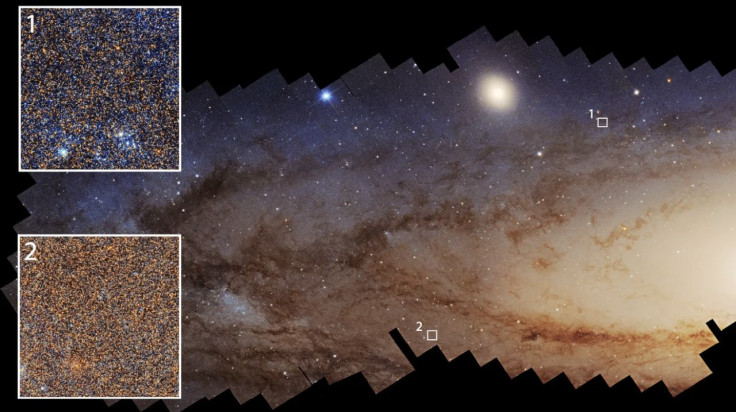
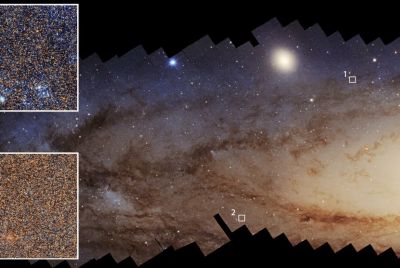
New analysis of data from the Hubble Space Telescope suggests the Andromeda galaxy, humanity's nearest large galactic neighbor, is gradually winding down from a dramatic burst of star formation that occurred roughly 2 billion years ago, offering astronomers fresh clues about how large spiral galaxies evolve over time.
Andromeda, also known by its catalog designation M31, sits roughly 2.5 million light-years from Earth in the constellation of the same name. It stands out as the only major galaxy in the universe currently moving closer to the Milky Way rather than speeding away, and its comparatively close proximity makes it an especially valuable laboratory for studying galaxy formation and evolution.
The new study, published July 27 in The Astrophysical Journal, combined two major Hubble surveys that together mapped roughly two-thirds of Andromeda's disk, capturing detailed data on approximately 200 million individual stars. Researchers found that Andromeda's star formation rate has been steadily declining over the past 500 million years. Roughly 500 million years ago, the galaxy was forming stars at a rate of approximately one solar mass per year. By 40 million years ago, that rate had fallen by half, and the current rate has dropped further still, to just one-fifth of a solar mass annually.
Andromeda is a giant spiral galaxy broadly similar in structure to the Milky Way but roughly twice as massive. Scientists already knew the galaxy experienced a dramatic burst of star formation approximately 2 billion years ago, an event thought to have produced roughly a fifth of all the stars currently within Andromeda. That earlier starburst is believed to have resulted from a merger with another galaxy, most likely the compact elliptical galaxy M32, which continues to orbit Andromeda today.
The new research found that most of Andromeda's recent star formation activity has been concentrated within a ring located roughly 32,000 light-years from the galaxy's center, and that declining activity specifically within this ring accounts for the bulk of the overall slowdown observed across the galaxy. That pattern suggests Andromeda is gradually settling down from its earlier burst of star formation rather than abruptly running out of the raw material needed to form new stars.
Researchers also examined whether Andromeda's companion galaxy, M32, may have played a role in the observed slowdown. Regions of Andromeda located closest to M32 show a more recent decline in star formation activity compared with other parts of the galaxy, raising the possibility that the smaller companion galaxy has influenced the broader trend. Even so, the researchers described the evidence connecting M32 directly to the slowdown as inconclusive based on current data.
Ben Williams, an astronomer at the University of Washington and a co-author of the study, explained why Hubble's specific capabilities made this kind of detailed stellar analysis possible. "We need to measure the individual stars because they are the fossil record of the galaxy's formation," Williams said in a statement released by NASA. "Hubble is the only telescope that can give you high enough spatial resolution over a large enough area to be able to do that in Andromeda."
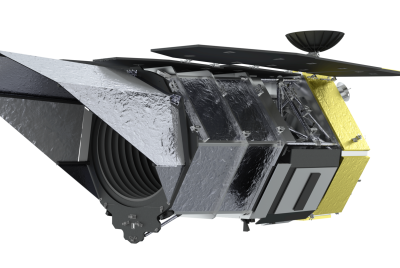
While the research team plans to continue mining Hubble's existing data archive for additional insights, they are also preparing to incorporate observations from NASA's upcoming Nancy Grace Roman Space Telescope, currently scheduled to launch aboard a SpaceX Falcon Heavy rocket as soon as Aug. 30. With a field of view at least 100 times larger than Hubble's, the Roman telescope is expected to survey the entirety of the Andromeda galaxy and its surrounding halo in unprecedented detail once operational, potentially resolving some of the open questions the current study was unable to fully answer, including the precise role M32 may have played in Andromeda's star formation decline.
For skywatchers hoping to observe Andromeda themselves, the galaxy is best viewed during the month of November and remains visible to the naked eye even from locations experiencing moderate light pollution, given its status as the most distant object generally visible without a telescope or binoculars.
Looking further ahead, Andromeda's continued approach toward the Milky Way is expected to eventually culminate in a galactic collision, an event astronomers estimate could occur roughly 5 billion years from now, though the galaxy's precise long-term trajectory and the ultimate outcome of any such collision remain uncertain given the complex gravitational interactions at play between the two galaxies and their surrounding satellite systems.
With the new findings adding to a growing body of research examining how Andromeda's stellar populations formed and evolved over billions of years, astronomers say the combination of continued Hubble analysis and the forthcoming Roman Space Telescope observations should provide an increasingly detailed picture of how the galaxy has changed over cosmic time, offering broader insight into the life cycles of large spiral galaxies throughout the universe, including our own Milky Way.
© Copyright 2026 IBTimes AU. All rights reserved.
- Recommended For You