Where to Watch the August 12 Total Solar Eclipse Online by Country: NASA Livestream and Free Streams
A Comprehensive Guide to Viewing the 2026 Total Solar Eclipse from Anywhere
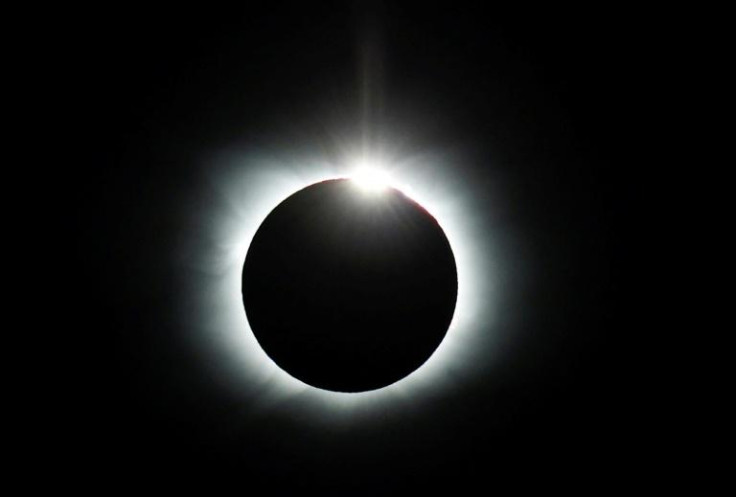
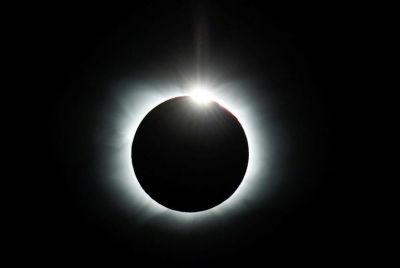
A total solar eclipse will sweep across the Northern Hemisphere on Wednesday, Aug. 12, and for the vast majority of the world's population who won't be standing inside the narrow path of totality, a livestream will be the only way to watch the moon fully block the sun. Here's a country-by-country breakdown of where and how to watch online.
NASA's Flagship Broadcast
NASA will anchor the day's coverage with a live broadcast beginning at 1:15 p.m. Eastern time, available on NASA+, the agency's website, and its social media accounts on Facebook, Instagram, X, Twitch and YouTube, as well as through Amazon Prime. The broadcast will feature telescope views from multiple points along the eclipse path, footage from a WB-57 high-altitude research aircraft chasing the moon's shadow across the sky, and expert commentary from solar physicists throughout the event. NASA's 2024 eclipse broadcast drew more than 15 million concurrent viewers, and the agency's 2026 stream is expected to match or exceed that figure. Viewers can also access NASA's stream through its dedicated app, available on iOS, Android, Roku, Apple TV and Fire TV devices, which supports background audio for those who want to listen to commentary while doing other tasks.
Where Totality Will Actually Be Visible
The path of totality begins over a remote, sparsely populated stretch of northern Russia before crossing the Arctic Ocean into eastern Greenland, sweeping down over Iceland, clipping the northwestern tip of Portugal, and finally crossing northern Spain and the Balearic Islands before ending over the Mediterranean Sea. Totality reaches Iceland at 1:45 p.m. Eastern time and arrives in Spain at 2:28 p.m. Eastern time, according to NASA. Only viewers physically located within that roughly 182-mile-wide band will see the sun fully disappear behind the moon; everyone else in the Northern Hemisphere positioned near the path will see only a partial eclipse.
Iceland
Iceland stands as one of the most accessible destinations along the path of totality and is expected to draw significant crowds of eclipse tourists. For those watching remotely rather than traveling, Iceland-based astronomy outlets and international broadcasters are expected to carry dedicated coverage as the shadow crosses directly over Reykjavik in the late afternoon local time, marking the first total eclipse visible from the Icelandic capital since 1433.
Spain
Spain will host the first total solar eclipse visible from mainland Europe since 1999, and as such is expected to be a major focus of international livestream coverage. NASA's own broadcast will feature live feeds from multiple locations across Spain's path of totality, including professional solar telescopes and wide-angle cameras designed to capture the dramatic 360-degree sunset effect created as totality occurs just before the sun sets locally in the late evening.
Greenland and Northern Russia
Coverage from Greenland and the remote stretch of northern Russia where the eclipse first makes landfall is expected to be more limited given the sparse population and logistical difficulty of broadcasting from those locations, though NASA's broadcast is expected to include footage from the Greenland portion of the path as part of its overall coverage.
United States
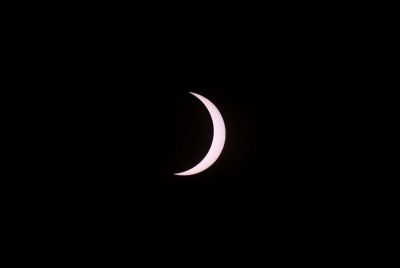
The eclipse will not reach totality anywhere in the United States. Instead, parts of the northern U.S., ranging from Alaska down through the northeastern states to North Carolina, will see only a partial eclipse, with the moon taking what NASA describes as a small "bite" out of the sun. Alaska will see the strongest partial eclipse effect among U.S. locations, with visibility diminishing further south and east. American viewers hoping to see totality itself will need to watch NASA's livestream, which begins at 1:15 p.m. Eastern time with views from Iceland and Spain.
Canada
Most of Canada will experience a partial solar eclipse, similar to the northern United States, without reaching totality at any point within the country. Canadian viewers can access the same NASA livestream available to American audiences, along with coverage from Canadian astronomy and science broadcasters expected to air alongside the international feed.
United Kingdom and Ireland
Neither the United Kingdom nor Ireland falls within the path of totality, but both will see a partial eclipse, appearing as a thin, low crescent of sunlight near the western horizon. Given the significant public interest generated by Spain hosting the first mainland European total eclipse since 1999, British and Irish broadcasters and astronomy outlets are expected to carry supplementary partial-eclipse coverage alongside international feeds of the Spanish totality.
Continental Europe
Much of continental Europe, including France, Germany, Italy and the Scandinavian countries, will see a partial eclipse, with the visible portion of the sun's disk covered by the moon varying by location and generally increasing the closer a viewer is to the path of totality in Spain. European viewers can follow NASA's English-language broadcast or the agency's Spanish-language version, both of which will be accessible online, alongside expected coverage from national broadcasters across the continent given the historic nature of Spain's eclipse.
Northwestern Africa
Parts of northwestern Africa are also positioned to see a partial eclipse as the moon's shadow passes to the north over Spain, though as with much of mainland Europe, the sun will be setting locally while still partially eclipsed in the westernmost parts of the visible region, creating an opportunity for a striking sunset eclipse view for those watching in person or through regional broadcast coverage.
Additional Streaming Options
Beyond NASA's flagship broadcast, astronomy website Time and Date is expected to offer its own dedicated eclipse livestream through a specialized app that automatically detects a viewer's location and displays local eclipse timing and cloud cover forecasts specific to their city. Every major broadcaster covering the event is also expected to stream simultaneously on YouTube, meaning viewers searching "2026 total solar eclipse" on the platform on Aug. 12 should find multiple live options to choose from, castable to a television through devices like Chromecast for those who prefer to watch on a larger screen.
A Reminder on Safe Viewing
For anyone watching in person rather than online, NASA and eye-safety experts stress that certified eclipse glasses meeting the ISO 12312-2 international safety standard, or a properly fitted solar filter on any telescope, binoculars or camera, must be used throughout every partial phase of the eclipse. Only viewers standing within the narrow path of totality may safely remove eclipse glasses, and only during the brief window when the moon fully covers the sun.
© Copyright 2026 IBTimes AU. All rights reserved.
- Recommended For You