Meta Shares Jump 2.4% After Zuckerberg Unveils New Open-Source AI Models To Rival OpenAI
Meta Platforms Inc. pivots to open-source AI, unveiling Muse Spark 1.2 and Muse Glimmer, aiming to strengthen its competitive edge.
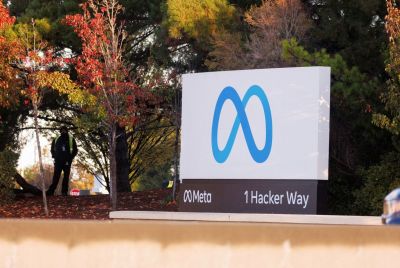
Shares of Meta Platforms Inc. climbed Tuesday, extending gains from the previous session after Chief Executive Mark Zuckerberg unveiled a major shift back toward open-source artificial intelligence, positioning the company more directly against rivals OpenAI and Anthropic.
The stock traded at $609.05 as of 10:25 a.m. Eastern time, up $14.13, or 2.38%. The gain builds on Monday's session, when shares rose nearly 3% in premarket trading following Meta's announcement, even as the stock remains down roughly 10% for the year amid ongoing investor questions about the payoff from the company's massive artificial intelligence spending.
In an Instagram video posted Monday, Zuckerberg announced that Meta would release the weights for its newest and most capable AI model, Muse Spark 1.2, meaning developers and the public will be able to download and use the underlying technology directly rather than accessing it only through Meta's own products. Alongside that announcement, Meta launched Muse Glimmer, a new family of smaller, open-source models specifically designed to run on laptops and other consumer devices rather than relying entirely on cloud-based data centers.
Muse Glimmer is a 30-billion-parameter model distilled from the larger Muse Spark 1.2, according to Bloomberg, with Meta transferring reasoning capabilities from the flagship model and adding a lightweight companion model to speed up text generation. The model is being released under an Apache 2.0 license, allowing developers to download and modify it freely, with integrations planned in the coming days for developer tools including llama.cpp, MLX and ExecuTorch, along with support through partners such as Ollama, LM Studio, Together AI and Fireworks AI.
The announcement marks a notable strategic reversal for Meta, which had shifted toward keeping its most advanced models closed following the widely panned release of Llama 4 last year. That closed approach was intended to help Meta compete more directly with OpenAI and Anthropic, both of which generally keep their most capable models proprietary. Meta's renewed embrace of open-weight models comes as Chinese AI labs, including Alibaba, DeepSeek and Moonshot, have moved aggressively to release increasingly capable open-weight systems, a trend Zuckerberg addressed directly in a lengthy essay published alongside Monday's announcement.
In the essay, Zuckerberg argued that American AI labs face structural disadvantages in the open-source race due to domestic restrictions on training data and other regulatory friction. "Our goal should be for American open source models to be the best globally," Zuckerberg wrote, adding that he does not believe restricting public access to foreign AI models represents an effective solution to the competitive pressure from Chinese developers. He called on U.S. policymakers to reconsider rules governing practices such as model distillation and the use of training data if the country hopes to maintain leadership in open AI development.
Wall Street's initial reaction to the announcement was largely positive. Gil Luria, head of technology research at D.A. Davidson, described Meta's renewed open-source push as a "positive development for the ecosystem" in comments to CNBC, noting separately that the strategy could help Meta retain its roughly 4 billion users within its own ecosystem while reinforcing the strength of its advertising business. Luria said embedding smaller, agentic models like Muse Glimmer directly onto laptop and mobile hardware could allow Meta to bypass cloud computing costs entirely, potentially giving it a competitive edge over Google and Microsoft on end-user devices.
Analysts also noted a financial dimension to Meta's open-source strategy. Because Meta's primary business remains advertising rather than selling access to AI models directly, the company faces less pressure than pure-play AI labs to monetize its models through subscription or API fees, allowing it to release powerful systems for free in ways that could undercut competitors reliant on selling model access as their core business.
Monday's announcement followed a period of significant AI-related activity from Meta Superintelligence Labs, the research unit led by Alexandr Wang that the company built up over the past year with substantial investment. The lab had previously released Muse Spark 1.1 in July, which carried Meta's first-ever price tag attached to one of its AI models, alongside Muse Code, a terminal-based coding agent built on Muse Spark 1.2. At the time, Meta positioned its API pricing for Muse Spark 1.1 at roughly 25% of what Anthropic and OpenAI charge for comparable models.
The open-source push also comes as Meta faces continued scrutiny over its overall AI spending, with the company projecting capital expenditures of as much as $145 billion in 2026. That level of spending has put pressure on Zuckerberg to demonstrate concrete progress from Meta Superintelligence Labs, a dynamic that some analysts say helps explain the company's decision to more aggressively showcase its open-source capabilities as tangible evidence of its AI investments paying off.
Separately, Meta continues to face legal challenges tied to its social media platforms. A U.S. court recently allowed roughly 2,400 lawsuits against major social media companies, including Meta, to proceed, with reporting indicating the litigation could expose the company to damages potentially reaching $1.4 trillion across thousands of individual claims tied to allegations of social media addiction and related harms. That litigation risk has continued to weigh on some investor sentiment even as Monday's AI announcement provided a more immediate lift to the stock.
With Meta shares still trading below their 52-week high of $796.25, reached last August, investors are likely to continue watching closely for further updates on both the adoption of Muse Glimmer and Muse Spark 1.2 among developers, and any additional signals on how the company's aggressive AI spending is translating into competitive positioning against OpenAI, Anthropic and fast-moving Chinese AI labs in the months ahead.
© Copyright 2026 IBTimes AU. All rights reserved.
- Recommended For You