Flock Safety CEO Garrett Langley Targeted Online Over Alleged Blurred Home as Doxxing Fuels Privacy Row
Unverified claims about Garrett Langley's home and Google Maps pranks have intensified a wider debate over the company's licence-plate surveillance technology.

NEW YORK — Flock Safety Chief Executive Garrett Langley has become the target of an online pile-on that started with his public call for Americans to accept a "compromise" between privacy and public safety and has since turned into a personal campaign involving an unverified home address, a Street View blur and a Google Maps prank. This article does not publish or describe the location of any home, because the address circulating online has not been verified and publishing it could put people at risk.
The episode began in mid-August, when Langley appeared on Fox News' "Saturday in America" and argued that focusing on privacy alone "prioritizes the wrong thing," with the answer being "compromise," according to reports by Gadget Review and Neowin. A clip of the interview spread on X. Newsweek reported on August 27 that critics of the company had begun circulating an address they said belonged to Langley, and that some users shared what they said was a blurred image of the home on Google Street View. One X user wrote that the "compromise apparently doesn't apply to him," Newsweek reported. Newsweek said it had not verified the address and was not publishing or linking to it, and that it had asked Langley for comment through Flock. Primetimer reported that neither Langley nor his representative had confirmed or denied whether the address belongs to him.
The controversy flared again over the weekend. A post on X on September 26 claimed users had marked the CEO's lawn as a "public toilet" on Google Maps after it was revealed that images of the house were blurred, and Primetimer reported that users then marked the residence as a public toilet and said Langley and his family should be monitored by Flock cameras like everyone else. Gadget Review said who created any such listing, whether it remained visible and whether the property was affected in any way are all unconfirmed, and it described its source as lower-authority reporting. The coverage reviewed did not include a response from Google, Langley or Flock about the map edits.
The blur itself proves little, according to Gadget Review. Google allows homeowners or tenants to request a permanent blur of a residence, subject to an eligibility certification and proof of address, the outlet said. "A blurred home is not evidence of hypocrisy, guilt, or even that Langley requested the blur himself," it wrote, adding that property ownership, current residence and who submitted any request are all unconfirmed. Accounts about the sequence differ: one commentary outlet said Google agreed to blur the images after an address was leaked, while other reports said the blur was noticed first and then prompted the address-sharing. None of the coverage reviewed included confirmation from Google.
Some outlets have drawn a line between criticism of Flock and the publication of a private home address. Gadget Review said reputable outlets withheld the alleged address because "doxxing is not criticism." IBTimes UK reported that one account on X rejected any link between license plate tracking and the doxxing of a private home as an inaccurate comparison, distinguishing between data gathered from vehicles on public roads and the publication of a residential address. X prohibits doxxing and has been removing posts, though users have re-uploaded them with altered wording and images, according to Yahoo and Gadget Review.
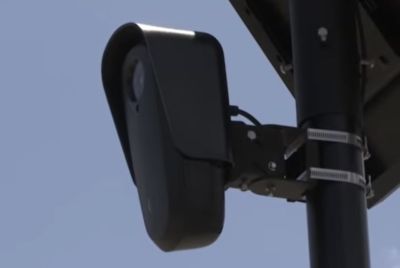
Behind the pile-on is a substantive dispute over Flock's technology. The company makes automated license-plate readers and related tools, and according to a July update on its Wikipedia entry, Flock says it operates in more than 6,000 communities across 49 states and performs more than 20 billion vehicle scans in the United States every month. Backers say the cameras help solve crimes and locate missing people, Newsweek reported, while critics argue they enable mass surveillance and create opportunities for misuse. IBTimes UK noted that Flock's supporters maintain the cameras capture only what is already visible on public roads. DeFlock, a grassroots group tracking the technology, counts more than 50 cities and towns that have deactivated, rejected or canceled Flock contracts since the start of the year, according to Newsweek.
Langley has defended the company in a series of interviews. He told Newsweek that Flock's "end goal isn't a dystopian future of surveillance; it's one where we all feel safe." On oversight, he said: "We announced changes that required auditing, that required using our audit assistance tool, which detects abnormal behavior, and we're calling on state regulators to focus less on banning this type of technology and more [on] holding our law enforcement community accountable," according to Primetimer. Primetimer, citing a report shared by The Washington Post, said there were 46 reported incidents in which officers were accused of misusing Flock's system, in some cases to stalk women.
The politics have shifted as well. Rep. Keith Self introduced the PRIVACY Act, which would require federal agencies to obtain warrants before querying license-plate reader data, and said, "The Fourth Amendment is not up for 'compromise,'" according to Gadget Review's summary. That outlet also reported that Sen. Josh Hawley opened a formal congressional investigation into Flock's data practices, a claim this article attributes to that single source. Cooper Quintin of the Electronic Frontier Foundation described Flock's privacy updates as "piecemeal, voluntary, and reversible," the same outlet reported. In West Virginia, three House Republican delegates wrote to Langley questioning whether a Flock announcement about mandatory multi-factor authentication contradicted sworn testimony, the Daily Signal reported. A Flock spokesperson said, "Flock has addressed the questions raised by West Virginia lawmakers and is offering to meet with them again."
Gadget Review argued that the unverified doxxing and map pranks undermined what it called a legitimate debate about executive privacy hypocrisy, and that the question of whether leaders of surveillance companies shield their own privacy while asking the public to accept less deserves serious scrutiny without crowdsourced harassment. The outlet also said that publishing an unverified address creates real safety risk, even for a public executive.
The company has not, in the coverage reviewed, publicly responded to the map pranks or the address circulating online. What remains unresolved are the questions that predate the pile-on: how long plate data is retained, who can search it, when a warrant should be required and how misuse is detected. Those questions are now before city councils, state legislatures and Congress, and they will continue regardless of what happens to the memes.
© Copyright 2026 IBTimes AU. All rights reserved.
- Recommended For You