10 Things You Must Know About Meta Muse, the AI Agent: What It Does, What It Costs and Why Amazon Blocked It
The personal assistant can send emails, book travel and shop on users' behalf, but privacy concerns and rival resistance are testing its momentum.

Meta Platforms' new personal artificial intelligence agent, Muse, has gone from launch to the top of the U.S. App Store in less than three weeks, drawing consumers, analysts and rival companies into a debate about how much authority people are willing to hand to software. Here are ten things to know about it.
First, Muse is an agent, not just a chatbot. Meta launched it on September 8 as a personal assistant that takes actions on a user's behalf rather than only answering questions. Meta described it as "a secure, private personal AI agent that proactively helps with people's goals and suggests ideas." In practice, that means tasks such as sending emails, booking travel, filling out online forms and shopping, once a user connects the accounts it needs.
Second, it runs in its own cloud computer. According to Meta's announcement, "Muse runs on Muse Secure VM, a dedicated, virtual machine (VM) that houses both the agent and a person's data." Independent guides describe the setup as a built-in browser the user can watch as the agent works, and note that it keeps running after the app is closed and asks for approval before sensitive actions.
Third, a new Meta model powers it. Muse runs on Muse Spark, a model family from Meta Superintelligence Labs first announced in April, which also underpins the Meta AI assistant. One guide notes the model is proprietary, a departure from Meta's open-source Llama tradition. Muse is the product people use, while Muse Spark is the model behind it, a distinction that has confused some early coverage.
Fourth, there is a free tier, with paid plans above it. Meta's Alexandr Wang said the agent would be available in a free tier or through monthly subscriptions of $20 or $100, depending on usage, CNBC reported. The paid tiers buy more agent usage rather than extra features, according to independent guides, and Meta has said it expects most people to stay on the free plan.
Fifth, it is limited to U.S. adults for now. Muse is available in the United States on iPhone and Android, on the web, and inside WhatsApp, though CNBC reported the WhatsApp version does not include the app's full features. One review describes it as a personal tool rather than a workplace product, since Meta has not published team or administrator features.
Sixth, the early demand has been striking. Sensor Tower estimated Muse passed 3.4 million downloads in about two and a half weeks, and CNBC reported it overtook ChatGPT as the top free iPhone app in the United States on September 18. Rankings are not the whole picture, however. Over the same 13-day window, ChatGPT logged about 3.1 million global downloads to Muse's 2.5 million, and downloads measure installs rather than sustained use.
Seventh, trust is the biggest obstacle. An Oppenheimer & Co. survey of 1,500 U.S. consumers found only 8% would trust Meta with their passwords, compared with 30% for Google, 23% for Apple and 16% for ChatGPT, and 58% said they would not share passwords with any AI agent. Meta says it will scrub "critical personally identifying information" before using agent conversations to improve its models, David Singleton, a Meta vice president of engineering, told CNBC. One independent guide based on Meta's documentation notes that model training is on unless users switch it off. The launch also came weeks after Meta agreed to a multistate settlement over social media harms reported at up to $18 billion.
Eighth, shopping has become a flashpoint. Amazon confirmed to CBS News that it has blocked Muse from shopping on its site, citing security and user-experience concerns, and said Meta never asked for permission, according to reporting by Forbes that cited GeekWire. Walmart, Sephora and Best Buy, by contrast, have partnered with Meta, The Wall Street Journal reported. Wang said Meta is exploring taking a cut of agent-driven purchases but has not settled on a plan. Palo Alto Networks Chief Executive Nikesh Arora warned on X that the dispute could grow. "This will be a bigger battle than anyone anticipates," he wrote.
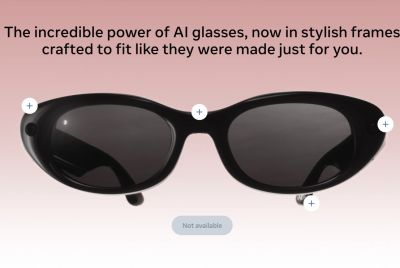
Ninth, more is coming. At Meta's developer conference last Wednesday, Chief Executive Mark Zuckerberg said users will soon be able to talk with Muse in real time and reach it through Meta's smart glasses and a forthcoming handheld device called the Muse Charm, according to the Journal. The company is pushing the agent as the centerpiece of a broader hardware and software strategy.
Tenth, Wall Street is excited but wary. Meta shares rose more than 10% last week, the Journal reported, and Truist Securities estimates Muse could add $28.5 billion in revenue by 2030. Truist analyst Youssef Squali cautioned that rivals move fast. "I don't know whether it's sustainable because if we learn anything from this space, give Google and OpenAI a couple weeks and they'll duplicate whatever is out there," he said. Bernstein analyst Stacy Rasgon told CNBC that agent tools have not yet reached ordinary consumers. "I think up to this point most of the agentic use cases have not really been for normal people," he said.
Agents can misread vague instructions, and some websites refuse automated browsing, so results will vary. Whether Muse becomes a lasting habit will depend on whether people trust it with their most sensitive accounts. This article is a report on developments and is not investment advice.
© Copyright 2026 IBTimes AU. All rights reserved.
- Recommended For You