Major US Clinical Trial Finds Silver Liquid Stops Childhood Cavities Without Drilling, Shots or Sedation
University of Michigan-led trial finds silver diamine fluoride effective in preventing cavities in young children.
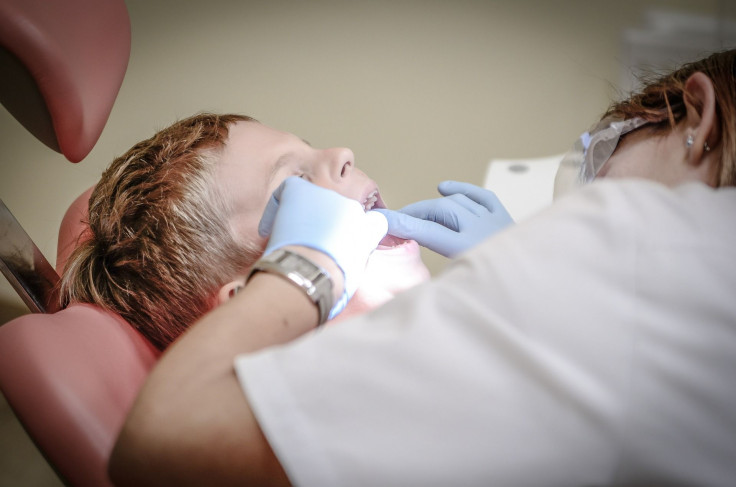
A large U.S. clinical trial has found that a simple, inexpensive liquid can halt tooth decay in young children without the need for drilling, injections or sedation, offering researchers the kind of rigorous domestic evidence that has been missing for a treatment already used successfully around the world for decades.
The study, led by researchers at the University of Michigan and published in JAMA Pediatrics, examined a treatment called silver diamine fluoride, commonly abbreviated as SDF. Dentists apply the liquid directly to a cavity using a small sponge-tipped applicator, a process that takes only a few seconds per tooth and requires no removal of decayed tooth material, unlike traditional cavity treatment, which typically involves drilling out damaged tissue before placing a filling.
The Phase III trial enrolled 830 children younger than age 6, recruited through dental offices, pediatric medical practices, and Head Start and Early Head Start programs across Michigan, New York and Iowa. Researchers found that applying 38% SDF every six months stopped tooth decay in more than half of the affected baby teeth included in the study.
Margherita Fontana, a professor of dentistry at the University of Michigan School of Dentistry and the study's lead investigator, described the strength of the results. "This is a very effective and safe treatment — even in children as young as 1," Fontana said.
Tooth decay remains the most common chronic disease among children in the United States, affecting more than 40% of children nationwide, according to the study. Left untreated, cavities can lead to significant pain, infection, difficulty sleeping or eating, missed school days and repeated medical appointments. Untreated cavities also send thousands of young children to hospital emergency departments across the country each year, though emergency physicians are typically unable to address the underlying dental problem, leaving some children to continue suffering from pain and infection or eventually requiring surgery under general anesthesia to fully resolve the issue.
Although SDF has been used successfully in many other countries for decades, its use in the United States has remained more limited. American dentists have applied it off-label since 2014, when the U.S. Food and Drug Administration first approved the substance as a medical device intended to reduce tooth sensitivity, rather than as an approved treatment for cavities specifically. Until now, researchers had not completed the kind of large-scale U.S. clinical trials needed to formally demonstrate the treatment's safety and effectiveness against tooth decay, evidence the FDA would require before considering approval of SDF as a drug specifically indicated for treating cavities.
Fontana said the newly published trial results fill that evidentiary gap. "If we want more children and families to benefit from this treatment, we need rigorous evidence showing both that it works and that it's safe," Fontana said. "From a public health perspective, if we want broader implementation across the United States, including in medical settings, we need carefully collected data in U.S. populations, and we now have that."
The treatment does carry one notable visible drawback: the silver in the solution permanently darkens the decayed portion of the treated tooth. Despite that cosmetic tradeoff, researchers said SDF could prove especially valuable for certain groups of patients, including very young children, older adults, people with developmental or physical disabilities, and patients who experience severe dental anxiety. The treatment may also benefit people with limited access to conventional dental care or those who cannot easily tolerate standard drilling-based procedures.
Fontana noted that the treatment's simplicity could allow it to be used earlier in a child's life than a typical dental visit might otherwise occur. "It is important to have data they can refer to because young children often see pediatricians years before they ever visit a dentist," Fontana said. "Broader acceptance could allow many more cavities to be treated while a referral to a dental home is successful, and before they become painful, infected, or require surgery." Fontana added that in medicine, clinicians generally require high-quality evidence of this kind before they are willing to change established clinical practice.
The research, which began in 2018 and continued despite disruptions caused by the COVID-19 pandemic, was conducted in collaboration with researchers from New York University, the University of Iowa and Indiana University, along with the National Institutes of Health's National Institute of Dental and Craniofacial Research, which provided more than $12 million in funding to support the study. Elevate Oral Care, the manufacturer of the specific SDF product tested in the trial, known commercially as Advantage Arrest 38% SDF, supplied the treatment used throughout the study.
Amr Moursi, a professor of pediatric dentistry at New York University College of Dentistry and a co-principal investigator on the study, said the trial's findings could support formal regulatory approval of the treatment going forward. "Our results support FDA approval of SDF for managing arrest of tooth decay in young children," Moursi said. "Removing SDF from off-label status would be an important innovation which could lead to increased utilization by providers, enhanced payments by insurers and more consistent product quality."
Researchers noted that SDF may function differently depending on the age of the patient and the specific clinical situation. For young children with baby teeth, repeated application of the treatment every few months may be sufficient to control a cavity until the affected tooth eventually falls out naturally as part of normal childhood dental development. In adults, the treatment could instead serve as either a long-term management option or a temporary measure to control decay until a more permanent restorative procedure becomes financially or logistically feasible for the patient.
Fontana summarized the treatment's broader potential impact on public dental health. "For almost anyone, this can arrest the decay and stop the infection and the pain it causes," Fontana said. "This could benefit many people."
The trial's results now provide the manufacturer with the clinical evidence needed to formally submit a dental caries drug application to the FDA, a step researchers said could ultimately expand access to the treatment well beyond its current off-label use across American dental and medical practices.
© Copyright 2026 IBTimes AU. All rights reserved.
- Recommended For You