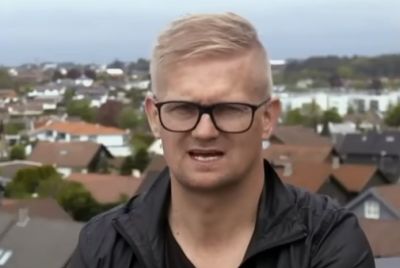
Meet Alfie Haaland: The Former Norway and Manchester City Defender Who Raised World Cup Star Erling
Exploring the Haaland family's impact on Norway's historic World Cup run
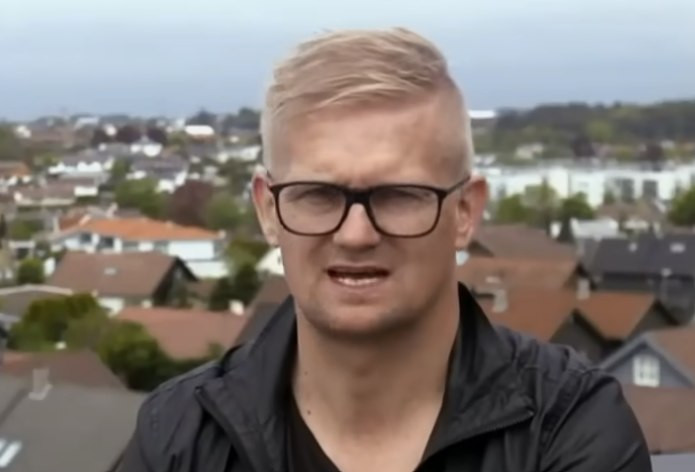
Long before Erling Haaland became one of the most feared strikers in world soccer, his father was building a career of his own in England's top flight and on the international stage with Norway. As Erling led Norway to its best-ever World Cup finish this month, attention has turned once again to the man who shaped his path: Alfie Haaland, a former Premier League defender whose own playing days quietly set the stage for his son's rise.
A career built in England's top division
Alfie Haaland, born Alf-Inge Rasdal Håland on November 23, 1972, in Stavanger, Norway, began his professional career at hometown club Bryne before moving to England in 1993 to join Nottingham Forest. He spent four seasons there before transferring to Leeds United in 1997, where he was part of a side that reached the semifinals of the UEFA Cup and qualified for the Champions League. In 2000, he joined Manchester City, where he made 35 appearances and scored three goals before persistent knee problems forced him into early retirement in 2003, at age 30.
Across his club career in England, Haaland made more than 180 appearances and scored 18 goals, playing primarily as a right-back or defensive and central midfielder. His knee troubles were largely traced to a notorious 2001 tackle by then-Manchester United captain Roy Keane, an incident that became one of the more infamous episodes of that era of Premier League rivalry and ultimately shortened Haaland's playing days.
Norway's 1994 World Cup squad
Haaland earned the first of his 34 senior caps for Norway in January 1994, in a friendly against Costa Rica, and went on to represent his country at that year's World Cup in the United States, appearing in matches against Italy and Mexico. He continued playing for the national team through 2001, though he never scored a goal in international competition. Injury kept him out of Norway's 1998 World Cup squad, the last time the country had qualified for the tournament before this summer.
Haaland was one of three players on that 1994 World Cup roster whose sons would go on to represent Norway at this year's tournament, alongside the fathers of teammates Alexander Sørloth and Kristian Thorstvedt — a generational link that added an extra layer of storytelling to Norway's return to the World Cup stage after a 28-year absence.
Erling wasn't born until 2000
Erling Haaland was born in July 2000, three years before his father's playing career ended, meaning the bulk of Alfie's professional days came before his son was old enough to remember them firsthand. Still, growing up around professional locker rooms and training grounds gave the younger Haaland an early, close-up education in the sport that would eventually make him one of its biggest stars. Alfie has remained closely involved in his son's career in the years since, often described as a mentor and adviser as Erling rose through Norwegian youth football, a stint at Austrian club Red Bull Salzburg, and stardom first at Borussia Dortmund and then at Manchester City — his father's former club.
Norway's historic World Cup run
This summer marked a milestone for the Haaland family and for Norwegian soccer as a whole. Norway advanced to the World Cup quarterfinals for the first time in the country's history, riding a tournament in which Erling Haaland scored in each of his first four matches and finished with seven goals overall, drawing comparisons to some of the most prolific individual World Cup campaigns in the competition's history.
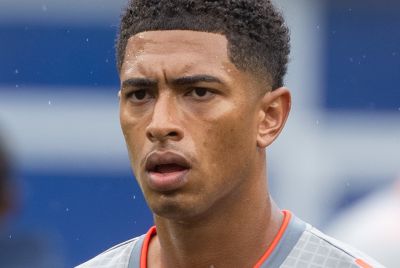
Norway's run ended on July 11 in a 2-1 extra-time loss to England in Miami. Andreas Schjelderup gave Norway the lead in the first half, but Jude Bellingham equalized for England in first-half stoppage time and then scored the winner three minutes into extra time, pouncing on a rebound from a Morgan Rogers shot. Norway had a second-half goal from Torbjørn Heggem controversially disallowed after a video review showed Erling Haaland had fouled England's Elliot Anderson in the buildup to the corner kick that led to it.
Alfie's reaction on social media
The elder Haaland did not hide his frustration with the result. Writing on X after the final whistle, he took aim at the officiating, posting, "Well done Bellingham and referee," a pointed jab suggesting the outcome had been shaped as much by the whistle as by the football played. In a follow-up post, he added that Norway felt "robbed" by the result, while conceding, "Hope England win the WC now."
The posts quickly circulated among soccer fans and media outlets covering the tournament, adding to a wave of attention on the Haaland family throughout Norway's tournament run. Erling Haaland himself has often credited his father's influence not just for his technical development but for his mentality on the field, an attitude that became a talking point throughout Norway's surprise march to the quarterfinals.
A family legacy renewed
Norway's quarterfinal appearance closes out a remarkable chapter for a country that had not reached the World Cup since 1998, the tournament Alfie Haaland missed through injury after playing in the 1994 edition. With Erling Haaland just 26 and already established as one of the sport's most dominant strikers, and with Norway fielding a young core built around him and midfielder Martin Ødegaard, the country's soccer federation and fans alike are hoping this summer's breakthrough marks the beginning of a sustained run of tournament appearances rather than a one-off return to the world stage.
For the Haaland family, the tournament offered a full-circle moment: a father who once wore Norway's colors at a World Cup watching his son do the same, three decades later, on a bigger stage than either could have imagined when Alfie first pulled on the national jersey in 1994.
© Copyright 2026 IBTimes AU. All rights reserved.
- Recommended For You