

Alaska Airlines Boeing 787 Dreamliner Declares Emergency Over Europe, Returns Safely to Rome Airport
Boeing 787-9 Dreamliner safely lands back in Rome after declaring emergency mid-flight.
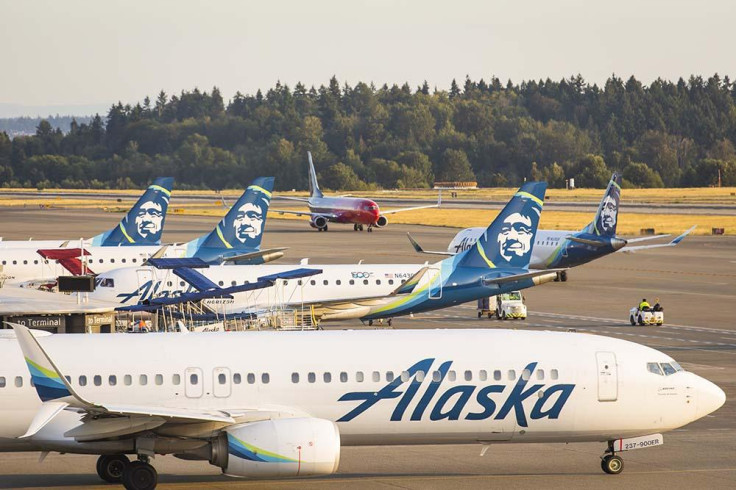
An Alaska Airlines Boeing 787-9 Dreamliner operating a scheduled transatlantic flight from Rome to Seattle returned safely to its departure airport on Sunday after the flight crew declared an emergency while cruising over Europe, the airline confirmed.
Flight AS181 departed Rome Fiumicino Airport at approximately 3:25 p.m. local time bound for Seattle-Tacoma International Airport. The aircraft, a Boeing 787-9 registered as N780HA, is used on one of Alaska Airlines' recently launched nonstop routes connecting Italy and the United States.
The flight's path before the emergency
According to flight tracking data, the aircraft climbed normally after departure and proceeded northwest across Italy before crossing southern France and continuing over the English Channel toward the United Kingdom. While cruising over that stretch of Europe, the flight crew declared an emergency, prompting the aircraft to abandon its planned Atlantic crossing and turn back toward Rome.
Alaska Airlines had not disclosed the specific reason for the emergency declaration as of the time of publication, and the airline has not released a detailed technical explanation of what prompted the crew's decision to return.
A precautionary fuel-dumping maneuver before landing
Before beginning its approach back into Rome, the Boeing 787 entered a holding pattern over the Mediterranean Sea, a maneuver commonly used to reduce an aircraft's landing weight by burning off or dumping excess fuel. Wide-body aircraft such as the 787 are typically too heavy to land safely shortly after takeoff on a long-haul route, given the substantial amount of fuel loaded for extended transoceanic flights, making such holding patterns a standard part of any diversion or emergency return shortly after departure.
The aircraft landed safely back at Rome Fiumicino Airport without further incident. Emergency response personnel were positioned at the airport as a standard precaution ahead of the landing, though there were no immediate reports of injuries among passengers or crew members aboard the flight.
What an emergency declaration means
Aviation officials note that a flight crew declaring an emergency does not necessarily indicate that a flight was in imminent danger. Rather, the declaration allows air traffic control to provide the aircraft with priority handling and to coordinate emergency response services on the ground in case they become necessary. Returning to the departure airport, rather than continuing to an alternate destination, is a standard precautionary step that flight crews often take when they detect abnormal indications, such as unusual engine readings, before committing to a long oceanic crossing where diversion options become far more limited.
Part of Alaska Airlines' expanding European network
The Rome-to-Seattle route affected by Sunday's emergency represents Alaska Airlines' first scheduled nonstop connection between the two cities and forms part of the carrier's broader push into European markets. That expansion has been made possible in part by Alaska Airlines' acquisition of Hawaiian Airlines' wide-body aircraft fleet, which has given the combined carrier access to long-haul aircraft capable of operating transatlantic routes that were previously outside Alaska's traditional network.
The seasonal Rome-Seattle service launched in April 2026 and is operated using Boeing 787-9 Dreamliners, the same aircraft type involved in Sunday's incident. The route's continued seasonal operation is expected to proceed following the incident, though it remains unclear whether Sunday's disruption will have any broader effect on the flight schedule in the immediate term.
Aircraft expected to undergo inspection
Following the emergency landing, the affected Boeing 787 is expected to undergo engineering inspections before being cleared to return to service. Alaska Airlines has not announced a specific timeline for when the aircraft will resume flying, and no formal investigation into the incident had been announced by aviation authorities as of publication, consistent with the relatively routine nature of emergency declarations that conclude with a safe landing and no reported injuries.
A busy period for regulatory attention on Boeing aircraft
Sunday's incident comes as Boeing's 787 and 737 MAX programs remain under close scrutiny from aviation regulators more broadly. Separately, the U.S. Federal Aviation Administration announced Monday that it will allow Boeing to resume issuing its own airworthiness certificates for newly built 737 MAX and 787 aircraft beginning July 20, following months of parallel safety oversight in which the FAA and Boeing alternated responsibility for final certification checks. The agency said it found comparable production quality results regardless of whether certificates were issued by Boeing or by FAA inspectors directly, a finding that informed its decision to gradually restore more certification authority to the manufacturer while maintaining what it described as rigorous ongoing oversight of Boeing's production system.
That regulatory shift does not appear directly connected to Sunday's Alaska Airlines emergency, which involved an in-flight crew decision rather than a manufacturing or certification issue. Still, the timing underscores the continued high level of attention being paid to Boeing's wide-body and narrow-body aircraft programs across the aviation industry, even as individual in-flight incidents like Sunday's emergency return to Rome are treated by airlines and regulators as routine safety precautions rather than signs of a broader systemic problem.
For now, passengers aboard Flight AS181 are expected to be rebooked onto alternative flights to Seattle, while the affected aircraft undergoes further technical review in Rome before returning to Alaska Airlines' operating fleet.
© Copyright 2026 IBTimes AU. All rights reserved.