Tom Hanks Opposes New Oscar Category for Voice Acting Performances
Hanks argues against a separate Oscar category for voice actors, advocating for their inclusion in existing acting awards.
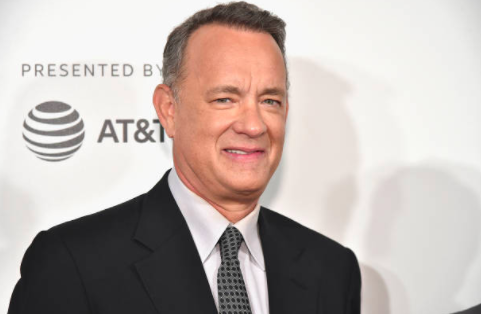
LOS ANGELES — Tom Hanks has voiced opposition to creating a dedicated Oscar category for voice actors, arguing instead that exceptional vocal performances should compete directly in the best actor and best actress categories.
The two-time Academy Award winner made the comments while promoting Disney and Pixar's "Toy Story 5," in which he reprises his iconic role as Woody. Speaking with Gold Derby, Hanks emphasized that the existing acting categories already provide sufficient recognition for performances that move audiences, regardless of whether they appear on camera.
"I think they have enough categories," Hanks said about the Oscars. "The truth is, truly, a voice actor can win Best Actor. The judgment is 'any performance that moved you.'"
He cited examples of actors who have come close to recognition without traditional on-screen appearances, including Andy Serkis, whose motion-capture work as Gollum in "The Lord of the Rings" films generated significant awards discussion. Hanks noted that pure vocal performances should be eligible under the same criteria applied to all acting work.
"If they are moved, that means they are moved by a human being's performance. That's all the requirement," Hanks added.
Historical Context and Precedents
The Academy of Motion Picture Arts and Sciences has never nominated a voice-only performance in the lead or supporting acting categories. Scarlett Johansson generated considerable Oscar buzz for her voice role in Spike Jonze's 2013 film "Her," which ultimately won best original screenplay, but she was not nominated for acting. Similarly, motion-capture performances have struggled for recognition despite critical acclaim.
Zoe Saldaña, who portrays Neytiri through performance-capture technology in James Cameron's "Avatar" franchise, has spoken about the oversight. In 2024, she told The Independent that longstanding traditions within the Academy make change difficult. "Old habits die hard, and when you have old establishments, it's really hard to bring forward change," Saldaña said. "And I understand that, so I'm not bitter about it, but it is quite deflating when you give 120% of yourself into something."
Cameron has been equally vocal in support of Saldaña's work, telling Variety in 2024 that her contributions equal those of traditional Academy Award-winning actors. "I've worked with Academy Award-winning actors, and there's nothing that Zoe's doing that's of a caliber less than that," Cameron said. "But because in my film she's playing a 'CG character,' it kind of doesn't count in some way, which makes no sense to me whatsoever."
Hanks, who won best actor for "Philadelphia" in 1993 and "Forrest Gump" in 1994, brings particular credibility to the discussion. He received an Annie Award nomination for his voice work as Woody in the original "Toy Story" in 1995 but has never been recognized by the Oscars for the role despite the character's cultural impact.
Broader Debate on Acting Recognition
The conversation reflects ongoing discussions within the film industry about how to honor evolving performance techniques. Motion capture and voice acting have become increasingly sophisticated, blurring traditional lines between live-action and animated work. Proponents of new categories argue they would provide appropriate recognition for specialized skills, while opponents like Hanks contend that strong performances should compete on merit regardless of delivery method.
The Academy has expanded categories over time to reflect industry changes, including best animated feature and various technical honors. However, the core acting categories have remained largely consistent, focusing on performances that audiences experience as human characters, whether captured traditionally or through advanced technology.
Critics of the current system point to cases where groundbreaking work in voice or performance capture has been overlooked, potentially discouraging innovation in storytelling methods. Supporters of maintaining the status quo emphasize the importance of preserving the integrity of acting awards as celebrations of human emotion and craft.
Implications for "Toy Story 5" and Animation
Hanks' comments come as "Toy Story 5" prepares for its theatrical release on June 19. The film continues the beloved franchise that helped establish Pixar's reputation for emotional storytelling through computer animation. Hanks has voiced Woody across all installments, contributing significantly to the character's enduring appeal.
The franchise's success demonstrates the power of voice performances to connect with audiences across generations. While unlikely to compete in traditional acting categories, the films have earned multiple Oscar nominations and wins in animated feature and technical categories.
Industry observers note that voice actors in major animated releases often deliver performances comparable in depth and nuance to live-action roles. The emotional range required to convey complex characters through voice alone represents a distinct but equally demanding skill set.
Academy's Position and Future Considerations
The Academy has not publicly responded to recent calls for new acting categories. Its awards structure undergoes periodic review, with changes typically driven by member consensus and industry evolution. Any proposal for a voice acting or motion-capture category would require broad support and careful definition of eligibility criteria.
Past expansions, such as the introduction of best animated feature in 2001, show the organization's willingness to adapt. However, core acting categories have proven more resistant to subdivision, maintaining focus on overall performance impact rather than technical delivery methods.
Industry Reactions and Perspectives
Voices across Hollywood have weighed in on the debate. Some actors and directors support greater recognition for non-traditional performances, arguing it would encourage creative risk-taking and technical excellence. Others worry that additional categories could dilute the prestige of existing honors or create unnecessary fragmentation.
Hanks' stance carries particular weight given his stature and personal experience with voice work. His belief that strong vocal performances should compete directly challenges assumptions about what constitutes eligible acting and invites further industry conversation.
Looking Ahead
As "Toy Story 5" approaches release, Hanks' comments add an intriguing layer to discussions about performance recognition in modern cinema. The film's success will likely renew attention on the contributions of voice actors in animated features, even if Oscar eligibility remains limited to existing categories.
The broader debate reflects cinema's ongoing evolution. As technology advances and storytelling methods diversify, awards bodies face the challenge of balancing tradition with innovation. Hanks' perspective offers one viewpoint in a conversation that is likely to continue as more performers deliver compelling work outside traditional parameters.
For now, the two-time Oscar winner maintains that existing categories suffice when performances truly move audiences. "We've talked about, for example, Andy Serkis," Hanks said. "Even though he does not appear as Andy Serkis, he gives all the raw material to it. There's been people who have been close to being nominated that do not appear on camera. That could happen to a pure-vocal actor."
The Academy's next awards cycle will provide another opportunity to observe how voters respond to innovative performances across all formats. Whether voice and motion-capture work gains greater recognition remains an open question, but Hanks' clear position adds a prominent voice to the discussion.
As the film industry continues evolving, conversations about how best to celebrate excellence in acting will remain central. Hanks' comments while promoting "Toy Story 5" serve as a timely reminder that emotional impact, rather than technical delivery, should ultimately define great performances.
© Copyright 2026 IBTimes AU. All rights reserved.
- Recommended For You