Oil Prices Jump as Trump Rejects Iran's Hormuz Offer, With Brent Near $107 and WTI Near $95 a Barrel
Brent crude trades near US$107 a barrel as markets weigh the prospect of prolonged disruption and renewed US-Iran tensions.

NEW YORK — Oil prices rose sharply on Monday after President Donald Trump rejected Iran's conditional offer to reopen the Strait of Hormuz, reviving fears that supply through the world's most important oil chokepoint will stay disrupted. International benchmark Brent crude traded near $107 a barrel and U.S. West Texas Intermediate near $95, both in U.S. dollars, though prices moved through the morning.
Brent futures for November delivery were 2.7% higher at $107.11 a barrel at 8:32 a.m. Eastern time, paring gains after climbing as high as $108.83 earlier in the session, CNBC reported. WTI futures for November were 3% higher at $95.20. Later in the morning, CNBC's market blog showed Brent up more than 2% at $106.79 and WTI up about 2% at $94.40. In early Asian trading, Brent had gained as much as 2.89% to $107.34 and WTI had risen 1.87% to $94.14, according to CNBC.
The move reversed part of Friday's decline. Oil fell more than 2% on Friday after reports that the two sides were exploring a phased arrangement, and it rebounded at the start of the week, Euronews reported. Trading Economics data showed Brent up about 18% over the past month and about 59% higher than a year ago, while WTI was up about 9.7% over the month and about 48% higher year on year. Brent remains well below its April peak, when it reached a four-year high of $126, according to a chronology of the year's oil market on Wikipedia.
The trigger was Trump's rejection of a seven-day proposal from Tehran. Iranian Foreign Minister Abbas Araghchi presented the offer on the sidelines of the U.N. General Assembly in New York. "If certain conditions are met, the Strait of Hormuz will be open at the end of seven days, and talks will be restarted," Araghchi told reporters. According to Iranian foreign ministry spokesman Esmaeil Baghaei, the conditions include an end to what Tehran describes as U.S. "acts of aggression," the lifting of the naval blockade and economic warfare, and the release of Iranian assets.
Trump confirmed that he had turned the offer down. "They made a proposal but I rejected it," he told reporters, CNBC reported. The Wall Street Journal reported Saturday, citing unnamed U.S. officials, that Trump told aides he expects U.S. strikes on Iran to resume after November's midterm elections. Trump also told Axios on Sunday that Iran has overplayed its hand and that Tehran's conditions are something Washington might have agreed to about a year ago, Bloomberg reported. He said he expects negotiations to resume this week. Iran said it is waiting for a definitive U.S. response and will not ease its conditions, according to Trading Economics.
Analysts said markets were pricing in a longer standoff. Energy market participants are seeing a "clear and present danger" of a return to U.S.-Iran hostilities after the midterm elections, Cornelia Meyer, chief executive of Meyer Resources, told CNBC. Trump said earlier this month that he expected the conflict, which began with U.S. and Israeli airstrikes on Iran on February 28, to conclude soon after the midterms, with oil prices subsequently declining, CNBC noted. On Friday, before the rejection, David Morrison, senior market analyst at Trade Nation, said traders saw room for a sharp oil pullback if a phased deal landed but that there were "still plenty of obstacles to overcome first."
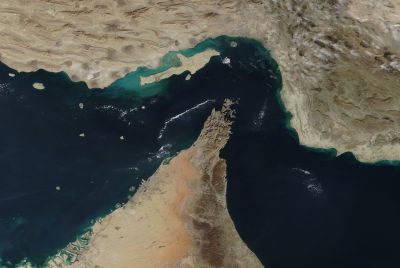
The strait's importance explains the sensitivity. Before the strikes on Iran, roughly one-fifth of global oil supplies flowed through the waterway, which links the Gulf to the Gulf of Oman and the Arabian Sea, according to Al Jazeera. Commercial shipping has declined drastically since the war began amid attacks on vessels in the Gulf, most of which have been blamed on Iran or allied groups. Vessels made 132 transits of the strait from September 21 to 27, up from 116 the previous week, according to the maritime intelligence platform MarineTraffic. Euronews said shipping risks have also grown in the Red Sea after the Houthis seized Yemen's coastline, including territory near the Bab al-Mandab Strait.
Other factors are adding to volatility. Trading Economics said oil markets have been unsettled by mixed signals over peace prospects, signs of recovering Middle East energy flows, and speculation that the United States could restrict diesel exports. Previous negotiations have repeatedly appeared close to a breakthrough before collapsing, the outlet noted, which has kept traders cautious.
Higher crude pushed up inflation worries and rippled through other markets. In the United States, the Dow Jones Industrial Average was down about 0.6% in early trading and the 10-year Treasury yield traded above 5.2%, according to CNBC. In Europe, the Euro Stoxx 50 was about 0.5% lower in early trading, Euronews reported. In Asia, Japan's Nikkei 225 and South Korea's Kospi fell 0.73% and 2.70%, respectively, according to Al Jazeera.
For consumers and businesses, the stakes are largely about fuel costs. Higher crude prices tend to feed into gasoline, diesel and jet fuel costs, and traders are watching whether the rise in oil adds to price pressures at a time when interest-rate expectations are already sensitive. The article notes that these are futures prices, which move constantly and may differ from what motorists pay at the pump.
The next moves depend on diplomacy. Trump has said talks could resume this week, Iran has said its conditions stand, and the market has shown it will react to each shift in tone, with prices dropping when a deal seems possible and jumping when it recedes. Investors are also watching shipping data for signs of whether flows through Hormuz keep recovering. This article is a report on market developments and is not investment advice.
© Copyright 2026 IBTimes AU. All rights reserved.
- Recommended For You