Mookie Betts Injury Update: Oblique Strain Recovery Slows Dodgers as Star Remains Weeks from Return
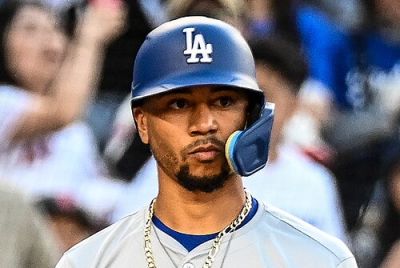
LOS ANGELES — Los Angeles Dodgers star Mookie Betts is not yet fully recovered from a right oblique strain suffered in early April, with the 33-year-old still in the early stages of baseball-specific activities and facing an uncertain timeline that could keep him sidelined well into May or longer.

Betts has missed 13 consecutive games since exiting a contest against the Washington Nationals on April 5 with lower back pain that an MRI later confirmed as an oblique strain. The Dodgers placed him on the 10-day injured list, recalling infielder Hyeseong Kim from Triple-A in a corresponding move. As of April 23, manager Dave Roberts and Betts himself have offered measured updates, emphasizing caution over haste in a notoriously tricky injury that often sidelines players for four to six weeks.
Betts provided his most detailed public progress report in recent days, noting he can throw without issue and has begun med ball throws as part of his rehab. Running produces mild discomfort but nothing severe, he said, while swinging a bat has not yet started. "It's just an oblique, and it's going to take time," Betts told reporters. He stressed the importance of avoiding the mechanical compensations that plagued his swing during a previous injury last season, preferring to build comfort gradually rather than rushing back.
Roberts echoed the deliberate approach. While Betts began a swing progression over the weekend — a positive step — the manager made clear it will "take a while" before the veteran is active again. The Dodgers are weighing simulated games versus a traditional minor-league rehab assignment, though Roberts noted Betts is not particularly fond of the latter. No firm return date has been set, and the team continues to monitor symptoms daily.
Oblique strains vary widely in severity and recovery. Initial optimism after the injury suggested Betts might beat the standard four-to-six-week timeline, with Roberts saying early on he would "take the under." By mid-April, however, the club acknowledged the 10-day IL stint would not suffice. Betts was symptom-free in everyday movements by around April 10, yet baseball actions that engage the core — hitting, twisting, explosive running — remain restricted to prevent re-injury or compensatory habits.
The Dodgers have managed without their versatile All-Star by shifting Miguel Rojas and others around the infield while relying on depth pieces. Betts, who plays shortstop primarily in 2026 after years in the outfield, brings elite defense, on-base skills and power from the leadoff or top-third spots. His absence has tested the lineup's consistency during a stretch where the Dodgers have stayed competitive but missed his gravitational presence at the plate and in the field.
Historically, oblique injuries demand respect. Players who return too soon often experience setbacks or diminished production. Betts has referenced his own past experiences, including a shorter oblique-related absence last year, as motivation to prioritize long-term readiness. At 33, with a contract that runs through 2032 and a new chapter as a father of three, he has spoken of balancing family life with the drive to reclaim MVP-caliber form after a challenging 2025 campaign.
The injury occurred during a swing in a game, highlighting the explosive rotational forces that make obliques vulnerable for hitters. Early reports described it as moderate rather than severe, which fueled initial hope for a quicker recovery. Yet oblique strains often involve microscopic tearing that heals slowly, and Dodgers medical staff appear committed to a conservative protocol that includes progressive loading, core stability work and monitored throwing programs.
As the calendar approaches late April, Betts' return window points toward sometime in May at the earliest. Some projections suggest mid-to-late May if progress continues smoothly, though a minor-league rehab stint could push that into early June. The Dodgers have avoided setting public deadlines, allowing flexibility based on daily evaluations. Roberts has repeatedly said the focus is on having Betts "right" rather than rushing him back for a single series.
For Los Angeles fans and fantasy owners, the uncertainty creates frustration. Betts entered 2026 intent on rebounding from an off year, rewiring aspects of his swing and embracing new training methods to feel restored physically. His early-season contributions before the injury reinforced his value as a cornerstone of the Dodgers' championship aspirations. Without him, the lineup has leaned more heavily on other stars, with mixed results against varying opponents.
Medical experts note that full recovery from an oblique strain means not only pain-free movement but restored explosiveness and confidence in rotational mechanics. Betts' comments about med ball work and hesitation-free throwing suggest he is advancing methodically through rehab phases, yet the absence of batting indicates he remains weeks away from game readiness.
The broader Dodgers injury picture adds context. While Betts' situation draws the most attention, the club has navigated other absences through depth and strategic roster moves. Still, losing a player of Betts' caliber — a former MVP capable of impacting games with his bat, glove and baserunning — creates a measurable void that no single replacement fully fills.
As April 23 passed without a concrete timeline, the narrative around Betts remained one of patience and optimism. He has stayed engaged with teammates, continuing light on-field work and maintaining a positive outlook. Personal milestones, including life as a father of three, have provided perspective during the downtime, even as he eyes a strong comeback.
Dodgers leadership continues to project confidence in the roster's ability to weather the absence while positioning Betts for a strong return. When he does step back onto the field, expectations will be high for the perennial All-Star to anchor the lineup and defense once more.
For now, the answer to whether Mookie Betts is fully recovered is no. He has made encouraging strides — throwing freely, managing mild discomfort while running and beginning swing progression — but baseball-specific demands lag behind. An exact return date remains elusive, with May the earliest realistic target and a more measured timeline likely extending further depending on how his body responds to increased loading.
The Dodgers will monitor every step closely, balancing the desire for his elite production against the risk of a setback that could sideline him deeper into the season. Betts' disciplined approach offers reassurance that when he returns, it will be on his terms — healthy, prepared and ready to contribute at the level that has defined his decorated career.
As the Dodgers push through April without their shortstop, the baseball world watches for the next positive update. Until then, Mookie Betts continues the deliberate work of healing, reminding fans and teammates alike that oblique injuries respect no timelines except their own.
© Copyright 2026 IBTimes AU. All rights reserved.
- Recommended For You