10 Things To Know About The History Of Labor Day, From Its Contested Founder To A Deadly 1894 Railroad Strike
Explore the dramatic origins and evolution of Labor Day, from its contested founders to the pivotal 1894 railroad strike.
10 Things To Know About The History Of Labor Day, From Its Contested Founder To A Deadly 1894 Railroad Strike
As Americans mark another Labor Day, the holiday's origins remain far more complicated, and far more dramatic, than the barbecues and end-of-summer sales that now define it for most people. Here are 10 things to know about the history behind the holiday honoring American workers.
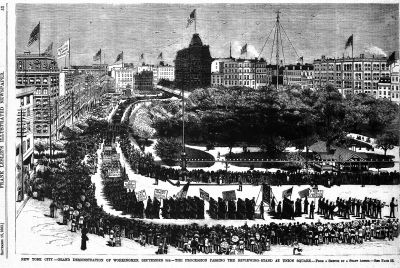
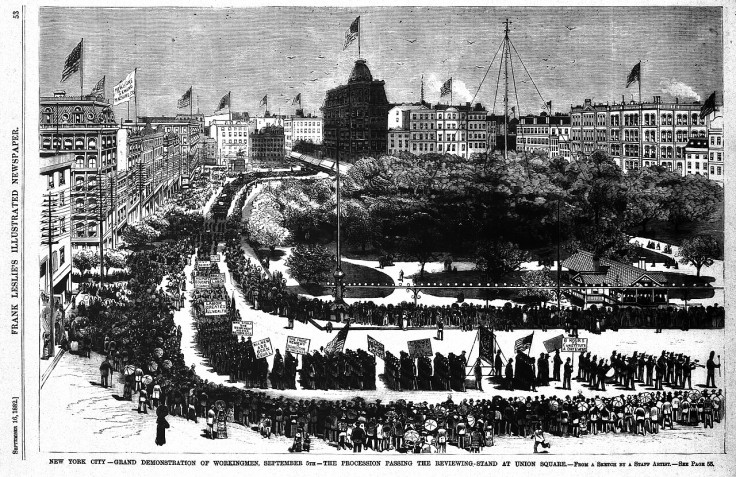
- The first Labor Day was a New York City parade in 1882. On Sept. 5, 1882, an estimated 10,000 to 20,000 workers marched through Lower Manhattan in a parade organized by New York City's Central Labor Union. One contemporary account described the scene vividly, noting that "the windows and roofs and even the lamp posts and awning frames were occupied by persons anxious to get a good view" of the procession of workingmen from various trades marching together under one banner.
- Two men are credited, and neither is fully certain. Union leader Peter J. McGuire, who founded the United Brotherhood of Carpenters in 1881 and later helped establish the American Federation of Labor, has long been called the "father of Labor Day." McGuire reportedly proposed the idea to the Central Labor Union on May 12, 1882, suggesting the day "be celebrated by a street parade which would publicly show the strength and esprit de corps of the trade and labor organizations." His gravestone and a statue in Pennsauken, New Jersey, both bear that title.
- A machinist named Matthew Maguire may be the real founder. Historical evidence uncovered by the New Jersey Historical Society suggests it was actually Matthew Maguire, a machinist and secretary of the Central Labor Union, who first proposed the holiday, not Peter McGuire. Following passage of the federal Labor Day law, the Paterson Morning Call published an opinion piece asserting that "the souvenir pen should go to Alderman Matthew Maguire of this city, who is the undisputed author of Labor Day as a holiday." Both men attended that first 1882 parade.
- The September date has no deep symbolic meaning. Unlike many American holidays tied to specific historical events, Labor Day's placement in early September was largely arbitrary. Peter McGuire said the date was chosen because it fell roughly halfway between Independence Day and Thanksgiving, giving workers a break during that stretch of the calendar without competing with any other major holiday.
- States adopted the holiday years before the federal government did. By 1885, Labor Day celebrations were being held in a number of states, with momentum building steadily throughout the mid-1880s as more state legislatures formally recognized the day, even though it would take another decade for Congress to establish it as a national holiday.
- A deadly railroad strike ultimately pushed Congress to act. In May 1894, the Pullman Palace Car Company, facing the effects of a severe economic depression, cut factory workers' wages by roughly 25% while refusing to lower rents or prices at its company-owned town near Chicago. When a worker delegation presented grievances to company owner George Pullman, he had three committee members fired, prompting employees to walk off the job on May 11, 1894. The American Railway Union, led by Eugene V. Debs, soon joined with a nationwide boycott of trains carrying Pullman cars, crippling rail traffic across much of the country.
- Federal troops and deadly violence followed. U.S. Attorney General Richard Olney, a former railroad attorney, secured a federal injunction against the strike on July 2, 1894, and President Grover Cleveland deployed federal troops to Chicago the following day, citing the need to keep mail moving. The resulting clashes turned violent, with rioters destroying hundreds of railroad cars in South Chicago and National Guard troops firing into crowds, leaving an estimated 30 people dead. Debs was later jailed for six months for contempt of court, an experience that helped shape him into one of the country's most prominent labor and socialist political figures in the years that followed.
- Cleveland signed the Labor Day law in the middle of that very crisis. On June 28, 1894, just days before dispatching federal troops to Chicago, Cleveland signed legislation making the first Monday in September a federal legal holiday. Historians have widely characterized the move as a conciliatory gesture toward the American labor movement at a moment of intense national unrest, an effort by Cleveland's administration to repair its standing with working-class voters even as it simultaneously moved to crush the Pullman strike by force.
- Cleveland deliberately avoided the more radical May Day. Labor Day and May Day both emerged as holidays honoring workers, but Cleveland was reportedly uneasy with May Day's socialist and international labor-movement origins, which trace back to the 1886 Haymarket affair in Chicago. By instead formalizing the more moderate, homegrown September date as the official U.S. holiday, Cleveland aligned the country with a distinctly American labor tradition rather than the more politically charged international observance embraced by many other nations.
- The holiday's original law applied only to federal workers in Washington. The 1894 legislation initially designated the first Monday in September as a legal public holiday specifically within the District of Columbia, before the recognition was extended more broadly to federal employees nationwide. It took additional years for individual states to align their own labor laws and private employers to broadly adopt the holiday as the near-universal day off it represents for most American workers today.
Labor Day has since evolved considerably from its origins in 19th-century union organizing and deadly labor unrest. For most Americans today, the holiday marks the unofficial end of summer, a long weekend for travel, shopping and family gatherings, with many people unaware of the contested founders and violent national crisis that led directly to its creation as a federal holiday. Even so, the day's underlying purpose, honoring the economic and social contributions of American workers, remains rooted in the same labor movement that first marched through the streets of Lower Manhattan more than 140 years ago.
© Copyright 2026 IBTimes AU. All rights reserved.
- Recommended For You