

Australia vs Egypt World Cup Preview: Salah Injury Doubt as Socceroos Chase Historic First Knockout Win
Injury concerns for key players add intrigue to Egypt and Australia's World Cup knockout clash.
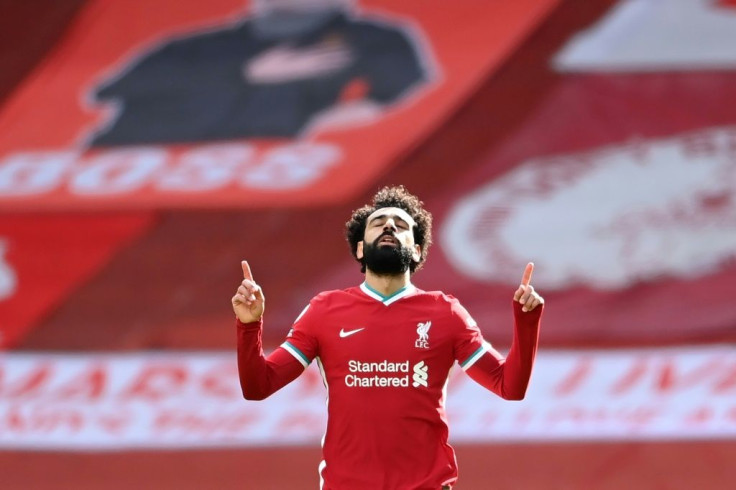
DALLAS — Two nations that have never won a World Cup knockout match meet Friday at Dallas Stadium with a place in the round of 16 on the line, and the contest that should be one of the round of 32's most evenly matched fixtures has been further complicated by significant injury concerns surrounding Egypt's captain and all-time greatest player.
Mohamed Salah, the 34-year-old who lit up Egypt's group stage campaign with his creativity and goal threat, is a major doubt for Friday's match after suffering a hamstring strain in the final minutes of Egypt's 1-1 draw with Iran. Salah was withdrawn in the second half of that match and did not train with the rest of the Egyptian squad on Monday, focusing instead on rehabilitation work as he attempts to recover sufficiently to take some part against the Socceroos. His status remains uncertain heading into kickoff at 2 p.m. ET.
The potential absence of Salah would be a significant blow to an Egyptian side that has leaned heavily on his creative output throughout the tournament. Salah generated 11 chances for teammates during the group stage, a figure that placed him second among all players in the tournament during that phase, behind only Belgium's Leandro Trossard, who created 13. Without him, Egypt lacks a comparable creative presence capable of consistently unlocking organized defensive structures, and Australia's compact shape has proven very difficult to break down throughout the tournament.
The injury concerns extend beyond Salah. Left-back Ahmed Fatouh has been ruled out with a hamstring tear of his own, while central defender Mohamed Abdelmonem is also listed as a doubt due to an ankle injury. The combination of those two absences could leave Egypt vulnerable across the defensive backline even as they attempt to manage without their captain and primary attacking threat.
Australia, meanwhile, arrives in Dallas without full-back Jacob Italiano and experienced midfielder Mathew Leckie, both of whom suffered tournament-ending injuries during the group stage. Despite losing both players, coach Tony Popovic is expected to continue with Aziz Behich at left-back and Jordan Bos on the opposite side of the defensive line, maintaining the structure that has given Australia its characteristic compactness throughout the competition.
Australia's group stage results tell a story of a team that has not yet fully found its attacking rhythm. The Socceroos opened with a 2-0 win over Türkiye, following up with a 2-0 loss to the United States and a goalless draw against Paraguay. Of all sides that finished in the top two of their group at this year's competition, only Croatia's 24 shots were fewer than Australia's 26, and no qualifying side generated a lower overall expected goals figure at 2.1. In their final two group matches, Australia managed only 17 combined shots with a total expected goals value of 0.9, a figure suggesting the team will need to create opportunities more efficiently in single-elimination play if they are to progress.
Australian striker Tete Yengi acknowledged the challenge of scoring against organized opponents while expressing confidence that the knockout format would unlock his team's offensive output.
"There haven't been easy games. We've been against good opposition, good defensive organisation, so it's difficult to score," Yengi said. "But we're through now to the knockout stages, so we have to score now to win, so we'll do that I think."
Despite Egypt entering as narrow favorites according to Opta's supercomputer modeling, which ran 25,000 pre-match simulations and produced Egypt winning 39.7% of them against Australia's 28.4% and a draw occurring 31.9% of the time, the fixture is statistically the closest matchup of the entire round of 32. Egypt's overall probability of advancing across all possible outcomes including extra time and penalties stands at 55.8%, compared with Australia's 44.2%, making this genuinely the most open single-elimination contest of the knockout phase.
The defensive quality Australia brings to the match is genuine and measurable. Opta's data shows that the average expected goals value of shots the Socceroos allowed in the group stage was just 0.052 per attempt, the second-lowest figure at the tournament behind Spain. Australia's defensive organization has been the consistent thread through the competition even as the attack has sputtered, and their record against African opposition at World Cups is entirely positive: a 1-1 draw with Ghana in 2010 and a 1-0 win over Tunisia in 2022.
The goalkeeper story running through Australia's campaign adds another dimension. Popovic's surprise decision to bench veteran starter Matthew Ryan, the team's long-serving captain, in favor of the inexperienced Patrick Beach has been one of the tournament's more unexpected individual subplots. Beach, who plays domestically for Melbourne City and arrived at the tournament with just five international caps, has responded with two clean sheet performances and has been sharp in the moments that required him to make saves under pressure. His performance Friday could be decisive in a match where both teams are likely to be cautious in how they approach the first half.
Egypt's group stage run was genuinely historic for the country. Their three-game unbeaten sequence, built on a 3-1 victory over New Zealand in which Salah scored, a hard-fought goalless draw with New Zealand's opponents and the 1-1 result against Iran, represented the longest unbeaten run Egypt has ever had at a World Cup, and they scored as many goals across those three games as they had in their seven previous appearances at the tournament combined.
For the winner, a round of 16 matchup against Argentina awaits in Atlanta on July 7. That prospect of facing Lionel Messi and the reigning champions has been acknowledged in both camps' public comments without requiring any particular elaboration. Both Australia and Egypt would represent significant obstacles to Argentina's title defense regardless of how the bracket reads on paper, but getting there requires winning Friday's match first.
The two nations have met just twice in senior competition previously, with Australia winning a 1987 tournament encounter on penalties and Egypt winning a 2010 friendly 3-0. Five members of the current Australian squad were also part of the team eliminated from the Tokyo Olympics by Egypt 2-0. That history is modest enough to offer little guidance for what happens when the referee blows the opening whistle in Dallas.
© Copyright 2026 IBTimes AU. All rights reserved.