Is Dubai Airport Open Today? DXB Stays Operational Despite Widespread Regional Flight Delays and Cancellations
DXB and Al Maktoum airports continue operating, while airlines warn passengers that individual routes may face short-notice changes, cancellations or delays.
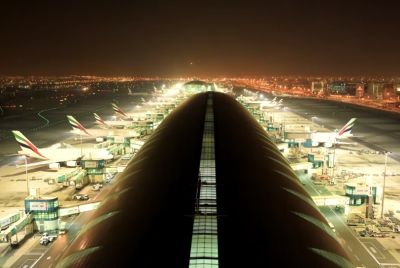
DUBAI — Dubai International Airport remains open and operational Tuesday, continuing to run flights across all three of its terminals even as travelers across the United Arab Emirates face another day of scattered delays and cancellations tied to ongoing tensions in the Gulf region surrounding the Strait of Hormuz.
Dubai Airports, the government entity that operates the emirate's civil aviation infrastructure, has not announced any closure or suspension of operations at either Dubai International Airport, commonly known as DXB, or the emirate's secondary facility, Dubai World Central–Al Maktoum International Airport. Both airports have continued operating throughout the broader regional crisis, even during earlier, more acute phases of the conflict that prompted temporary airspace restrictions across parts of the Gulf.
Despite the airport itself remaining open, individual airlines serving Dubai have reported a mix of delays and cancellations on specific routes. Emirates, the largest carrier operating out of Dubai by number of departures, has experienced scheduling adjustments on some flights, including a Dubai-to-Bangkok service that saw its scheduled 1 p.m. departure pushed to 2:02 p.m. Emirates has said it is offering flexible rebooking options for eligible passengers affected by the disruptions, including complimentary date changes on tickets booked from April 2 onward, subject to the airline's stated terms. The carrier has advised travelers to check the latest updates through its official channels before heading to the airport.
Budget carrier flydubai reported a mixed picture among its own regional services Monday, with one scheduled flight to Abha, Saudi Arabia, canceled while a later flight on the same route continued to operate as scheduled. A separate Dubai-to-Abha service was also listed as canceled by Dubai Airports. flydubai has reminded passengers that check-in counters close 60 minutes before scheduled departure unless otherwise notified by SMS or email, and has advised travelers departing Dubai to arrive at least four hours ahead of their flight.
Air France has suspended its Dubai services entirely through Tuesday, September 15, while the carrier's flights to Beirut remain suspended through September 24. The airline has cautioned that holding a confirmed ticket does not guarantee a flight will operate as scheduled given the fluid nature of the regional situation, and has advised passengers to verify their flight status directly before traveling.
Abu Dhabi-based Etihad Airways reported comparatively steadier operations Tuesday. The carrier said its services between Abu Dhabi and both Bahrain and Kuwait were largely operating normally, with no major cancellations reported on those routes. Etihad's Abu Dhabi-Bahrain flights had either already arrived or remained on schedule, while an Abu Dhabi-Kuwait service departed later than planned. Separately, the airline noted that a delayed flight from Tokyo's Narita Airport to Abu Dhabi on Monday was attributed to an unrelated technical issue rather than the broader regional situation, illustrating that not every disruption travelers are experiencing at UAE airports currently traces back to the Gulf tensions.
Zayed International Airport in Abu Dhabi has also reported delays affecting several flights, including an Air India Express service from Dubai to Jaipur. Authorities have cautioned that the causes behind individual delays and cancellations vary, with some tied directly to the wider regional situation and others stemming from routine operational or technical factors unrelated to the conflict.
The broader instability affecting Gulf aviation traces back to the conflict between the United States, Israel and Iran that began earlier this year, which has periodically disrupted air travel across the region and, in earlier phases, prompted temporary partial airspace closures that Dubai Airports confirmed affected some flight routing even as both of the emirate's airports continued operating throughout. That instability has weighed most heavily on smaller and more directly exposed airports elsewhere in the Gulf. Kuwait's main international airport, for example, sustained direct damage from Iranian strikes earlier this year, a far more severe disruption than anything reported at Dubai's airports to date.
Dubai's relative insulation from the worst of the disruption reflects both its geographic positioning further from the most acute flashpoints of the conflict and the scale of its aviation infrastructure. DXB has grown since opening in 1960 into one of the world's busiest airports, connecting more than 240 destinations across six continents and handling more than 86.9 million passengers in 2023 alone, a scale of operations that has historically given the airport more resilience and flexibility to reroute or adjust individual flights without halting operations entirely.
For travelers with upcoming flights through Dubai, airlines and the airport operator have offered largely consistent guidance: arrive at least three to four hours before a scheduled departure depending on the carrier, complete online check-in where available, allow additional time for road traffic, security screening and immigration processing, and keep contact information updated with the relevant airline to receive last-minute notifications. Both Dubai Airports and individual carriers have emphasized that schedules remain subject to change on short notice given the fluid nature of the regional situation, and have urged passengers to monitor official channels directly rather than relying solely on previously confirmed booking information.
As of Tuesday, no indication has emerged that Dubai International Airport's overall operational status is at risk of changing in the near term, even as the individual flight disruptions affecting specific routes and carriers are expected to continue on a day-to-day basis for as long as the broader regional tensions persist.
© Copyright 2026 IBTimes AU. All rights reserved.
- Recommended For You