(VIDEO) Venezuela Earthquake: Back-to-Back 7.2 and 7.5 Earthquakes Devastate Venezuela
Twin earthquakes cause catastrophic damage in Venezuela, with fears of high casualties and extensive destruction.

CARACAS, Venezuela — Two strong earthquakes shook north-central Venezuela on Wednesday afternoon, collapsing buildings in the capital Caracas and prompting scientists to warn of potentially heavy casualties and widespread destruction across the South American country.
How the Quakes Struck
The U.S. Geological Survey said the first earthquake had a magnitude of 7.2 and its epicenter was west of the community of Morón, located along the country's Caribbean coast, about 168 kilometers west of Caracas. The USGS reported an even larger 7.5-magnitude earthquake less than a minute later. A magnitude 7.2 foreshock took place near San Felipe, the capital city of Yaracuy state, just after 6:04 p.m. ET. Just 40 seconds later, it was followed by the larger 7.5-magnitude quake, some 23 kilometers southeast of Yumare, also in Yaracuy state.
The epicenters, which USGS estimated to be about 3 miles apart, were near the town of Morón on Venezuela's Caribbean coast, some 100 miles west of Caracas. The first quake occurred at a depth of about 8 miles, while the second was at an even shallower 6 miles. Shallow quakes typically produce stronger ground shaking at the surface than deeper ones.
A Dire USGS Warning
"High casualties and extensive damage are probable, and the disaster is likely widespread," the USGS said, initially estimating the death toll would most likely range from 10,000 to 100,000. On Wednesday evening, USGS modeling of the 7.5-magnitude earthquake estimated deaths could be in the thousands to tens of thousands, with economic losses reaching billions to tens of billions of dollars, said Paul Earle, a seismologist at USGS.
The Largest Quake to Hit Venezuela in Over a Century
The strongest of the "doublet," as the USGS described the twin quakes, is the largest earthquake to strike Venezuela since 1900, when a 7.7-magnitude quake hit the country, according to USGS. "When the earthquakes are this close together" in time, Earle said, "it can be difficult to unravel the exact magnitudes and the exact locations, especially for the second event," due to the way the signals on seismograms overlap in these cases.
A State of Emergency Declared
Acting Venezuelan President Delcy Rodríguez confirmed there have been fatalities in a national address, but did not give any numbers. Rodríguez declared a state of emergency, said several Venezuelan states had sustained damage, and called for unity, urging "our population to remain calm." Rodríguez has been running the country since the U.S. ouster of President Nicolás Maduro in January and has hailed a new era of cooperation with the U.S. and other countries, especially on oil, mining, and other industries.
Damage in Caracas and Beyond
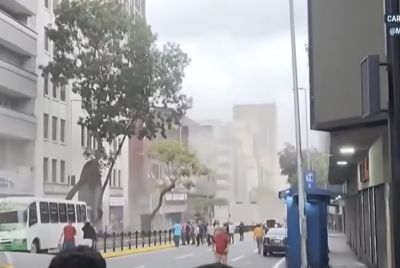
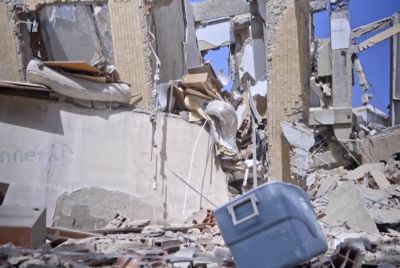
Interior Minister Diosdado Cabello said the quake could be felt in several states, adding that the Altamira neighborhood in Caracas had "alarming situations" with collapsed homes and buildings. "We understand that some people may be desperate, but we are acting according to protocols to activate aid and rescue efforts to help those who need it most," Cabello said on state TV. "Be very careful with children and the elderly; call each other and check that no one has been harmed." He also urged people to remain outside as aftershocks could further damage some structures.
In Chacao, an eastern Caracas municipality, Mayor Gustavo Duque told broadcaster Globovision that two structures had collapsed, 16 people were injured, and that there were deaths too, though he gave no figure for fatalities. "We're going to do everything we can to rescue the most people possible," he said.
The Airport Suffered Significant Damage
Damage was also reported at Caracas' Simón Bolívar International Airport, where flights are now suspended. President Rodríguez announced in remarks on state television that the airport in Caracas is closed due to heavy damage.
Residents Describe the Terror
Manuel Guevara Baro, who lives on the ninth floor of a building in the Los Palos Grandes district, said he was reading a book when the earthquakes struck. "I lived through the earthquake in Caracas in 1967, which was an earthquake that also had many victims, but was nothing like this earthquake we lived today," Guevara Baro told CNN. "I could not even walk because of the intensity of the movement." Once he believed things had calmed down, he and his neighbors evacuated down dark stairwells, with electricity out and water falling from broken plumbing.
Maria Romero, an 80-year-old pensioner living on the south side of Caracas, said police helped her evacuate from her building. "This earthquake was horrible, even worse than the one in 1967," she added. Caracas resident Roberto Damas described the force of the shaking: "The building really shook from side to side. Unreal. The force was incredibly strong." "We were walking and it was tossing us around. Everything in the apartment fell. Well, thank God we were able to get out."
Streets Filled With Evacuated Residents
People remained on the streets of Caracas for hours, even after sunset. Some sat on the ground hugging their pets as dust gathered around them. Collapsed buildings, toppled electric poles, and debris blocked streets. Parts of the capital lost power and cellphone signal.
A Compounding Crisis for an Already Struggling Population
The lack of cellphone signal in parts of Venezuela deepened the distress of many families, particularly those among the more than 7.7 million people who have left the country during its protracted crisis — underscoring how the earthquake's toll is compounding years of economic and political upheaval that have already displaced a substantial share of Venezuela's population.
Tsunami Threat Lifted
A tsunami advisory was issued immediately after the quakes for much of the Caribbean, including Puerto Rico and the Virgin Islands. The National Weather Service U.S. Tsunami Warning System has since confirmed that the advisory has been lifted: "There is no longer a tsunami threat from this earthquake."
Numerous Aftershocks Recorded
Rodríguez expressed condolences to Venezuelans who lost family members and noted that there had been 20 aftershocks recorded in the hours following the initial quakes. According to USGS forecasting, there's a 40% chance that, in the next week, a magnitude 6 or larger earthquake will strike in the same region, Earle said, and an "almost certainty" of an earthquake measuring at least magnitude 5.
A Region With a Violent Seismic History
Venezuela sits along a complex and active tectonic boundary where the Caribbean Plate interacts with the South American Plate, creating a zone of frequent earthquakes across the country's northern region. Historically, the region has experienced several damaging events, including the devastating 1812 Caracas earthquake, estimated at magnitude 7.5 or higher, which killed thousands, and more recent events such as the 2018 magnitude 7.3 quake along the country's northern coast.
Effects Felt Beyond Venezuela's Borders
The earthquakes' impact extended into neighboring countries as well. Buildings in Manaus, Belém, and Macapá in Brazil's Amazon region were evacuated, according to reports on TV Globo, reflecting just how widely the shaking was felt across northern South America.
The U.S. Embassy Responds
The U.S. embassy in Caracas said it was closely monitoring the aftermath of the quake and urged citizens in the country to seek secure shelter and avoid damaged areas.
A Message From an Exiled Opposition Leader
Exiled Venezuelan opposition leader María Corina Machado wrote on social media, "My heart, my infinite embrace, and my prayers are with every Venezuelan home in these hours of anguish. May strength, serenity, and solidarity prevail among us in the face of this difficult moment."
Other Seismic Activity Around the World the Same Day
The Venezuela quakes occurred amid a notably active day for seismic activity worldwide. About a half-hour after the Venezuela quakes, a 6.9-magnitude earthquake hit the east coast of Japan. Earlier Wednesday, a 5.6-magnitude quake struck Northern California. There was no major damage reported in either of those quakes.
With hundreds of emergency workers continuing to search for victims through the night and significant aftershocks considered likely in the coming days, Venezuelan authorities and international partners face a rapidly evolving humanitarian response. Given the USGS's own preliminary modeling suggesting a death toll that could range into the tens of thousands, along with widespread damage to housing, infrastructure, and the country's main international airport, the full scope of the disaster is expected to become clearer only in the coming days as rescue and recovery efforts continue across the affected region.
© Copyright 2026 IBTimes AU. All rights reserved.
- Recommended For You