(VIDEO) Strong 7.5 Magnitude Earthquake Strikes Japan's Northeast Coast, Triggering 3-Meter Tsunami Warning
TOKYO — A powerful 7.5 magnitude earthquake struck off Japan's northeastern coast on Monday afternoon, prompting the Japan Meteorological Agency to issue a tsunami warning for waves up to 3 meters high along parts of the Pacific coastline in Iwate, Aomori and Hokkaido prefectures.

The quake hit at approximately 4:53 p.m. local time near the Sanriku coast, about 100 kilometers east of Miyako in Iwate Prefecture, at a shallow depth of around 10 kilometers, according to the Japan Meteorological Agency. The U.S. Geological Survey initially reported a magnitude of 7.4, while Japanese authorities revised the figure upward to 7.5. The discrepancy remains under review, but both measurements classify the event as a major earthquake capable of generating dangerous tsunami waves.
Tremors were felt across a wide area, including as far south as Tokyo, where buildings swayed but no immediate damage was reported in the capital. Public broadcaster NHK and other outlets aired live footage showing residents in coastal communities rushing to higher ground as emergency alerts blared from mobile phones and loudspeakers.
The Japan Meteorological Agency warned that tsunami waves could arrive immediately and urged people in affected areas to evacuate without delay. "Evacuate now to higher ground," officials repeated in urgent broadcasts. A small initial wave of about 40 to 70 centimeters was recorded at Miyako port in Iwate Prefecture shortly after the quake, with authorities cautioning that larger surges or repeated waves could follow.
Prime Minister Sanae Takaichi activated a crisis response team and urged residents to follow evacuation instructions. "Please move to higher ground immediately and stay away from the coast," she said in a public address. Local governments in the affected prefectures opened evacuation centers and deployed emergency personnel to monitor coastal areas.
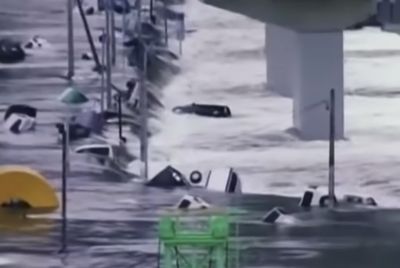
The epicenter lies in a seismically active region along the Japan Trench, where the Pacific Plate subducts beneath the North American Plate. This zone produced the devastating 2011 Tohoku earthquake and tsunami, which killed nearly 20,000 people and triggered the Fukushima nuclear disaster. Monday's event revived painful memories for many survivors, though officials stressed that initial reports indicated no immediate threat to nuclear facilities.
As of early evening local time, no major injuries or widespread structural damage had been confirmed, but assessments were ongoing. Strong shaking registered upper 5 on Japan's seismic intensity scale in parts of Iwate and Aomori, enough to cause furniture to topple and potentially crack walls in older buildings. Transportation services, including some bullet train lines in northern Japan, were temporarily suspended for safety checks.
Japan's rigorous building codes, updated after the 2011 disaster, are designed to withstand major quakes, but coastal infrastructure remains vulnerable to tsunami inundation. Authorities issued tsunami advisories for additional areas along the eastern coastline, forecasting smaller waves of up to 1 meter in some locations.
The Pacific Tsunami Warning Center and U.S. Tsunami Warning System also issued alerts, noting the potential for hazardous waves within 1,000 kilometers of the epicenter, though impacts beyond Japan were not expected to be significant.
Live camera feeds from the northeast coast showed relatively calm seas in the immediate aftermath, but officials warned that the first waves are not always the largest. "Tsunamis can continue for hours, and subsequent waves may be larger," the meteorological agency cautioned.
Residents in low-lying areas of Miyako, Kuji and other coastal towns described the initial shaking as intense and prolonged. "It felt like the ground was rolling," one resident told NHK. Social media filled with videos of swaying chandeliers, falling objects and people calmly but quickly heading to designated evacuation points.
Japan sits on the Pacific Ring of Fire and experiences thousands of earthquakes annually. Most are minor, but the country maintains one of the world's most advanced early warning systems. Monday's alert was triggered within seconds of the quake's detection, giving coastal communities precious minutes to move to safety.
The event comes amid heightened global awareness of seismic risks. Scientists have long warned that the Sanriku coast remains prone to large undersea quakes. Monday's tremor occurred at a shallow depth, increasing the likelihood of tsunami generation compared with deeper events.
No immediate reports of damage to ports, roads or homes emerged in the first hours, but full damage surveys could take days, especially if tsunami waves complicate access to affected zones. Emergency teams prepared for possible landslides in mountainous inland areas shaken by the quake.
International leaders and organizations expressed solidarity. The White House and several Pacific nations monitoring the situation offered assistance if requested. Japan's Self-Defense Forces stood ready to support local authorities with rescue and relief operations.
For many Japanese, the quake served as a sobering reminder of the nation's constant seismic vulnerability. Schools and workplaces conducted regular drills, and most citizens keep emergency kits with water, food and flashlights. Monday's event tested that preparedness once again.
As night fell over northern Japan, authorities continued to monitor sea levels and aftershock activity. Seismologists expect numerous aftershocks in the coming days and weeks, some of which could be strong enough to cause additional concern.
The meteorological agency said the tsunami warning would remain in effect until wave risks subside, potentially for several hours. Residents were advised not to return to coastal areas even after initial waves pass, as dangerous currents and further surges remain possible.
In Tokyo and other unaffected regions, daily life continued with minimal disruption, though many checked news updates and contacted relatives in the north. Stock markets showed little immediate reaction, reflecting confidence in Japan's disaster resilience infrastructure.
This latest event underscores the importance of ongoing investment in earthquake and tsunami preparedness. Since 2011, Japan has reinforced seawalls, improved warning technology and educated the public on evacuation routes. Monday's response demonstrated those systems functioning as designed, even as the full outcome depends on how high the waves ultimately reach.
As assessments continue, officials emphasize calm and adherence to instructions. For coastal communities in Iwate, Hokkaido and Aomori, the hours ahead will determine whether this strong offshore quake passes with limited impact or delivers a more serious blow.
Japan's resilience in the face of natural disasters has been hard-earned. While the immediate threat focuses on tsunami waves, the broader story remains one of a nation perpetually preparing for the next major seismic event along its volatile tectonic boundaries.
Live updates from the coastline and official channels will continue to shape the evolving picture. For now, the priority remains clear: safety first, with evacuation and higher ground offering the best protection against the unpredictable power of the sea.
© Copyright 2026 IBTimes AU. All rights reserved.
- Recommended For You