Xiaomi Sky Nomad N70 SUV Preview: Everything We Know About Its Dimensions, Range and Powertrain Setup
Xiaomi's Sky Nomad N70 SUV Debuts with Innovative Extended-Range Electric Powertrain

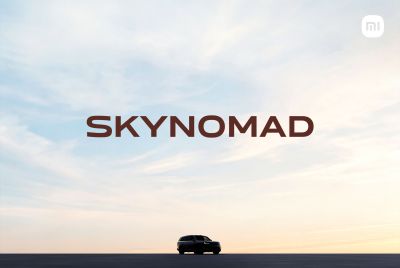
Xiaomi is preparing to unveil its Sky Nomad N70, a new mid-to-large SUV that marks the technology company's entry into the extended-range electric vehicle segment, at a launch event scheduled for Thursday in China. Because the vehicle has not yet made its public debut, the details available so far come from Chinese regulatory filings and preliminary reporting rather than hands-on testing, meaning a full road-test review remains weeks or months away.
The N70 will be positioned as the smaller of two new models in Xiaomi's Sky Nomad lineup, sitting below the larger, three-row N90 in the automaker's expanding SUV portfolio. According to filings submitted to China's Ministry of Industry and Information Technology, the N70 measures 4,960 millimeters in length, 1,998 millimeters in width and 1,785 millimeters in height, riding on a 2,950-millimeter wheelbase. In imperial terms, that translates to roughly 195.3 inches long, 78.7 inches wide and 70.3 inches tall, making the N70 nearly four inches longer than a Mercedes-Benz EQE SUV, according to comparisons drawn from the regulatory specifications.
Unlike Xiaomi's existing SU7 sedan and YU7 crossover, which are fully electric vehicles, the Sky Nomad series will use an extended-range electric powertrain, commonly abbreviated as EREV, in which a gasoline engine functions primarily as an onboard generator to recharge the battery rather than directly powering the wheels. The N70 will be equipped with a 1.5-liter turbocharged engine built by Harbin Dongan Power, producing a maximum output of 112 kilowatts, according to the regulatory filing.
Powertrain configurations will vary by trim level. The entry-level N70 will come as a rear-wheel-drive variant equipped with a single 210-kilowatt electric motor. The higher-spec N70 Max variant will add a second 100-kilowatt motor on the front axle, bringing total system output to 310 kilowatts, or roughly 416 horsepower, and enabling all-wheel drive. Battery options for the N70 lineup include both ternary lithium-ion cells supplied by CALB, or China Aviation Lithium Battery, and lithium iron phosphate cells supplied by Sunwoda, giving buyers a choice between different battery chemistries depending on trim and configuration.
According to the most recent reporting on the vehicle's specifications, the top battery option for the N70 Max will offer 76 kilowatt-hours of capacity, providing an electric-only driving range of up to 505 kilometers on China's CLTC testing cycle, or approximately 380 kilometers under the stricter WLTP testing standard used in parts of Europe and elsewhere. When the gasoline generator engine is actively running to recharge the battery, fuel consumption for the N70 Max is expected to rise to approximately 6.2 liters per 100 kilometers, according to preliminary specifications.
The N70 will seat five passengers in a standard configuration, distinguishing it from the larger N90, which will be offered in both five- and seven-seat layouts and includes a more elaborate reconfigurable interior featuring front seats that can rotate 180 degrees to face rearward when the vehicle is parked. Exterior design elements shared across both Sky Nomad models include large headlights, semi-hidden door handles, a roof-mounted LiDAR sensor to support driver-assistance systems, and a ring-shaped taillight design. The N70 will also feature electrically powered side steps as standard equipment, according to the regulatory filing.
Xiaomi founder, chairman and chief executive Lei Jun has said the Sky Nomad series took roughly three and a half years to develop, describing the goal of the project as creating vehicles that function as a "living space" rather than purely as transportation. The series is built on what Xiaomi calls its Kunlun Architecture, a platform developed from the ground up beginning in early 2023 specifically to enable the flexible, reconfigurable cabin layouts featured across the lineup.
Thursday's event is expected to function primarily as a technology showcase rather than a full commercial launch, according to preliminary reporting on the event's scope. Pricing and specific on-sale dates for the N70 have not yet been officially announced by Xiaomi. Local Chinese media reports have previously suggested that pricing for the broader Sky Nomad series could start around 200,000 yuan, or roughly $29,000, which would position the lineup in direct competition with extended-range SUVs from Li Auto and Huawei-backed Aito, two of the dominant players in China's current EREV segment.
The N70's arrival comes at a challenging moment for the extended-range electric vehicle category in China more broadly. Sales of EREV models fell an estimated 25% to 28% year over year in May 2026, with the segment's overall share of China's new-energy-vehicle market dropping to roughly 7%, as fully electric vehicles with improving battery ranges of 600 to 700 kilometers on the CLTC cycle have narrowed the traditional range advantage that extended-range vehicles have historically offered consumers.
The Sky Nomad series represents Xiaomi Auto's second distinct vehicle lineup, alongside its existing SU7 and YU7 electric models, as the company works toward its full-year 2026 delivery target of 550,000 vehicles, a goal that would represent growth of approximately 34% over the roughly 410,000 vehicles the company delivered in 2025. Xiaomi delivered a cumulative 185,055 vehicles during the first half of 2026, putting the company on pace to complete roughly 34% of its annual target at the midpoint of the year, according to company figures.
A hands-on assessment of how the N70 performs on the road, including its handling, ride comfort, interior build quality and real-world range, will only become possible once the vehicle becomes available for test drives following Thursday's event and any subsequent formal sales launch.
© Copyright 2026 IBTimes AU. All rights reserved.
- Recommended For You