

Lamborghini Unveils the Urus SE Performante Hybrid SUV and Calls It the Fastest Super SUV in the World
Lamborghini's strategic shift to plug-in hybrid technology with the Urus SE Performante marks a defining moment for the brand.
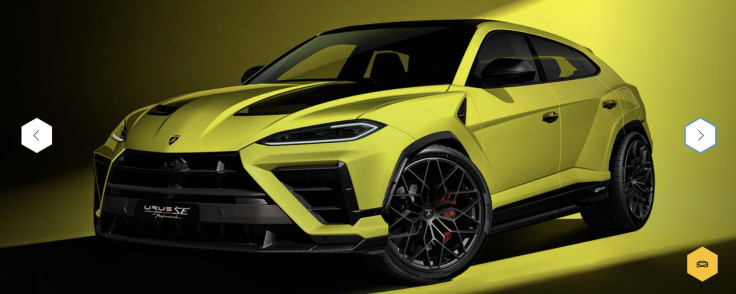
MILAN — Lamborghini revealed a new high-performance hybrid version of its best-selling Urus SUV Wednesday, calling the vehicle the fastest super SUV in the world and cementing the Italian automaker's strategic bet on plug-in hybrid technology over the all-electric future it briefly considered before abandoning earlier this year.
The Urus SE Performante is a plug-in hybrid electric vehicle combining a 4-liter twin-turbocharged V-8 gasoline engine with an electric motor to produce 812 horsepower and approximately 738 foot-pounds of torque. Lamborghini says the combination accelerates from zero to 100 kilometers per hour, roughly equivalent to zero to 60 miles per hour, in 3.3 seconds and achieves a top speed of 312 kilometers per hour, or 194 miles per hour, figures the company says justify its "fastest super SUV" claim.
Lamborghini Chief Executive Stephan Winkelmann framed the new model as a defining moment for the brand.
"It is very important. It's a game changer," Winkelmann told CNBC in an interview accompanying the reveal.
The Performante designation signals that this is not simply a refreshed Urus with modest upgrades but a more aggressive, track-informed variant of the vehicle. The exterior reflects that intent, with a larger grille and hood scoops that distinguish it visually from the standard Urus SE lineup, alongside interior improvements that Lamborghini said will be detailed closer to the vehicle's U.S. market arrival. The company declined to specify pricing for the Performante at this stage, pointing to closer alignment with the American market launch as the appropriate moment for that disclosure. The base 2026 Urus SE starts at approximately $250,000 to $280,000 depending on configuration, providing a rough baseline from which the Performante's premium can be estimated.
The Urus has been the commercial engine of Lamborghini's modern success since its introduction nearly a decade ago. Winkelmann said the model represents approximately 50% of the brand's global sales annually, with total Lamborghini deliveries nearing 11,000 vehicles last year. That commercial weight makes every iteration of the Urus a strategically significant decision for a company that remains small by automotive industry standards but generates revenues entirely disproportionate to its unit volume.
The new Performante arrives against the backdrop of a significant strategic pivot Lamborghini announced in March, when Winkelmann confirmed the company was abandoning its previously stated plans for a fully electric model. The reversal came after Lamborghini assessed customer sentiment and concluded that demand for a pure electric Lamborghini among its target buyers was not materializing at the pace the company had initially anticipated.
"By observing the market ... we saw that the acceptance curve of EVs for our type of customers is not increasing, and that therefore we decided to move away from a full-electric car into a plug-in hybrid," Winkelmann said in a previous interview.
Wednesday's Urus SE Performante reveal translates that strategic position into a specific product. Lamborghini is not simply walking away from electrification; it is choosing a form of electrification, the plug-in hybrid architecture, that it believes better suits both the performance expectations and the purchasing preferences of the ultra-luxury SUV buyer. The plug-in hybrid format preserves the visceral qualities of a high-displacement combustion engine while layering electric motor torque on top to improve both performance and, in lower-demand scenarios, efficiency. For a customer spending a quarter of a million dollars on an SUV, the argument is that a PHEV delivers the best of both worlds without forcing a compromise that a purely electric powertrain would require in the form of charging infrastructure, range anxiety or the absence of the combustion soundtrack that defines much of the Lamborghini ownership experience.
Winkelmann was careful when asked whether Lamborghini might eventually return to gasoline-only powertrains, declining to rule out the possibility in a characteristically measured response.
"Never say never," he said when the question was put to him directly.
The Lamborghini announcement arrived shortly after rival Ferrari drew intense public criticism for the reveal of its first fully electric vehicle, the Ferrari Luce, in late May. The Luce's reception was described as backlash-heavy, with a segment of Ferrari's enthusiast community expressing vocal opposition to an electric vehicle from a brand historically defined by its naturally aspirated engine sounds and driving character. Winkelmann declined to comment directly on the Luce or the reaction it received when asked previously, but offered a broader perspective on the philosophy behind Lamborghini's own approach.
"Innovation is paramount to success," Winkelmann said. However, he added a qualification that implicitly addressed the controversy surrounding Ferrari's EV: innovation should not be made for innovation's sake or forced upon customers against their preferences.
Lamborghini is a subsidiary of Volkswagen AG, the German automaker that also controls Audi, Porsche and Bentley, among other brands. The broader Volkswagen Group has been navigating its own complex relationship with electrification across its various marques, with some brands pushing aggressively toward EV lineups while others, including Porsche, have sought to maintain hybrid options alongside expanding battery-electric ranges. Lamborghini's EV pullback reflects the reality that the ultra-luxury end of the automotive market has behaved differently from the broader industry in its adoption of electric vehicles, with buyers at the extreme high end of the price spectrum showing greater resistance to the transition than some analysts had predicted when the EV investment wave peaked several years ago.
For now, Lamborghini's roadmap is clearly focused on extracting maximum performance from the hybrid architecture while preserving the brand's identity as a builder of viscerally exciting, extreme-performance vehicles. The Urus SE Performante, with its 812-horsepower output, 3.3-second sprint capability and 194-mile-per-hour ceiling, represents the current apex of that strategy, offering performance numbers that would have been considered extraordinary from any vehicle in any category just a few years ago.
Pricing and a formal U.S. launch timeline for the Urus SE Performante are expected to be announced closer to the vehicle's arrival at American dealerships.
© Copyright 2026 IBTimes AU. All rights reserved.