Audi Unveils Flagship Q9 Three-Row SUV to Take On BMW X7 and Mercedes GLS Amid Steep US Sales Slump
Audi's Q9 SUV challenges luxury rivals with innovative features and design

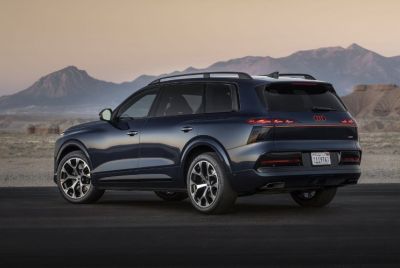
Audi officially revealed its new flagship SUV, the Q9, on Tuesday, marking the German automaker's first serious entry into the largest tier of the three-row luxury SUV market and its most direct challenge yet to established rivals like the BMW X7 and Mercedes-Benz GLS.
The Q9 is positioned above the existing Q8 as Audi's new range-topping vehicle, spiritually succeeding the long-running A8 sedan as the brand's flagship model. The move reflects a broader industry shift away from large luxury sedans and toward full-size SUVs, a category that has continued growing even as sedan sales have steadily declined across the premium segment.
Built on Audi's new Premium Platform Combustion architecture, the Q9 measures 209 inches in length and rides on a 123.5-inch wheelbase, dimensions that place it firmly in the same class as the biggest three-row SUVs on the market, including the BMW X7, Mercedes-Benz GLS, Cadillac Escalade, Lincoln Navigator, Lexus TX and Land Rover Range Rover. Compared with the redesigned Q7, which is also arriving as a 2027 model, the Q9's wheelbase stretches five inches longer, its overall length extends by 10 inches, and it offers four additional cubic feet of cargo space behind a raised third row.
Audi is offering the Q9 with a choice of two powertrains at launch. The standard version uses a 2.9-liter twin-turbocharged V6 producing 429 horsepower, while a high-performance SQ9 variant is powered by a 4.0-liter twin-turbocharged V8 generating 591 horsepower, paired with a rear-biased all-wheel-drive system, staggered-width wheels and an air suspension setup. Both versions use an eight-speed automatic transmission. Given the SUV's substantial curb weight, listed at 5,302 pounds for the standard Q9 and 5,556 pounds for the SQ9, the vehicles are built primarily for comfort and capability rather than sharp, sporty handling.
The Q9's exterior design carries Audi's familiar visual language scaled up to a larger footprint, with a muscular but understated look that the brand has aimed to distinguish from what some reviewers have described as the visually heavy proportions of certain rival full-size SUVs. Inside, the Q9 introduces what Audi calls a "Digital Stage" asymmetric dashboard layout, featuring an 11.9-inch driver display, a 14.5-inch central MMI touchscreen and a separate 10.9-inch passenger display.
Notable features highlighted at the reveal include automatic doors that can be operated remotely through a smartphone app, Audi's largest panoramic sunroof to date, curved digital taillights, power-adjustable second-row seats and a ChatGPT-powered voice assistant integrated into the vehicle's infotainment system. The Q9 also offers a hands-free driver assistance system.
Karl Brauer, executive analyst at automotive research firm iSeeCars, said the Q9 represents an unusually feature-rich offering even by Audi's own standards. "This one's going to have some real decadent features, I would almost say, like power opening doors and crazy interior materials, even by Audi standards," Brauer said.
Pricing for the Q9 has not yet been officially confirmed, though industry estimates place the starting price in the range of $87,700 to $118,000 depending on trim and configuration, according to preliminary reporting ahead of the reveal. The vehicle is expected to reach U.S. dealerships by the end of 2026, with Consumer Reports saying it plans to purchase a Q9 anonymously as soon as it becomes available in order to run the vehicle through its standard testing program.
The Q9's arrival comes at a difficult moment for Audi in the U.S. market. The company's American sales fell 16% in 2025 compared with the previous year, and that decline has continued into 2026, with sales down 17% during the first six months of the year compared with the same period in 2025. The first quarter of 2026 was particularly severe, with sales dropping 30% year-over-year. Audi has attributed much of the decline to the impact of tariffs on imported vehicles and to the expiration of federal electric vehicle tax incentives, which had previously driven a temporary spike in the brand's EV sales before that demand fell off sharply once the credits lapsed.
An Audi executive speaking about the Q9's potential impact on the brand's fortunes framed the new SUV as an opportunity to reverse the company's recent struggles. "It's always amazed me how one home run with a given brand can make really all the difference," the executive said.
Industry analysts have noted that the Q9 essentially serves as a stretched, more heavily equipped version of the redesigned Q7, sharing the same underlying platform, similar cabin architecture from the front seats forward, and comparable powertrain options. That overlap raises questions about whether the roughly $17,000 price premium the Q9 is expected to command over an equivalently equipped Q7 will be enough to justify the larger vehicle's added size and features for cross-shopping buyers, and whether the Q9 can convincingly match the biggest established players in the segment on their own terms.
Audi has framed the Q9 as a necessary strategic move given the state of the broader luxury vehicle market, where big sedans continue to lose favor and full-size SUVs remain one of the most profitable and fastest-growing segments among premium buyers. With competition intensifying not only from German rivals but also from American and Japanese luxury brands expanding their own full-size SUV offerings, the success of the Q9 is likely to play a significant role in determining whether Audi can stabilize its U.S. sales trajectory in the coming year.
© Copyright 2026 IBTimes AU. All rights reserved.
- Recommended For You