Honda CB1000 Hornet SP 2026 Review: A 155-Horsepower Naked Bike Priced Well Below Its Closest Rivals
Discover the 2026 CB1000 Hornet SP, Honda's latest naked bike offering superbike performance at an unbeatable price.

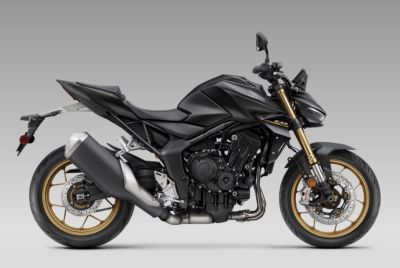
Honda's 2026 CB1000 Hornet SP has landed in dealerships as one of the most closely watched naked-bike releases of the year, pairing a superbike-derived engine and premium suspension components with a price tag that undercuts most of its open-class rivals by a significant margin.
The Hornet SP carries a base MSRP of $10,999 in the United States, plus a $775 destination charge, positioning it well below other liter-class naked bikes that typically start several thousand dollars higher. Reviewers who have tested the bike say that pricing, combined with a spec sheet that includes fully adjustable suspension and Brembo brakes as standard equipment, makes the Hornet SP one of the strongest value propositions in the segment.
At the heart of the bike is a 999cc liquid-cooled inline-four engine derived from Honda's CBR1000RR Fireblade sport bike, but retuned specifically for naked-bike duty. Honda says the engineering team prioritized midrange drive and flexibility over outright peak numbers, aiming for an engine better suited to street riding than one built purely to chase lap times. The result, according to Australian outlet Bike Review, is a powerplant that produces a claimed 115.5 kilowatts, or roughly 154.8 horsepower, at 11,000 rpm, along with 106 to 107 newton-meters of torque peaking at 9,000 rpm.
The SP designation bundles in a set of components that would typically be optional extras or reserved for a pricier trim on other motorcycles. The bike rides on a 41mm inverted Showa SFF-BP front fork, fully adjustable for spring preload, compression and rebound damping. At the rear, market specifications vary: U.S.-spec models pair the front end with a Pro-Link Öhlins single shock, while other markets, including Australia, receive a Showa unit at both ends. Braking comes courtesy of four-piston Brembo Stylema front calipers paired with a radial-mount Brembo master cylinder, hardware more commonly associated with premium sport bikes than mainstream naked bikes at this price point.
Reviewers who tested the Hornet SP on the road were largely positive about how those components translate into real-world handling. Writing for Bike Review, one tester said the bike's cornering composure stood out during aggressive riding, noting it as one of the best-handling naked sport bikes they had ridden in some time. The same review praised the throttle response and overall engine character once the bike is pushed beyond city-speed riding, describing the powerplant as central to Honda's broader reputation for engine engineering.
Not every aspect of the bike drew universal praise. Multiple reviewers flagged snatchy low-speed throttle response as a minor annoyance in stop-and-go traffic, and Bike Review's tester also criticized the layout of the bike's switchgear, noting that the placement of the horn and indicator buttons ran counter to muscle memory and led to repeated accidental horn presses. A menu toggle used to navigate the bike's electronic rider aids was also described as fiddly to operate while riding.
On the technology front, the Hornet SP includes Honda Selectable Torque Control, the company's traction-control system, alongside a throttle-by-wire setup that offers five riding modes: Standard, Sport, Rain and two customizable user-defined settings that riders can tailor and save. A quickshifter, allowing clutchless upshifts and downshifts, comes standard as part of the SP package rather than as a paid add-on.
Styling has proven more divisive among reviewers than the bike's mechanical performance. In the U.S. market, the Hornet SP is offered exclusively in a Matte Ballistic Black Metallic finish with gold accents marking it as the SP variant, a look one American reviewer for RideApart described as understated to the point of being unremarkable on the street, joking that the bike wouldn't turn heads the way some naked-bike rivals do. That same review highlighted the bike's notably quiet exhaust note at idle, attributing it to emissions equipment mounted beneath the engine, and said the bike felt almost electric-like when stationary.
The Hornet nameplate carries a long history at Honda dating back to the 599 and 919 models sold in earlier decades, both of which were discontinued in the U.S. market by the mid-2010s. The nameplate disappeared from the American market for years before returning as part of a broader naked-bike lineup that now includes the smaller CB750 Hornet, which was also updated for the 2026 model year with the addition of Honda's E-Clutch technology, a system that allows clutchless shifting without a conventional clutch lever.
The Hornet SP weighs approximately 212 kilograms, or about 467 pounds, fully fueled and ready to ride, with a seat height of 809 millimeters, or roughly 31.85 inches, making it accessible to a wide range of rider heights. Honda lists a top speed of approximately 250 kilometers per hour, or about 155 miles per hour, for the model.
With the 2026 lineup now arriving at dealerships, the Hornet SP is expected to compete directly against naked-bike offerings from Kawasaki, Yamaha, Suzuki and KTM, several of which carry noticeably higher starting prices despite comparable performance specifications, a gap reviewers say could make the Hornet SP one of the more compelling value picks in the open-class naked-bike category this year.
© Copyright 2026 IBTimes AU. All rights reserved.
- Recommended For You