$593 Billion Will Be Bet on the World Cup, and Most of It Is Going to Crime, Expert Warns
A staggering $593 billion expected to be wagered, with 69% through unregulated channels

More than half a trillion dollars will be wagered on the 2026 World Cup, and much of it will flow through unlicensed crypto operators, according to Gaming Compliance International, a fintech compliance firm that has spent months tracking the money expected to move through the tournament.
A Half-Trillion-Dollar Betting Event
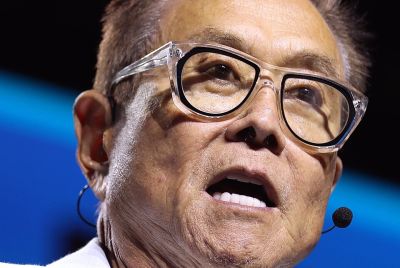
"Conservatively, we're looking at $593 billion. So this is an over half a trillion dollar betting event," Ismail Vali said on the first morning of the 2026 World Cup. "This will be bigger than anything we've seen before."
Vali is the president of Gaming Compliance International. "The World Cup, along with the Super Bowl, is one of these events that basically changes audiences, changes marketplaces completely," Vali said on the On The Margin podcast. "You're looking at the World Cup, the biggest tournament sports betting event."
A Lopsided Split Toward Unregulated Books
The split is the part that should sting. "Regulated's coming in at around 31%," Vali said. "Unregulated and unacknowledged, 69%. So that 69% is worth $409 billion."
That $593 billion is wagering value, not losses. It reflects what Americans call handle: every dollar staked, including the same dollars bet, won, and bet again. "Obviously with gambling, you win money, you play it back again. That's the point," Vali said. The money that actually stays with a bookmaker typically runs at less than a 10% margin on that headline figure.
A Global Pattern Favoring Unregulated Operators
The imbalance extends well beyond the World Cup itself. By Vali's count, unregulated gambling is now worth $5.9 trillion a year in global staking — a figure larger than the GDP of every country except the United States and China. "Every online marketplace is basically running at around an 80-20 split," he said. "80% of the marketplace goes to unregulated operators, 20% goes to the regulated." Even Britain, long held up as the regulatory model, has slipped to 90-10, with unregulated books taking a double-digit share of that market for the first time.
"How do you provide for fairness and safety," Vali asked, "when so much of the business in the marketplace has already gone and been possessed by crime?" Crypto rails have already fed a $67 billion shadow betting economy in the United States alone, and the World Cup feeds it further.
Why Vali Calls It the "World Cup of Crime"
Hosting across three countries presents three legal gambling regimes, all leaking revenue. The United States has legal sports betting in 31 states and a full casino-and-sportsbook offer in only seven. "You grafted a legal business on top of an illegally dominated marketplace," Vali said. Canada has competitive licensing in Ontario and government monopolies almost everywhere else. Mexico recently floated higher taxes on licensed operators, "which has led to a resurgence of the black market."
"You've got a World Cup here which you could convincingly call the World Cup of Crime in those countries," Vali said, "because all of those marketplaces are hemorrhaging business to the unregulated and unacknowledged gambling sectors right now."
The pressure point is sharpest in America. If the United States performs well, the fans most likely to start betting live in its two most populous states, California and Texas, neither of which has legal sports betting at all. "What's the customer's option?" Vali asked. "They will go online, on Instagram and Facebook and Google, and what will they find? They will find unregulated, illicit gambling, and that's what they will play with."
Illegal Streaming as the Gateway
The fastest on-ramp into that marketplace is free streaming. "FIFA is definitely in the betting business, and have been interested for years," Vali said, noting the organization licensed broadcast rights to legal gambling brands for the first time this year. "What do you think unregulated brands are doing, however? They have been providing live streaming and in-vision betting for years. All that FIFA are doing now is playing catch-up with a practice developed by the unregulated sector."
Vali traced the pairing of illegal streaming and illegal gambling to a specific moment. The two "formed a dark nexus in 2020, right at the height of pandemic, when there was no professional sport," he said, and never broke it. "Behind 85-90% plus of illegal streaming of sports events, who's behind it? Illegal gambling, because they know they can acquire customers from that content extremely quickly."
He described the technical risks lurking behind those streams in stark terms. "Behind most illegal streams, more than 80% of illegal streaming features malware, spyware, keystroke logging," along with background processes including "illegal Bitcoin mining, child sexual abuse material storage, whole bunch of stuff you don't want to know about. But it's now in your machine, on your profile." "If you don't pay for a product, you are the product. It's that simple," he said. "You are not saving money by using illegal streaming. You are making yourself a victim of crime, you just don't know it yet."
The Prediction-Market Loophole
Vali reserved particular concern for prediction markets, a category his firm classifies as unacknowledged gambling outside the United States, even as the Commodity Futures Trading Commission treats them as financial derivatives within it. That regulatory carve-out lets the products compete with licensed sportsbooks while sitting outside gambling oversight, with roughly 90% of volume on venues like Kalshi now tied to sports.
"The genie's out of the bottle, and you're not putting this one back in quickly, if at all," Vali said, noting Brazil has banned the products outright.
Vali pointed to a specific case as illustrative of the integrity risks the products create. A U.S. service member bet on a Polymarket market tied to a raid he allegedly took part in, a strike to capture Venezuela's Maduro. "He bet on himself, and now he's being investigated for insider trading," Vali said. "But that's only because somebody pulled up in a US magazine to say somebody made nearly half a million bucks. It's one person. We are probably looking at a river of unacknowledged gambling here that's creating a whole bunch of integrity issues that we have no control over whatsoever."
Analyst Ryan Kirkley raised similar concerns on an earlier episode of the same podcast, describing what he observed while watching geopolitical prediction markets during the Iran conflict. "This has just become a breeding ground for insiders to extract from everyday citizens," Kirkley said. "You are no longer betting against free and fair information. You are betting against the insiders. And your only job as a Polymarket trader now is to identify the insider as quickly as possible and follow their trade."
Targeting the Most Vulnerable
Vali argued that public debate over gambling advertising misses the bigger threat. "We are drowning in criminal control right now," he said. "Who is really targeting your children and your most vulnerable in societies? The ones who are on self-exclusion schemes, people who've excluded from gambling altogether."
He described an influencer-driven acquisition machine fueling that targeting. "Influencers are selling their souls to gambling companies, and I understand why, because illegal gambling companies in particular are offering them so much money," Vali said, citing offers of "$10,000 a day." He acknowledged his own past involvement in similar promotional work earlier in his career. "If I could hire a celebrity and use their face and name to promote some gambling, I did it," he said. "I'm as guilty of it as anybody else."
Vali also flagged TikTok's live-gifting contests as "probably one of the largest unacknowledged gambling platforms in the world right now," citing a viewer who "lost her life savings in two weeks" — a quarter of a million dollars spent on virtual roses for an on-screen favorite. "You have stake, uncertainty, reward. All those elements of gambling are still there with those contests," he said.
Caron Treatment Centers, one of the largest U.S. addiction-treatment organizations, has flagged the expanded tournament as a relapse risk, warning that the frequency of betting opportunities across a month of near-continuous matches makes the World Cup dangerous for people in recovery and for first-time bettors who do not yet know the warning signs.
A Record Year, by Design
"2026 will be a record year in gambling," Vali said, noting that illegal staking grew 12% during the prior tournament summer in 2024 and 4% in quieter 2025. He expects double-digit growth again this year, arguing the customer acquisition model is built for long-term retention rather than a single event. "It's in the interest of an unregulated gambling company to make sure they let you bet as much as possible on the World Cup, that you even win money from them," he said, "but they'll make sure you give them that money back and then some, because they will cross-sell you into other products." The plan, in his words, is to "bleed those customers out all the way into 2027."
Vali's Own Pick — and His Final Verdict
Vali does not bet himself, but he offered a pick for the tournament's outright winner. "I'm going to go with Spain," he said. On who wins the tournament's real economy, he was blunt. Across market share, tax capture, and consumer protection, "the biggest beneficiary remains unregulated gambling," he said. "Who benefits from this World Cup? It will be crime, and it will be unregulated gambling."
A Sensitive Topic Worth Flagging
This piece touches on gambling addiction and financial loss. If you or someone you know is struggling with gambling, the National Council on Problem Gambling operates a confidential helpline at 1-800-522-4700.
© Copyright 2026 IBTimes AU. All rights reserved.
- Recommended For You