Land Rover Unveils Road-Legal Defender Dakar SUV With 626 Horsepower V8 Rally Pedigree
Limited-run Defender Dakar brings rally engineering to public roads
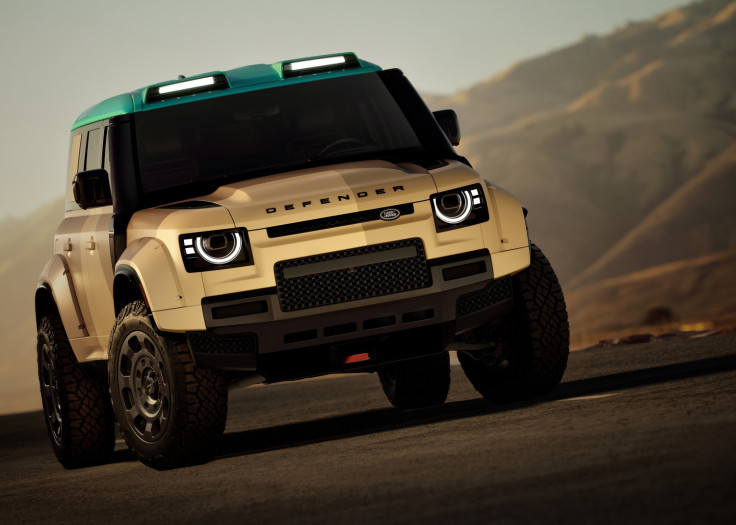
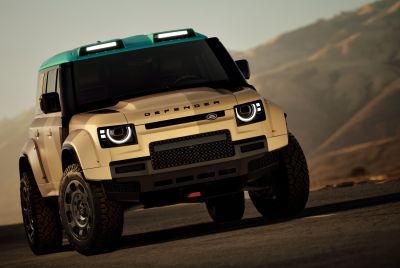
Land Rover unveiled a road-legal version of its Dakar Rally-winning race vehicle this week, revealing the Defender Dakar during Monterey Car Week festivities in California, a limited-run SUV that carries over much of the engineering from the company's competition-class rally car directly onto public roads.
The Defender Dakar is built as a production evolution of the Defender D7X-R, the race vehicle Land Rover fielded in the Stock class of the 2026 Dakar Rally earlier this year. That rally effort proved highly successful, with Land Rover's three-car team finishing first, second and fourth in class on the marque's Dakar debut, sweeping every stage podium position across 10 of the rally's 13 stages. Drivers Rokas Baciuška and Oriol Vidal claimed the Stock-class victory for the team.
Mark Cameron, managing director for Defender, said the road-going Defender Dakar was designed to channel that competition pedigree directly into a vehicle customers can drive on public streets. "It's the ultimate expression of adventure and is a true reflection of how we embrace the impossible," Cameron said, describing the new model as an embodiment of both the Defender rally team's spirit and the brand's broader history of off-road engineering.
Mechanically, the Defender Dakar retains the same body structure, transmission and driveline as its Dakar-winning counterpart. Both vehicles are built on a foundation derived from the range-topping Defender Octa, and both are powered by a 4.4-liter twin-turbocharged V8 engine sourced from BMW. Because the road-going version is not bound by motorsport regulations that limited the race car's output, Land Rover was able to unlock significantly more power for the production model, with the Defender Dakar producing 626 horsepower and 553 pound-feet of torque, an increase over the roughly 394 horsepower the competition version was permitted to run under Dakar's Stock-class rules. Power is sent to all four wheels through an eight-speed automatic transmission.
The Defender Dakar rides on 35-inch all-terrain tires mounted to forged 20-inch wheels, with a widened track, raised ride height and rally-tuned suspension featuring motorsport-style dampers, all changes intended to further enhance the vehicle's off-road capability beyond even the already highly capable standard Defender Octa. Beyond the Octa's existing drive modes, the Defender Dakar adds dedicated settings for dunes and gravel terrain, along with a "Flight Mode" carried over directly from the competition car, which Land Rover says is designed to help ensure smoother landings when the vehicle catches air over rough or uneven terrain.
Visually, the Defender Dakar incorporates a range of rally-inspired design elements, including roof-mounted light pods, a fixed metal roof, carbon-fiber trim across the hood and air intakes, exposed rivets along extended wheel arches, additional underbody protection, and a blanking plate covering the tailgate area where a spare wheel would normally be mounted, mirroring the rally car's own design. Buyers will be able to specify the same sand-colored body paired with a turquoise roof used in the D7X-R's competition livery, along with other color options.
Inside, the cabin adopts what Land Rover has described as a "tough luxury" aesthetic, featuring a 2+2 seating layout with dedicated racing bucket seats up front designed specifically for the Defender Dakar. Buyers will be able to option four-point racing harnesses and a rear storage area intended for stowing helmets, details drawn directly from the vehicle's motorsport origins, even though the production version omits certain full-race features found in the D7X-R itself, such as a complete roll cage, perspex windows and built-in intercom systems.
Land Rover has not yet disclosed pricing or confirmed exactly how many units of the Defender Dakar it plans to build, though the model is being positioned as a limited-run offering. The company has said reservations for the vehicle will open in early 2027, with additional technical details expected to be released around the same time as the 2027 Dakar Rally. Given that the Defender Dakar sits above the already premium Defender Octa, which starts at £147,245 in the United Kingdom, industry analysts expect the new model's pricing to land meaningfully higher once officially announced.
The Defender Dakar's debut adds to a broader wave of high-performance, motorsport-inspired production vehicles unveiled during this year's Monterey Car Week, with automakers increasingly using the event to showcase halo models that translate racing technology directly into limited-edition road cars aimed at enthusiast buyers and collectors.
With full specifications and pricing still to come, the Defender Dakar's reveal at this stage functions primarily as a statement of intent from Land Rover, signaling the brand's ambition to more directly connect its Dakar Rally success with a tangible, road-legal product for customers, even as many of the finer production details remain to be finalized ahead of the vehicle's planned 2027 arrival.
© Copyright 2026 IBTimes AU. All rights reserved.
- Recommended For You