(VIDEO) Tim Cook's Final WWDC Keynote: Apple Focuses on AI Upgrades and Software Innovations in 2026
Apple's 2026 WWDC highlights AI advancements and Tim Cook's final keynote as CEO.

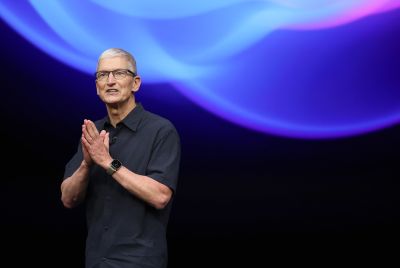
CUPERTINO, Calif. — Apple Inc. CEO Tim Cook opened the 2026 Worldwide Developers Conference on Monday with a keynote address that placed artificial intelligence and the next generation of software updates at the center of the company's strategy, marking his final appearance in that role before stepping down later this year.
The event, running June 8-12 at Apple's headquarters, drew developers, investors and technology observers eager for details on advancements across iOS, macOS, iPadOS, watchOS, tvOS and visionOS. Cook's keynote, beginning at 1 p.m. ET, set the tone for the week by emphasizing practical AI integration and ecosystem enhancements designed to strengthen Apple's position in an increasingly competitive landscape.
Apple has faced questions about the pace of its artificial intelligence rollout compared with rivals. The company introduced Apple Intelligence last year, featuring writing tools, image editing and Visual Intelligence capabilities. While these features have been well-received in targeted applications, analysts and users have called for more transformative advancements, particularly in the digital assistant Siri.
Monday's presentation is expected to preview a significantly upgraded Siri that leverages Google's Gemini AI models for enhanced conversational abilities and multi-step task handling. The assistant is anticipated to gain its own dedicated app and appear more prominently in the Dynamic Island on iPhones. Additional integrations, such as in the Camera app for quick information extraction from nutrition labels, aim to make Siri more proactive and useful in daily scenarios.
The keynote also highlighted broader software improvements. iOS updates are likely to focus on deeper Apple Intelligence integration, enhanced privacy controls and productivity features. macOS advancements may emphasize better cross-device continuity and AI-assisted workflows for creative professionals. Similar refinements are expected across other platforms, creating a more cohesive experience for users with multiple Apple devices.
For developers, the conference provides essential tools and APIs to build applications that leverage Apple Intelligence. More than 100 video sessions are scheduled throughout the week, offering technical deep dives and opportunities to explore new capabilities. The Platforms State of the Union, set for 4 p.m. ET, will offer a more detailed look at the technologies behind the keynote announcements.
Cook's appearance carried added significance as his final WWDC keynote as CEO. He is expected to transition to an expanded board role in early September, marking the end of an era that began when he succeeded Steve Jobs in 2011. Under Cook's leadership, Apple has grown into one of the world's most valuable companies, with a focus on services, ecosystem loyalty and privacy as core pillars.
Investor attention centered on whether Apple can demonstrate a clearer path for turning AI features into stronger iPhone demand and services revenue growth. Bernstein analyst Mark Newman recently noted that Apple Intelligence "presents a huge opportunity to reinvent the company, accelerate product replacement cycles, and drive increased services revenue."
Evercore ISI analyst Amit Daryanani echoed this view, stating that Apple's edge lies in its massive distribution network. "We don't think Apple needs to win the frontier-model race to monetize AI, but rather its edge is in distribution to a ~1.25B iPhone install base," he wrote.
Apple's deliberate approach to AI emphasizes on-device processing for privacy and efficiency. This strategy distinguishes it from cloud-heavy competitors but has also limited access to the most powerful frontier models, prompting partnerships such as the one with Google for Siri. The company has invested heavily in silicon development, data centers and machine learning talent to support its ambitions.
The event comes at a pivotal time for Apple. Shares have experienced mixed performance in 2026, reflecting concerns about AI leadership and slowing growth in core hardware segments. A compelling demonstration of progress could help reassure markets and re-accelerate device upgrade cycles.
WWDC serves as Apple's annual platform to regain narrative control in the AI conversation. By showcasing practical, user-focused applications rather than flashy demonstrations, the company aims to differentiate itself through seamless ecosystem experiences. The conference typically generates significant media coverage and social conversation, with live streaming available on Apple's website and YouTube.
For developers, the week offers hands-on sessions to explore new tools that enable third-party apps to leverage Apple Intelligence. This strategy allows Apple to extend its AI reach while maintaining control over the core user experience and privacy standards.
As the keynote concluded, attention shifted to the week's technical sessions and the potential for surprise announcements. Apple has a strong track record of using WWDC to introduce features that define the next era of its products. This year's focus on making Siri smarter and more capable represents another step in that tradition.
The Platforms State of the Union will provide developers with deeper insights into the tools and frameworks supporting the new features. This session often includes code examples, best practices and forward-looking roadmaps that help the developer community prepare for the fall software releases.
Apple's emphasis on responsible AI development, including transparency and user control, aligns with its longstanding privacy-first philosophy. The company has positioned its AI strategy as one that prioritizes user benefit and data protection over rapid feature expansion.
Investor reaction to the keynote will likely influence Apple's stock performance in the coming days. While the event is primarily developer-focused, its announcements often have immediate implications for product demand, services growth and competitive positioning.
As Cook prepares to step back from day-to-day leadership, the conference offers a platform to demonstrate the strength of Apple's innovation pipeline and the vision guiding its next chapter. The company's ability to translate its vast resources and engineering talent into compelling AI experiences will shape its trajectory for years to come.
WWDC 2026 arrives at a critical juncture for Apple. The tech giant's success in AI will influence not only its financial performance but also its cultural relevance in an industry increasingly defined by artificial intelligence capabilities.
The week ahead promises technical depth, strategic announcements and a glimpse into Apple's future. As developers and users digest the information, the focus will remain on how these updates translate into real-world benefits and whether they position Apple more competitively in the AI era.
© Copyright 2026 IBTimes AU. All rights reserved.
- Recommended For You