Sony Ends PlayStation Physical Game Discs Starting January 2028, Sparking Immediate Backlash From Fans
Sony's shift to digital-only game releases sparks backlash from gaming community

Sony Interactive Entertainment announced Wednesday that it will stop producing physical game discs for all new titles releasing on PlayStation consoles starting in January 2028, marking the end of a 50-year tradition of physical video game media and drawing immediate and intense backlash from players, collectors and game preservation advocates worldwide.
Sony Interactive Entertainment's content communications senior director Sid Shuman said: "As consumer preferences and the broader entertainment industry continue to shift away from physical discs to digital, physical game disc production for all new games releasing on PlayStation consoles will be discontinued starting January 2028. Following this date, new games will be available on PlayStation Store and at retailers in digital formats only."
The announcement, published simultaneously on the official PlayStation Blog and previewed by Game File ahead of its public release, represents one of the most consequential decisions in Sony's gaming history, effectively closing the door on a format that the company helped define with the original PlayStation's shift to CD-ROMs in 1994 and then championed through subsequent generations of hardware using DVDs, standard Blu-Rays and eventually 4K Blu-Rays in its disc-based consoles.
Sony noted that the transition has no impact on games that already released or will be releasing prior to January 2028 in disc format, citing upcoming PlayStation game "Marvel's Wolverine" as among the titles that would still receive a physical disc edition. Shuman cited the move as "a natural direction for Sony Interactive Entertainment to adapt to consumer trends as the general preference for digital media significantly outpaces physical discs."
Shuman continued in the announcement: "This transition will enable us to align more closely with how most of our community prefers to access and play games today. We'll continue to prioritize our resources to drive innovation in how players can access games and provide choices as to where players prefer to purchase new games, whether that's at retailers or PlayStation Store."
The policy applies to all new PlayStation games released from January 2028 forward, covering both Sony's own first-party titles and third-party publishers releasing games on PlayStation hardware. Physical retailers will still be able to sell new games after the cutoff, but those products will no longer contain a disc. Instead, they will be distributed in digital formats only, though Sony has not yet clarified exactly what that will look like at retail, whether through boxes containing download codes, cards with digital redemption prompts, or some other physical-but-discless format.
Microsoft has been offering codes in boxes for certain releases for years and the launch of the Nintendo Switch 2 ushered in game key cards, which are effectively glorified download codes but can still be shared and traded. Unlike single-use codes, game key cards retain some of the secondhand-market flexibility of physical media. It doesn't sound like Sony is considering any similar compromise for physical media on its upcoming PS6.
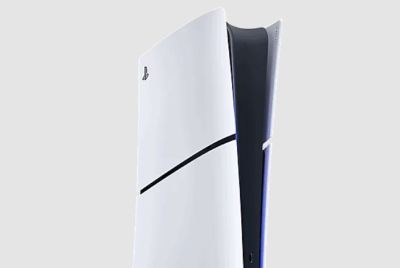
The announcement carries significant implications for Sony's next-generation console, widely expected to be called the PlayStation 6. Many industry observers had assumed the PS6 would at minimum offer an optional disc drive for backward compatibility with existing physical PS5 games, but Wednesday's announcement narrows those expectations considerably.
Piers Harding-Rolls, senior games research analyst at Ampere Analysis, told Game File: "This pretty much guarantees that PS6 won't arrive until 2028 at the earliest."
The digital transition Sony is formalizing has been underway for years across the entertainment industry. Music pivoted away from CDs more than a decade ago, while film and television have largely moved to streaming, leaving the gaming sector as one of the last major entertainment categories to still produce a meaningful volume of physical media. Sony has previously pointed to data showing a growing share of game sales occurring digitally, with many major titles now selling more than half their copies through digital storefronts rather than retail disc sales.
The announcement arrived alongside a separate, related development: Sony disclosed that it will be closing the PlayStation Store for its older PlayStation 3 console and PS Vita handheld in most countries in July 2027, with some regional shutdowns beginning even earlier.
Sony said in its PS3 and PS Vita store closing announcement: "We know this news may be disappointing to PS3 and PS Vita players who hold a special place in their hearts for this generation of gaming," characterizing the move as one that "was not an easy decision for us to make," and saying the marketplaces "are no longer able" to support modern commerce systems.
That parallel announcement has amplified concerns among gaming preservation advocates, who argue that the combination of closing older digital storefronts and eliminating new physical disc production creates a permanent access problem for games, since players who purchase digital titles receive only a personal license for non-commercial use rather than ownership of the content in any lasting or transferable form, unlike physical disc ownership.
The concern is not theoretical. Sony's 2024 shutdown of "Concord," a first-party multiplayer game that was pulled from sale and effectively wiped from players' libraries just weeks after launch, demonstrated in stark terms how digital game ownership differs fundamentally from owning a disc. Physical discs can be shared, resold, lent to friends and used indefinitely regardless of whether a company continues to support the title. Digital licenses expire when a company decides they do.
A Sony spokesperson noted to Game File that with all digital content, including games, movies and music, players are purchasing a personal license for non-commercial use, an explicit acknowledgment that digital purchasing confers different rights than physical ownership.
Player reaction across social media and gaming forums following Wednesday's announcement was swift and overwhelmingly negative. Comments on the PlayStation Blog post, which accumulated thousands of responses within hours, ranged from expressions of disappointment to declarations that Sony had irreversibly damaged its relationship with a segment of its customer base that values physical game ownership.
The announcement comes as Sony has already been raising prices on PlayStation hardware, with the PlayStation 5 console line receiving a price increase in April driven in part by skyrocketing memory chip costs tied to the global AI infrastructure buildout. That context has left some players feeling squeezed from multiple directions simultaneously, paying more for hardware while losing the ability to buy, share, resell or lend physical copies of the games they play.
© Copyright 2026 IBTimes AU. All rights reserved.
- Recommended For You