Seagate Technology Stock Surges on AI Demand, Analysts Maintain Strong Buy Ratings for 2026
Seagate Technology's shares soar in 2026, driven by AI infrastructure demand, with analysts maintaining positive outlooks amid record revenue and margins.
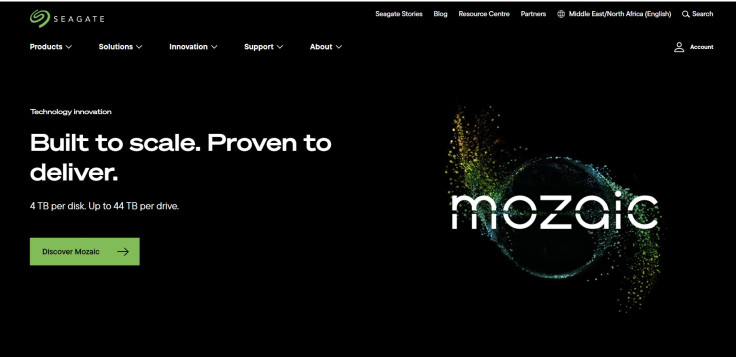
Seagate Technology Holdings plc shares have delivered exceptional returns in 2026, fueled by robust demand for high-capacity data storage solutions driven by artificial intelligence infrastructure expansion, prompting analysts to maintain overwhelmingly positive recommendations and raise price targets amid record margins and revenue growth.
The storage solutions leader, known for its hard disk drives essential to cloud computing and hyperscale data centers, reported strong fiscal third-quarter 2026 results in late April, with revenue reaching $3.11 billion, up 44% year-over-year, and non-GAAP diluted earnings per share of $4.10, exceeding expectations. Gross margins hit record levels around 47%, reflecting operational efficiency and favorable product mix shifts toward higher-value AI-related storage.
As of early June 2026, the stock has climbed dramatically year-to-date, trading near all-time highs despite occasional pullbacks from profit-taking and insider sales. Wall Street consensus remains firmly in the Buy camp, with roughly 20 out of 25 analysts recommending purchase and price targets averaging around $870, with highs reaching $1,150.
Seagate's performance benefits from the explosive growth in AI workloads, which require massive amounts of storage for training and inference. The company's heat-assisted magnetic recording (HAMR) technology positions it as a leader in next-generation high-density drives, offering advantages in capacity and cost per terabyte that competitors struggle to match at scale.
Recent analyst actions underscore confidence. Mizuho raised its price target to $1,090 from $875, while BofA increased to $1,000 from $900 and Citi to $1,150 from $740, citing strengthening storage demand and margin outlook. Barclays and Wells Fargo also lifted targets, reflecting sector-wide optimism around AI tailwinds.
"Seagate is poised for continued growth with strong demand in both Data Center and Edge/IoT revenue, as well as the implementation of HAMR technology," analysts noted in consensus commentary.
The company's fiscal 2026 trajectory shows accelerating momentum. Earlier quarters reported revenue of $2.63 billion in Q1 and $2.83 billion in Q2, with consistent margin expansion and free cash flow generation supporting dividends and share repurchases. Seagate increased its quarterly dividend to $0.74 per share and has returned substantial capital to shareholders.
Despite the rally, risks remain. The stock experienced an 8% drop in mid-May following CEO comments on capacity expansion timelines, highlighting execution challenges in a cyclical industry. Insider selling by executives, including the CEO, has drawn attention, though such activity often occurs during strong performance periods.
Seagate also reached a $175 million settlement over Huawei-related litigation, providing closure on a lingering issue without materially impacting operations. The company continues to navigate geopolitical tensions affecting global supply chains.
For investors weighing buy or sell decisions in the second half of 2026, the bull case centers on sustained AI investment by major cloud providers. Hyperscalers like Amazon, Microsoft and Google are expected to ramp data center builds, driving multi-year demand for Seagate's enterprise drives. Analysts project further revenue growth and margin stability as HAMR volumes increase.
Valuation metrics show the stock trading at elevated multiples compared to historical averages, with forward price-to-earnings around 20x amid strong growth forecasts. However, compared to peers in the memory and semiconductor space benefiting from similar AI trends, Seagate's valuation appears reasonable given its cash flow profile and dividend yield.
Bears point to potential cyclical downturns if AI spending moderates or economic conditions tighten. Competition from Western Digital and solid-state drive alternatives could pressure pricing, though HDDs maintain dominance for bulk storage. Balance sheet leverage and sensitivity to commodity prices add volatility.
Longer-term forecasts for 2026 and beyond remain constructive. Some models project prices exceeding $1,000, contingent on execution and market conditions. The next earnings report, expected in late July, will provide further clarity on guidance and AI momentum.
Seagate's strategic focus on mass-capacity storage aligns with secular trends in cloud, big data and machine learning. The company's Singapore headquarters and global operations support efficient manufacturing, while investments in research and development bolster its technological edge.
Market sentiment has improved markedly in 2026, with the stock benefiting from broader technology sector enthusiasm. Trading near the top of its 52-week range and above key moving averages, momentum indicators favor continuation, though overbought conditions warrant caution for short-term entries.
For retail investors, Seagate offers exposure to the critical infrastructure underpinning AI without the extreme valuations of some pure-play semiconductor names. The dividend provides income alongside growth potential, appealing to balanced portfolios.
Analysts emphasize monitoring quarterly results for signs of sustained demand. Key metrics include data center revenue trends, gross margin trajectory and management commentary on capacity and pricing. Positive surprises could drive further upside, while shortfalls might trigger corrections in this high-beta name.
Broader industry context supports optimism. Peers like Micron have achieved trillion-dollar market caps on memory demand, underscoring the value of storage in the AI ecosystem. Seagate's role as a foundational supplier positions it well for multi-year tailwinds.
Risk management remains essential. Investors should consider position sizing given volatility, diversification across technology subsectors and awareness of macroeconomic factors influencing capital expenditure cycles. Dollar-cost averaging on dips could mitigate timing risks.
Seagate Technology's transformation from a traditional hard drive manufacturer to a key enabler of the AI revolution has resonated with investors and analysts alike. With strong fundamentals, technological leadership and favorable secular trends, the consensus leans toward buying or holding shares for 2026, though careful monitoring of execution and market dynamics is advised.
As the company prepares for its fiscal fourth quarter and full-year results, attention will focus on whether AI momentum can offset any cyclical pressures. For now, the trajectory points to continued strength in a data-hungry world.
© Copyright 2026 IBTimes AU. All rights reserved.
- Recommended For You