

Nvidia Stock Sinks Nearly 5% as $250 Billion OpenAI Deal Sparks Circular Financing Fears on Wall Street
Nvidia's stock drops as investors react to a massive financial guarantee for OpenAI's data center project.
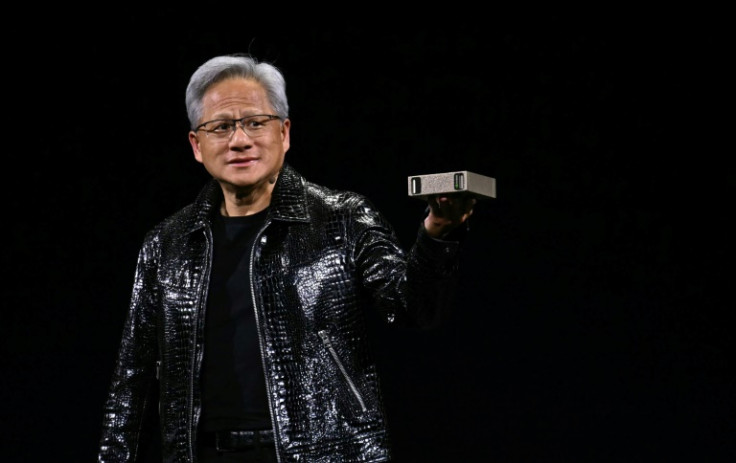
Nvidia Corp. shares tumbled Monday morning, falling 4.48% to $197.57, after a weekend report revealed the chipmaker is negotiating an enormous financial backstop tied to OpenAI's data center ambitions, reigniting investor concerns about circular financing arrangements across the artificial intelligence industry.
The stock traded down $9.27 as of 10:44 a.m. Eastern time, according to Google Finance data, marking one of Nvidia's sharper single-day declines in recent weeks and pulling shares further away from their 52-week high.
A Quarter-Trillion-Dollar Guarantee
The selloff traces back to a Wall Street Journal report published over the weekend. According to that report, Nvidia is in discussions to provide approximately $250 billion in financial guarantees to help OpenAI lease a planned 10-gigawatt AI data center campus in southern Ohio being developed by SoftBank's energy subsidiary, a commitment that would represent the largest financing guarantee ever discussed between two private companies.
The proposed arrangement would have Nvidia backstop the data center's lease and construction debt, while the company is separately exploring an additional structure to help finance OpenAI's purchases of Nvidia chips. The scale and structure of the deal immediately raised questions on Wall Street about how much contingent risk Nvidia would be taking onto its own balance sheet in order to support demand for its products.
Circular Financing Concerns Resurface
The proposed arrangement drew swift criticism from prominent market voices. Michael Burry, the investor known for his "Big Short" bet against the housing market, publicly characterized the arrangement as Nvidia effectively guaranteeing a customer's spending on its own chips, a framing that echoed concerns already raised by Bernstein Research analyst Stacy Rasgon. Rasgon had previously warned that these kinds of financing structures make it difficult for investors to distinguish organic AI demand from demand that has been financially engineered.
The criticism strikes at a broader anxiety that has followed Nvidia and its largest customers for much of the year: that a web of interlocking investments, guarantees and chip-purchase commitments between AI infrastructure players may be inflating the appearance of demand rather than reflecting it.
Insider Selling Adds to the Pressure
Compounding the negative sentiment, data shows Nvidia insiders have sold roughly $410.6 million in shares over the past three months, a level of activity some investors view as a cautionary signal. While insider sales are common at large technology companies and don't necessarily indicate a lack of confidence in the business, the timing has added to the unease surrounding Monday's news.
A Company-Specific Move, Not a Market Rout
Notably, Nvidia's decline stood in sharp contrast to the rest of the market. The S&P 500 gained 0.6%, the Dow Jones Industrial Average rose 1.0%, and the Nasdaq Composite advanced 0.8% on the day, underscoring that Nvidia's slide was a company-specific reaction rather than part of a broader selloff. That divergence reinforced the view among traders that the move was driven directly by the OpenAI financing headlines rather than macroeconomic factors.
Indeed, broader market conditions Monday were largely supportive. Easing tensions in the Middle East and a pullback in oil prices helped lift risk appetite across Wall Street, even as Nvidia bucked the trend on company-specific news.
Big Tech Earnings Loom
The timing of the report is notable, arriving just days before a pivotal stretch for the technology sector. Major hyperscalers including Microsoft, Meta and Amazon are scheduled to report earnings this week, and their guidance on AI infrastructure spending is expected to serve as a key barometer for continued demand for Nvidia's graphics processing units.
Nvidia's own quarterly results are also on the horizon. The company is expected to report second-quarter earnings on August 26, with Wall Street projecting earnings of $2.07 per share, up from $1.04 a year earlier, and revenue reaching an estimated $91.70 billion compared with $46.74 billion in the prior-year period. The stock currently trades at about 32.3 times earnings, and analysts maintain a consensus Buy rating with an average price target of $323.83.
That price target sits far above where shares changed hands Monday, reflecting continued long-term optimism among analysts even as the stock has struggled in recent months. Several firms have reiterated bullish stances in recent weeks, including China Renaissance, which initiated coverage with a Buy rating and a $319 price forecast, along with Needham and DA Davidson, which maintained Buy ratings with price forecasts of $270 and $300, respectively.
A Rocky Stretch for Nvidia Shares
Monday's decline extends a difficult stretch for the stock. After a strong 2025, Nvidia shares had already fallen roughly 18% from their June high, including a 10.7% drop in June alone, as the broader artificial intelligence trade cooled. That cooling was partly driven by reports that OpenAI could delay its initial public offering until 2027 in order to protect a $1 trillion valuation, a signal some investors read as caution around stretched valuations across the sector.
Not all the recent news has been negative, however. Washington has begun issuing licenses allowing Nvidia to resume selling its H20 chips in China, reopening a significant market that had previously been restricted by U.S. export controls.
Nvidia hit a 52-week high of $236.54 in May before forming a swing low in June and slipping below key support levels in July, making the stock's current trading range especially significant for investors watching its momentum. Monday's drop pushes shares further from that high-water mark and adds fresh uncertainty just as the broader AI sector heads into one of its most closely watched earnings weeks of the year.
For now, investors appear to be weighing the immediate optics of a quarter-trillion-dollar financing commitment against Nvidia's underlying position as the dominant supplier of AI computing hardware. How that tension resolves may hinge on the details of any final agreement with OpenAI and SoftBank, along with how hyperscale customers characterize their own AI spending plans in the earnings reports expected later this week.
© Copyright 2026 IBTimes AU. All rights reserved.