

Japan Patent Office Rejects Another Nintendo Filing Tied to Palworld Lawsuit, Citing Lack of Originality
Japan's Patent Office Rejects Nintendo's Application Amid Ongoing Legal Battle with Pocketpair
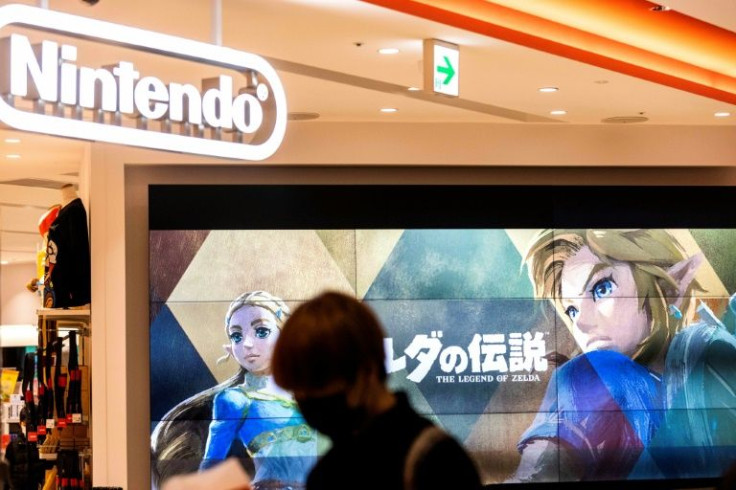
Japan's patent office has rejected another Nintendo patent application connected to the company's ongoing legal battle with Palworld developer Pocketpair, marking the latest in a series of setbacks for Nintendo's intellectual property campaign against the hit survival game.
The rejected filing, application number 2024-031879, sits structurally between two Nintendo patents already granted and actively being asserted against Pocketpair in the Tokyo District Court. The Japan Patent Office found the application lacked the inventive step required for approval, citing prior art from a range of earlier titles, including ARK: Survival Evolved, Monster Hunter 4, Craftopia, Kantai Collection and Pokémon GO.
A lawsuit built on gameplay mechanics, not character designs
When Nintendo and The Pokémon Company filed their patent infringement lawsuit against Pocketpair in September 2024, many in the industry expected the case to center on copyright or trademark claims tied to the visual similarities between Palworld's creatures and Pokémon designs. Instead, the companies pursued a narrower legal strategy, targeting specific gameplay mechanics: the act of capturing creatures by throwing an object at them, and the ability to transition between riding different creatures or items within an open-world setting.
That approach has proven contentious from the outset, given how widely those particular mechanics have appeared across the video game industry over multiple decades, spanning genres from survival games to massive multiplayer titles.
Why this rejection matters beyond a single filing
The application rejected this week is not a standalone or peripheral filing. According to reporting from legal industry outlet Games Fray and technology site Techdirt, the application descends directly from JP7505852, one of the two patents Nintendo has already been granted and is actively using in its court case against Pocketpair, while a related filing, JP7545191, branches off in a separate direction and is also being asserted in the ongoing litigation.
Because the rejected application sits within that same patent family, positioned between the two already-granted patents, the Japan Patent Office's reasoning carries implications beyond the specific filing itself. If patent examiners determined that a structurally related application lacked sufficient originality when compared with existing games, that same logic could potentially be applied to challenge the validity of the two granted patents currently powering Nintendo's lawsuit.
Pocketpair's parallel defense strategy
Throughout the litigation, Pocketpair has pursued a dual approach to defending itself. The company has both patched several of the disputed gameplay mechanics out of Palworld directly, including removing the ability to throw Pal Spheres to summon creatures in a November 2024 update, while simultaneously building a broader legal case aimed at invalidating Nintendo's patents by submitting evidence of prior art from other commercial games as well as fan-made mods, including titles like Pixelmon, a Minecraft-based mod, and Pocket Souls, a mod for Dark Souls 3.
Nintendo has pushed back on some of that evidence, arguing in filings to the Tokyo District Court that mods should not be considered valid prior art because they cannot function independently without the original game they modify. That argument remains a live point of contention in the case.
Part of a broader pattern
This is not the first time Nintendo's patent filings tied to the Palworld dispute have run into trouble with Japanese examiners. A separate application covering touchscreen-based monster-capturing mechanics, filed by Nintendo in spring 2026 and seen by some industry observers as a potential preemptive move against a mobile version of Palworld, was also rejected by the Japan Patent Office, with an examiner citing footage from a 2013 unofficial Pokémon fan project as part of the prior art record. That rejection, like the one involving application 2024-031879, leaves Nintendo with the option to appeal before a panel of JPO administrative judges or submit a revised, narrower divisional application within a set window following the decision.
Nintendo has also faced related setbacks with patent filings in the United States tied to the same broader family of gameplay mechanics, according to industry reporting, adding to a pattern that has drawn increasing attention from legal and gaming industry observers watching how the case may shape the broader question of whether specific gameplay mechanics can be meaningfully patented at all.
What's next in the case
Nintendo has not publicly indicated whether it intends to appeal the latest rejection or file a revised application narrowing its claims. The broader lawsuit against Pocketpair remains active in the Tokyo District Court, with additional court dates reportedly scheduled for later this year.
Legal observers following the case have noted that the pattern of rejections does not automatically invalidate the two already-granted patents Nintendo is using in its active lawsuit, since a rejection of a related application is a separate legal determination from a formal invalidation proceeding against a granted patent. However, the reasoning behind these rejections is expected to factor into Pocketpair's ongoing efforts to challenge the validity of those granted patents directly within the litigation itself.
A closely watched case for the industry
Beyond its direct impact on Nintendo and Pocketpair, the case has become something of an industry benchmark for how far patent protections can reasonably extend over broad categories of gameplay mechanics, rather than specific implementations, visual designs or code. A ruling that meaningfully narrows or invalidates Nintendo's patents could influence how other studios approach similar intellectual property strategies going forward, particularly for mechanics with long, well-documented histories across multiple genres and developers.
For now, the litigation remains ongoing, with no clear resolution in sight, and each new patent office ruling, whether favorable to Nintendo or Pocketpair, continues to shape the broader legal and industry conversation surrounding the case as it moves through Japan's court system.
© Copyright 2026 IBTimes AU. All rights reserved.