Middle East's 10 Busiest Airports: Which Major Hubs Remain Fully Open Or Still Disrupted By War Today
Airports in the Middle East face varied recovery paths following airspace closures due to regional conflicts.
DUBAI — More than five months after fighting between the United States, Israel and Iran triggered widespread airspace closures across the Middle East, most of the region's largest airports have reopened, though several are still operating under reduced schedules, security advisories or lingering infrastructure damage, according to airline and aviation-tracking data.
The disruption began in late February, when U.S. and Israeli strikes targeted military sites in Iran, prompting the United Arab Emirates, Qatar, Bahrain, Iraq, Israel and Iran to close their airspace within days of each other. The closures grounded tens of thousands of flights and cut off some of the busiest transit hubs connecting Europe, Asia and Africa. Since then, airports across the region have moved through varying stages of recovery, with the pace and completeness of that recovery differing sharply from country to country.
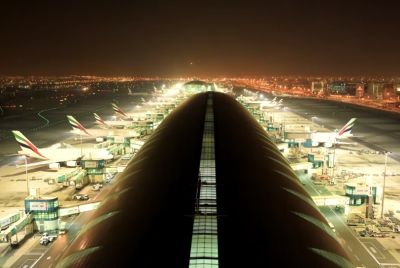
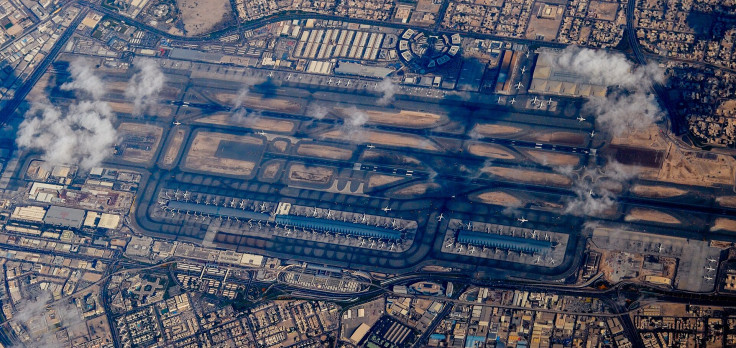
Dubai International Airport, the region's busiest hub and one of the busiest airports in the world by international passenger traffic, has remained open throughout the more recent phases of the conflict, with Emirates and flydubai maintaining regular schedules through the end of July and into August. Several international carriers, including Turkish Airlines, have also restored service to Dubai, though others, including Air France, Singapore Airlines and Lufthansa Group carriers, have kept Dubai suspended into September or later as they continue monitoring regional conditions.
Abu Dhabi's Zayed International Airport has likewise remained largely operational, having reopened after a drone was intercepted near the facility earlier in the conflict, an incident that killed one person and injured seven others from falling debris. Turkish Airlines has resumed flights to Abu Dhabi, and the airport has continued adding new international routes even as some Western carriers remain cautious about the surrounding region.
Doha's Hamad International Airport, another of the region's largest hubs, has continued operating but with some route-specific reductions. Qatar Airways cut certain frequencies during the height of regional tensions, including a temporary drop to once-daily Doha service on select routes, before resuming passenger flights between Doha and Bahrain, Kuwait and Erbil on August 8. The airline has also expanded some long-haul routes during the same period, including restoring daily Doha-Philadelphia service and increasing Tokyo Haneda frequency to daily flights, suggesting a broader recovery even as isolated regional routes remain more limited.
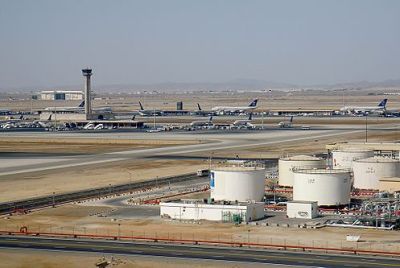
Saudi Arabia's two largest airports have followed somewhat different paths. Riyadh's King Khalid International Airport has remained open throughout the disruption, though some international carriers reduced service there to a single daily flight in recent weeks. Jeddah's King Abdulaziz International Airport has continued operating as well, though several individual carriers, including British Airways, have permanently suspended specific routes to Jeddah, even as the airport itself remains functional for other airlines and domestic traffic.
Kuwait International Airport stands out as the most significantly affected of the region's largest hubs. The airport has not been fully operational for months, with key infrastructure still damaged and some terminals closed. Foreign airlines have faced ongoing restrictions on service to Kuwait, and while Qatar Airways and Jazeera Airways have both resumed some flights to the airport as of early August, the facility remains in what aviation trackers describe as a phased, incomplete recovery rather than a full return to pre-conflict operations.
Bahrain International Airport has also continued a gradual recovery. Restrictions tied to the country's flight information region were extended through at least August 7, with all flights subject to prior approval and defined routing structures during that period. Bahrain's national carrier has continued restoring its network following the reopening of the country's airspace, alongside continued fleet expansion and new route launches, even as some international operators remain cautious about resuming full service.
Cairo International Airport, Egypt's largest hub, has continued operating largely without the disruptions seen elsewhere in the region, and has functioned as an alternative routing option for carriers seeking to avoid more heavily restricted airspace over Iran, Iraq and parts of the Gulf.
Muscat International Airport in Oman has likewise continued relatively normal operations, with Oman Air maintaining a full schedule of regional and long-haul flights as of early August, including service to Riyadh, Doha, Jeddah, London, Jakarta and destinations across South Asia.
Tel Aviv's Ben Gurion Airport has reopened but remains an outlier among the region's major hubs in terms of the caution still being exercised by international carriers. While the airport itself is functioning, aviation analysts note that operations still aren't fully back to normal, with several major European carriers, including Lufthansa Group airlines and British Airways, keeping Tel Aviv service suspended well into the fall as they continue assessing regional security conditions.
Aviation regulators, including the European Union Aviation Safety Agency, have continued to update conflict-zone advisories covering much of the region, generally recommending that operators avoid Iranian, Iraqi and Lebanese airspace entirely, while urging caution, though not outright avoidance, over Israel, Jordan, Oman and Saudi Arabia. Most international carriers have continued rerouting flights via Egypt and Saudi Arabia to avoid more heavily restricted airspace, a pattern that predates the current conflict but has become more entrenched as the disruption has stretched on.
With airspace advisories and airline schedules continuing to shift on a near-daily basis, aviation trackers and airlines alike have cautioned travelers to verify individual flight status before heading to the airport, particularly for routes touching Bahrain, Kuwait, Doha, Riyadh, Jeddah and Tel Aviv, where short-notice changes have remained more common than at the region's largest and most consistently operational hubs in Dubai, Abu Dhabi, Cairo and Muscat.
© Copyright 2026 IBTimes AU. All rights reserved.
- Recommended For You