

Light Flip Phone Revives the Motorola Razr Look With a $299 Price Tag, No Apps, and an April 2027 Release Date
Light's Latest Device Offers a Minimalist Alternative to Modern Smartphones
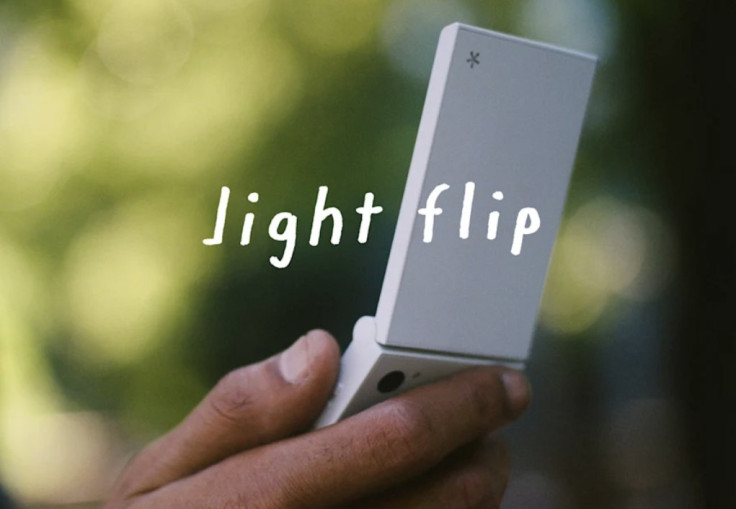
Light, the Brooklyn-based startup known for stripped-down "dumb phones," has unveiled its newest device: a flip phone designed by one of the original engineers behind the Motorola Razr, aimed at users who want to spend less time staring at a screen rather than more.
The device, called the Light Flip, is not made or sold by Motorola. But its resemblance to the company's iconic early-2000s flip phone is intentional. Kaiwei Tang, one of the phone's designers, was a member of the original Razr design team two decades ago, and the new device leans heavily on that legacy — a compact clamshell shape, a hinge built to snap shut with a satisfying click, and a deliberate absence of the sprawling app grids that define modern smartphones.
The Light Flip will sell for $299 when it ships in April 2027, a sharp discount from the $700 starting price of the company's most recent device, the Light Phone III, which launched last year. Preorders are open now.
A phone built to be put down
Light has spent the past decade building a reputation among people trying to cut back on smartphone use, starting with a Kickstarter-funded device in 2015. Its devices strip away social media, web browsers, and most other attention-grabbing features, offering only basic tools like calling, texting, music and navigation.
The Flip pushes that philosophy into a new form factor. The phone has no touch screen. Instead, it uses a 12-button keypad reminiscent of the T9 texting era, along with three function buttons and a four-way directional pad for moving a cursor around the interface. A home button and volume switches sit on the side, and the phone includes a 3.5mm headphone jack and USB-C port.
Unlike most flip phones on the market today, the Light Flip has no external display when closed — only a small notification light to signal an incoming call or message. The interior 2.8-inch OLED screen runs at a modest resolution, displaying the same stark, white-text-on-black interface found on the Light Phone III.
On the hardware side, the phone includes a 50-megapixel rear camera that outputs 12-megapixel photos, stereo speakers, a MediaTek MT8873 chipset, 6GB of RAM and 128GB of storage. It supports 5G connectivity along with both nano-SIM and eSIM. The battery is removable, tucked behind a screw-down panel, and the phone comes in six colors: black, navy, red, pink, yellow and light gray.
Why revisit the flip phone now
Light co-founder Joe Hollier said the company had been fielding requests for a flip-style device for some time, particularly from younger users looking for something even further removed from a typical smartphone than the company's earlier bar-style phones. Hollier said the company saw an opening in a flip-phone market that has largely been filled with either premium foldables or flimsy budget devices with limited functionality.
"We felt there was a huge opportunity [for a flip phone] with our OS and eco-system," Hollier said. "We're uniquely positioned with our experience."
Hollier has described the design choice to omit an external screen as part of what he calls the phone's "symbolic closure" — the idea that shutting the phone should feel like a genuine break from digital life, not just a pause.
Not as slim as the original
Despite the throwback design, the Light Flip is considerably bulkier than the phone that inspired it. At roughly 19 millimeters thick when folded and about 160 grams, it is noticeably heavier and thicker than Motorola's original Razr V3, which measured about 13 millimeters and weighed around 95 grams when it debuted more than 20 years ago. It's also thicker than early folding smartphones such as the first Samsung Galaxy Fold.
The company has acknowledged the size trade-off but has framed the device's plastic build, replaceable battery and physical keypad as features rather than compromises for the audience it's targeting.
Software and expansion plans
The Light Flip runs LightOS, the same minimalist software found across the company's device lineup. All existing tools built for the Light Phone III — including navigation and a basic music player — will work on the Flip, and the company says its T9-style dialer will include predictive text.
Light is also developing a software development kit that would let outside developers build and distribute a curated set of third-party tools for its devices. The company has said that project is progressing and could begin rolling out new tools this fall, which could help address one of the most common criticisms of Light's phones: that stripping away too many features leaves some users missing basic day-to-day functionality.
Pricing and service plans
Alongside the phone itself, Light is introducing its first bundled service plan. For $39 a month over two years, buyers can get the Light Flip along with unlimited voice and text and 1GB of monthly data. A $69-a-month unlimited data option is also available, aimed at customers who plan to use the phone's 5G hotspot feature more heavily. The company says a similar phone-and-service bundle for the Light Phone III will follow, priced at $59 a month.
Light did not immediately respond to a request for additional comment on manufacturing timelines or where the device will be assembled.
The bigger picture
The Light Flip arrives as smartphone prices climb across the industry and as several major manufacturers, including Samsung, prepare new foldable and flip-style devices of their own. But Light's pitch remains different from that of its mainstream competitors: rather than adding capability, the company is betting that some consumers want less.
Whether that bet pays off may depend on how many buyers are willing to wait nearly a year for delivery, and whether the SDK expansion can close the functionality gaps that have drawn criticism of Light's earlier devices. For now, the company is counting on nostalgia, a recognizable design pedigree, and a lower price point to draw in the "digital detox" crowd it has spent a decade courting.
© Copyright 2026 IBTimes AU. All rights reserved.