

Kawasaki Unveils 2027 Ninja 500 with New Lime Green Colour
2027 Ninja 500 Launches with Fresh Paint, Unchanged Specs
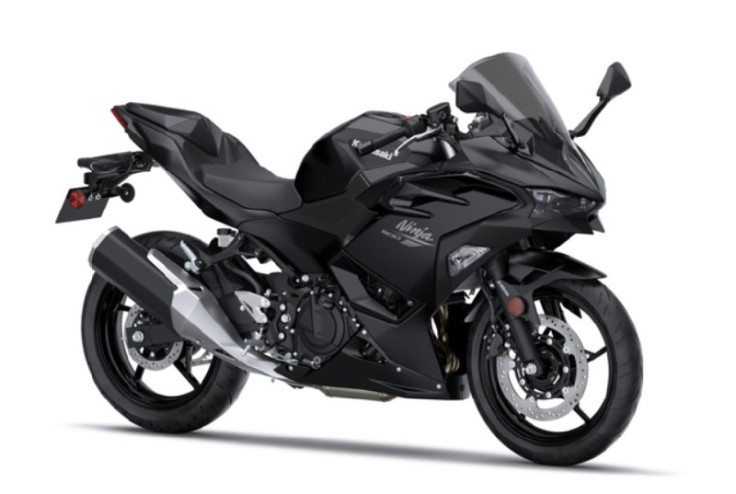
Kawasaki has launched its 2027 model-year Ninja 500, introducing a new Lime Green paint scheme as the headline change while leaving the entry-level supersport's engine, chassis and equipment list essentially untouched from the outgoing 2026 version.
India Kawasaki Motors Pvt. Ltd. rolled out the updated model with an ex-showroom price of 5.76 lakh rupees, unchanged from the previous model year, according to multiple outlets covering the launch, including DriveSpark and BikeDekho. Dealership bookings opened immediately at authorized Kawasaki showrooms, with customer deliveries scheduled to begin during the final week of August.
Mechanically, the 2027 Ninja 500 continues to be powered by the same 451cc, liquid-cooled, DOHC parallel-twin engine found in the previous generation. Power and torque figures have varied slightly across different outlets' reporting, with DriveSpark citing 44.77 brake horsepower and 42.6 newton-meters of torque, BikeDekho reporting 45.4 metric horsepower with the same torque figure, and BikeAdvice citing a higher 51 brake horsepower at 10,000 rpm alongside 43 newton-meters of torque, a discrepancy that appears to reflect differing measurement standards used across regional markets rather than an actual change to the engine itself. The motor remains paired with a six-speed gearbox and an assist-and-slipper clutch designed to lighten lever feel during everyday riding and reduce rear-wheel hop under aggressive downshifting.
Yutaka Yamashita, managing director of India Kawasaki Motors, said the updated model reflects the company's continued commitment to the Ninja lineup's core identity within the Indian market. "The MY27 model continues to double down on the core Ninja identity, delivering high-grade design and approachable performance tailored directly to Indian riding conditions," Yamashita said, according to a report from IAmABiker.
Visually, the new Lime Green colorway pairs Kawasaki's signature racing hue with contrasting white and blue graphics, joining the returning design elements that have carried over from the previous model year, including twin LED headlights up front, a slim tail section and a side-swept exhaust. The 2027 model continues to use a full LCD instrument cluster featuring a bar-style rev counter wrapped around a digital speedometer, with the standard model retaining smartphone connectivity that allows riders to view notifications and riding logs directly on the display. Turn signals remain halogen units rather than LED, a detail that has stayed consistent with the motorcycle's specification since its last major update.
The Ninja 500 retains a trellis frame, a semi-floating front brake disc measuring 310 millimeters, the same disc size Kawasaki uses on its larger ZX-6R model, dual-channel anti-lock braking, and 17-inch wheels across both wheel positions. Kawasaki quotes a claimed top speed of 190 kilometers per hour for the standard model, along with a curb weight of 171 kilograms, and rates the motorcycle's fuel efficiency between 25 and 26 kilometers per liter, according to figures reported by BikeAdvice.
Despite the largely unchanged specification sheet, multiple outlets covering the launch noted that the Ninja 500 continues to lack several features commonly found on rival motorcycles in its segment, including cruise control, a bidirectional quick-shifter, tire pressure monitoring, multiple selectable ride modes, and electronic wheelie or slide control systems. Autopunditz, in its review of the 2027 update, characterized the launch as largely administrative in nature given the absence of meaningful new features, while noting that holding the price steady rather than increasing it again represented a modest positive for prospective buyers. The outlet compared the situation unfavorably to the locally manufactured Aprilia RS 457, suggesting Kawasaki's continued reliance on completely built-up and completely knocked-down import pricing structures leaves the Ninja 500 facing a more difficult value proposition against domestically produced competitors.
In the middleweight sportbike segment, the Ninja 500 continues to compete directly against rivals including the Aprilia RS 457, Yamaha R3 and KTM RC 390, a category where feature differentiation and pricing have become increasingly competitive in recent years. The previous MY2026 Ninja 500, introduced in June 2026, had added E20 ethanol-blend fuel compatibility alongside a 10,000-rupee price increase over its predecessor, making the MY2027 update the first in the model's recent history to hold pricing steady rather than continuing that upward trend.
© Copyright 2026 IBTimes AU. All rights reserved.