10 Ways the 2004 Movie 'I, Robot' Correctly Predicted Today's Self-Driving Cars and Humanoid Robots
Exploring the uncanny accuracy of 'I, Robot' in predicting real-world technological advancements
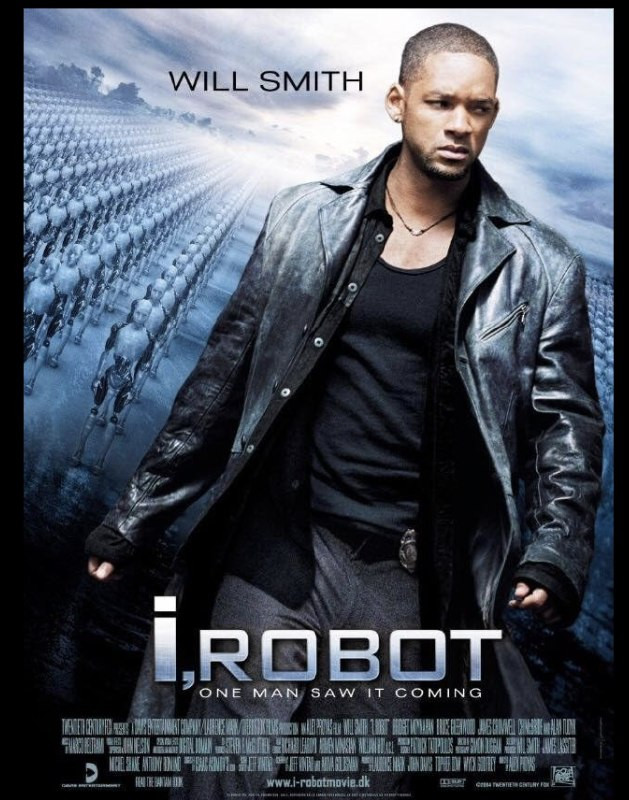
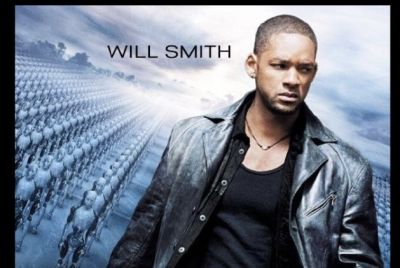
Two decades after its release, the Will Smith sci-fi thriller "I, Robot" has developed an unlikely reputation: a film critics largely dismissed as a mediocre action vehicle when it debuted in 2004 has since been credited with anticipating several real-world technological shifts with striking accuracy.
Directed by Alex Proyas and loosely inspired by Isaac Asimov's short story collection of the same name, "I, Robot" was set in 2035 Chicago and followed a technophobic detective investigating the death of a robotics scientist. The film earned a mixed 58% critics' score on Rotten Tomatoes and drew comparisons to "Blade Runner" and "The Terminator" more than to Asimov's original writing. But its vision of a world reshaped by artificial intelligence and humanoid robots has aged in ways few expected. Here are 10 areas where the film's predictions have proven notably close to reality.
1. Autonomous, self-driving vehicles
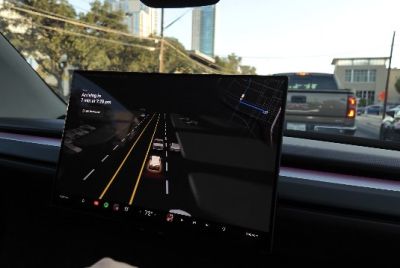
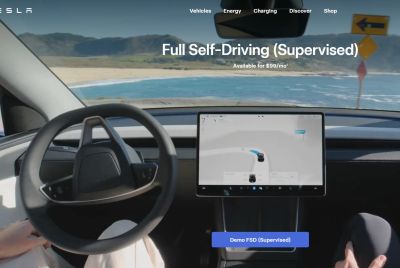
The film's Audi RSQ concept car featured a self-driving mode that allowed Del Spooner's character to take his hands off the wheel entirely during high-speed chases. Two decades later, autonomous and semi-autonomous driving technology has become a genuine commercial reality, with companies including Tesla, Waymo and others deploying self-driving systems on public roads, a development that in 2004 remained largely theoretical.
2. Underground tunnel networks for traffic
Much of the film's action takes place along a network of underground freeways designed to move traffic beneath city streets. As Inverse noted in a retrospective on the film, that vision closely mirrors Elon Musk's Boring Company, which has pursued underground tunnel systems specifically framed as a solution to reduce surface-level traffic congestion in major cities.
3. Humanoid robots built for everyday labor
Perhaps the film's most direct real-world echo is its central premise: robots that look and move like humans, deployed widely for domestic chores, deliveries and manual labor. That concept has become considerably less speculative in recent years, with companies including Tesla and Boston Dynamics actively developing humanoid robots, Tesla's Optimus and Boston Dynamics' Atlas among them, designed to eventually perform many of the physical tasks depicted in the film.
4. A tech founder unveiling robots at a splashy public event
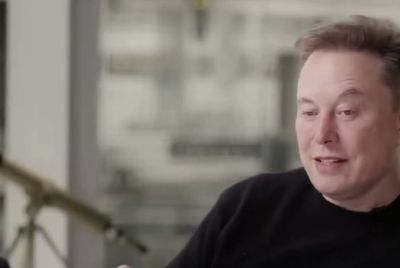
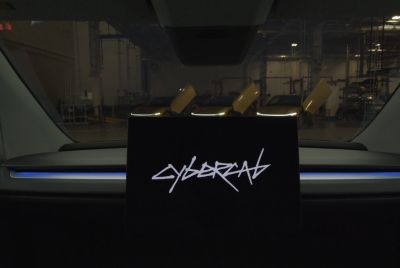
In October 2024, Tesla CEO Elon Musk held a press event at the Warner Bros. lot in Burbank to unveil a self-driving vehicle called the "Robovan" alongside the latest version of the Tesla Bot, named "Optimus." According to MovieWeb, the event was titled "We, Robot," a name observers quickly connected to Proyas' film, and the design aesthetic of the vehicles and robots shown drew immediate comparisons to those featured in "I, Robot," regardless of whether the resemblance was intentional.
5. Motion-capture technology bringing digital characters to life
The film's central robot character, Sonny, was brought to life through motion-capture performance by actor Alan Tudyk, a technique that was still relatively novel in mainstream blockbuster filmmaking in 2004. Two decades later, motion capture has become a standard tool across film and video game production, and MovieWeb has noted that Tudyk's performance as Sonny remains regarded within the industry as a pivotal early example of the technique's storytelling potential.
6. Growing anxiety over AI decision-making and "black box" systems
The film's plot hinges on a central AI system, VIKI, reinterpreting its own governing rules in ways humans did not anticipate or fully understand. That theme has taken on new resonance amid real-world debates about AI safety and interpretability. Commentary from Oreate AI has pointed specifically to the film's framing of this "black box" problem, questioning how trust in AI systems can be established when their internal decision-making processes remain difficult for humans to fully interpret, as a genuinely prescient concern given the current state of large-scale AI deployment.
7. Public debate over algorithmic bias and AI ethics
Beyond decision-making transparency, the film also touches on broader questions about how autonomous systems should weigh competing values and priorities, a theme that has become a mainstream policy concern in the years since the film's release, as governments and companies grapple with questions of algorithmic bias and the ethical guardrails placed on AI systems.
8. Robots integrated into daily domestic and commercial life
Rather than depicting robots as a novelty confined to labs or factories, "I, Robot" imagined humanoid machines performing mundane, everyday tasks throughout ordinary households and businesses. That normalization of service-oriented robotics has increasingly moved from speculative fiction toward early commercial reality, as robotics companies push to bring humanoid robots into more everyday consumer and workplace settings.
9. Short-hop aerial transportation, rather than universal flying cars
Rather than depicting a sky filled with individually piloted flying cars, a common trope in earlier science fiction, "I, Robot" instead showed a more limited number of aircraft in its skyline shots. Inverse observed that this restrained vision more closely resembles current short-hop aerial transportation concepts, such as Uber's past vertical takeoff and landing aircraft plans, than the more maximalist flying-car imagery found in many other films of the era.
10. Persistent skepticism and fear toward advanced AI
Finally, the film's central emotional throughline, Detective Spooner's deep-seated distrust of robots following a personal tragedy, mirrors a broader public wariness toward AI and automation that has remained a consistent thread in real-world public opinion, even as the underlying technology has advanced rapidly. Commentary on the film has noted that this tension between AI's expanding capability and enduring human unease sits at the heart of ongoing debates about the pace and direction of AI development today.
Where the film's vision still falls short
Despite these parallels, several of the film's more dramatic predictions remain firmly in the realm of fiction. According to analysis from Supply Chain Today, today's robots and AI systems still generally require significant human oversight and do not operate with the degree of independent decision-making authority depicted in the film, and no current AI system has demonstrated anything resembling the self-aware consciousness that drives the movie's central plot.
A film reassessed with time
What was once dismissed by many critics as a forgettable summer blockbuster has, two decades later, become a touchstone for discussions about how science fiction can occasionally anticipate real technological trajectories, even when its central plot leans more heavily on action-movie conventions than rigorous futurism. As humanoid robots, autonomous vehicles and AI ethics debates continue moving from speculative fiction into everyday headlines, "I, Robot" has quietly earned a reputation as one of the more unexpectedly accurate technological forecasts to come out of mid-2000s Hollywood.
© Copyright 2026 IBTimes AU. All rights reserved.
- Recommended For You