

White House Backs Argentina World Cup Players Over Falklands Banner Amid UK Calls for FIFA Investigation
Argentina's World Cup banner asserting claim to Falkland Islands ignites diplomatic tensions with the UK.
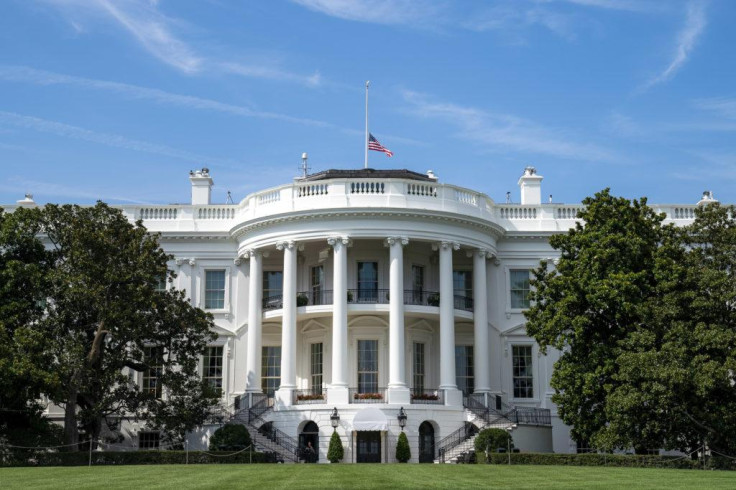
The White House has defended Argentina's football players after they displayed a banner asserting the country's claim to the Falkland Islands following their World Cup semifinal victory over England, setting up a diplomatic disagreement with the United Kingdom just days before Argentina's championship match against Spain.
Following Argentina's 2-1 win in a tense semifinal in Atlanta on Wednesday, several players held up a banner reading "Las Malvinas son Argentinas," using Argentina's own term for the disputed South Atlantic islands. British Prime Minister Keir Starmer supported calls Friday for FIFA to investigate the display and appeared to voice support for Spain ahead of Sunday's World Cup final against Argentina.
Andrew Giuliani, head of the White House's FIFA taskforce, pushed back against criticism of the banner, framing the players' actions as a matter of free expression protected under the U.S. Constitution. "We believe in our first amendment rights here in the United States of America," Giuliani said, adding that Argentina's players would have the "opportunity to be able to make statements" while competing in the U.S.
The disagreement arrives at a delicate moment for British politics, with Andy Burnham set to take over as prime minister on Monday. England and Argentina are separately scheduled to face off in rugby's Nations Championship on Saturday in Argentina, a fixture where England players have reportedly threatened to walk off the field if any of their teammates are subjected to racist abuse.
Starmer's spokesperson addressed the banner controversy directly on Thursday, reaffirming Britain's longstanding position on the islands' sovereignty. "The World Cup might not be ours, but the Falkland Islands definitely are. Our position is unchanged. Self-determination rests with the islanders and our commitment to the Falklands will never waver," the spokesperson said, adding that "potential action is a matter for FIFA, but it's been a fantastic World Cup and we've said throughout that politics should stay out of football." The spokesperson also passed along Starmer's good wishes to both finalists, adding pointedly, "especially Spain."
Business Secretary Peter Kyle offered a sharper assessment of the incident earlier Thursday, telling the BBC that the banner represented "an egregious violation of the rules of not having political activity as part of the football." Kyle added, "The World Cup has [as] one of its central tenets that politics is separate from football. That is now a matter for FIFA. I expect FIFA to do its investigation thoroughly." Starmer's spokesperson confirmed the prime minister endorsed Kyle's remarks urging FIFA to open a formal investigation.
FIFA has confirmed it is reviewing the incident through its standard disciplinary process. In a statement, the organization said, "As is standard procedure, FIFA's independent disciplinary committee is assessing the match reports and considering the relevant circumstances before deciding on potential further steps based on the FIFA disciplinary code." No timeline has been given for when that review might conclude or what sanctions, if any, might follow.
The episode is not without precedent within international football's governing bodies. In 2024, Spain players Rodri and Álvaro Morata were suspended for one match by UEFA after chanting "Gibraltar is Spanish" during celebrations in Madrid following Spain's win over England in the Euros final, a separate territorial dispute between Spain and Britain over the peninsula at the southern tip of the Iberian Peninsula.
Wednesday's semifinal had been anticipated as a potential flashpoint for tensions between Argentina and England well before kickoff, given the countries' shared history tied to the Falklands. More than 900 people were killed during the 1982 war that erupted after Argentina invaded the islands, a conflict that ended with British forces retaining control of the territory, which remains a British Overseas Territory to this day.
The banner controversy follows a separate diplomatic dispute that emerged earlier this month, when Argentina complained that a Royal Navy vessel, HMS Medway, had passed through what it considers its national waters without permission while sailing from the Falklands to Chile. Starmer's spokesperson rejected that characterization, saying Britain had notified the Argentine government in advance of the voyage. "We notified the Argentinian government in advance of HMS Medway undertaking a routine logistics visit to Chile between 5 and 8 July to support British Antarctic Survey operations, which will deliver essential stores and supplies to sustain scientific research in Antarctica," the spokesperson said. "The Royal Navy always operates in full compliance with international law and the transit from the Falkland Islands to Chile was carried out via the most direct practicable route, considering operational safety and weather factors to ensure timely delivery."
The Falkland Islands government issued its own statement responding to the banner display, expressing disappointment though not surprise at the players' actions. The government said it was "disappointed – though regrettably not surprised" that Argentina's footballers had "decided to tarnish" the semifinal, describing it as "a game that did not in any case involve the Falkland Islands." The statement continued: "That said, it is hardly news to anyone that the people of the islands were victims of an aggressive invasion in 1982, which left many traumatised. The banner displayed by Argentina last night, therefore, was particularly insensitive for many people in the Falklands ... We hope FIFA will make good on their promise to keep politics out of sport and sanction all behaviour of this nature in line with its own rules."
The controversy adds a geopolitical subplot to a World Cup final already carrying significant weight on the pitch, with Argentina seeking to become the first nation in more than six decades to win consecutive World Cup titles when it faces Spain on Sunday at New York New Jersey Stadium. Whether FIFA ultimately issues any formal sanction against the Argentine Football Association over the banner display remains uncertain, though the governing body's past handling of similar politically charged celebrations, including the 2024 UEFA suspensions of Rodri and Morata, suggests some form of disciplinary response is possible in the days following the tournament's conclusion.
© Copyright 2026 IBTimes AU. All rights reserved.