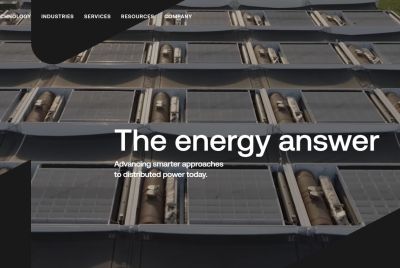
Sunrun Stock Soars 19% on 16-Gigawatt Power Deal With Tesla to Supply AI Data Centers
Sunrun, Tesla, and Renew Home collaborate to deliver 16 gigawatts of energy capacity, targeting AI data centers and utilities.

Sunrun shares jumped 19.13% to $15.26 in midday trading Wednesday after the residential solar leader unveiled a sweeping virtual power plant partnership with Tesla and home-energy management platform Renew Home, aimed at supplying flexible electricity capacity to AI data centers and utility companies nationwide.
What the Deal Actually Does
SAN FRANCISCO, June 24, 2026 — Sunrun, Renew Home, and Tesla today announced an agreement to deliver more than 16 gigawatts of flexible energy capacity to hyperscalers and utilities. The deal aims to pool power resources from hundreds of thousands of home battery systems operated by Sunrun and Tesla, as well as more than eight million devices managed by Renew Home, to ease the burden on traditional power distributors struggling to keep up with surging data center demand.
The CEO's Pitch
Sunrun CEO Mary Powell framed the stakes bluntly. "The grid of the 1800s cannot power the innovation of 2026," Powell said. "Americans deserve innovation that does not create unnecessary energy costs. When data centers are asked to throttle down operations during the most expensive and stressful hours of the day, we can activate our distributed power plants to help provide them the power they need while also protecting American families from footing the bill for costly new infrastructure."
Tesla's Colby Hastings echoed that framing, asserting that the answer "is already in place" in the batteries, thermostats, and electric vehicles inside millions of American homes.
Already Operational in Virginia
The partnership isn't purely theoretical — the companies say capacity is already being deployed in one of the country's most data center-dense regions. In Virginia's Data Center Alley, the partners already have more than 300 megawatts available for immediate deployment, expected to grow to at least 500 megawatts by 2030. Capacity for hyperscalers will be allocated on a first-come, first-served basis, and the group committed capacity to PJM's proposed Reliability Backstop Process, which they say could immediately unlock over a gigawatt.
The Demand Driving the Deal
The timing of the announcement traces directly to projections of explosive growth in electricity consumption tied to artificial intelligence infrastructure. A Goldman Sachs Commodities Research study cited by the partners projects U.S. data center power demand to climb to 41 gigawatts in 2026 and 66 gigawatts in 2027. Sunrun is positioning itself as a fast-to-deploy answer to that load curve.
A separate Brattle Group analysis referenced in the release estimates that better grid utilization could reduce U.S. electricity bills by $110 billion to $170 billion over the next decade — a pitch that reframes residential solar as utility-style infrastructure rather than a one-off hardware sale.
The Bull Case
The bull case is sizable. Sunrun could tap a recurring revenue stream tied to AI-driven power demand, built on what management has called the largest residential battery fleet in the country. Sunrun's first-quarter 2026 results showed momentum already, with revenue of $722 million, up 43% year over year and a record 73% storage attachment rate. The company also reported 19,000 customer additions and $1.1 billion in Aggregate Subscriber Value during the quarter.
The Bear Case
The bear case is just as real, though. This is a framework or capacity-as-a-solution structure, not firm signed hyperscaler revenue contracts, and execution depends on customer enrollment, utility programs, and regulatory approvals. Sunrun stock also remains volatile and is still down 11% year-to-date despite Wednesday's rally.
A History of Cash Burn and Insider Selling
Beyond the deal-specific uncertainty, longer-running concerns about the company's financial health continue to factor into analyst caution. Recent analyses reveal a mixed outlook for Sunrun. While some analysts maintain a positive stance, concerns about operating losses and cash management persist, leading to warnings from independent research firms. Sunrun's GF Score of 71 indicates a solid overall performance, particularly in growth, where it ranks 7 out of 10. However, the company faces challenges in financial strength, scoring only 2 out of 10, which suggests potential risks related to debt levels and operational performance. Over the past three months, insiders have sold approximately $9.5 million worth of shares, with no recorded insider purchases during the same period.
Wall Street's Mixed Response
Analyst reaction to the deal itself has been cautiously positive rather than uniformly bullish. UBS lowered its price target on Sunrun to $20 from $23 while keeping a Buy rating on the shares, characterizing the residential solar space as a relatively high risk/reward proposition. The current consensus price target on Sunrun shares sits at $19.11, with three Strong Buy and nine Buy ratings against ten Hold ratings — reflecting genuine division among analysts about how much weight to give the new partnership relative to the company's existing financial challenges.
Speculative Trading Chatter
Beyond the fundamental analysis, the stock's sharp single-day move has also attracted attention from more speculative corners of the market. Retail sentiment on Sunrun stock has turned visibly bullish, and some traders are floating short-squeeze speculation around the name. That chatter is worth flagging, though no firm short-interest data supports a squeeze thesis today.
What the Company Actually Does
Sunrun Inc. designs, develops, installs, sells, owns, and maintains residential solar energy systems in the United States. The company sells solar energy systems and products, such as panels and racking, and solar leads generated to customers. It offers battery storage along with solar energy systems, and sells services to commercial developers through multi-family and new homes. Its primary customers are residential homeowners, and the company markets its products through a direct-to-consumer approach across online, retail, mass media, digital media, canvassing, field marketing, and referral channels, as well as its partner network.
What to Watch Next
Analysts following the stock have identified specific milestones that will determine whether Wednesday's enthusiasm proves durable. The bigger tell will be conversion. Watch for whether the Virginia capacity, the PJM Reliability Backstop allocation, and any named hyperscaler offtake agreements firm up in the months ahead. That's the line separating an infrastructure breakthrough from a transient AI hype cycle. For now, Sunrun has reframed its story from struggling solar installer to potential distributed-grid operator. Tesla and Renew Home give the pitch genuine scale, but the contracts still have to follow.
With Sunrun's stock still down double digits for the year despite Wednesday's surge, the durability of today's rally will likely hinge on whether the framework agreement translates into concrete, signed contracts with named hyperscaler customers in the months ahead. As with any investment decision involving a stock that just posted one of its largest single-day gains in months on a still-unproven partnership structure, it's worth doing your own research and considering your personal risk tolerance — this overview is intended to summarize the facts and competing perspectives circulating among analysts, not to tell you what to do with your money.
© Copyright 2026 IBTimes AU. All rights reserved.
- Recommended For You