

Starlink's Top 5 Competitors in 2026: Amazon Leo, Viasat, HughesNet Lead Challenge to SpaceX Dominance
WASHINGTON — SpaceX's Starlink constellation, with nearly 10,000 operational low-Earth orbit satellites and more than 9 million subscribers worldwide, continues to dominate the satellite broadband market in 2026. Yet growing competition is emerging from both legacy geostationary operators and ambitious new low-Earth orbit projects aiming to erode Starlink's lead in speed, latency, pricing and global reach.
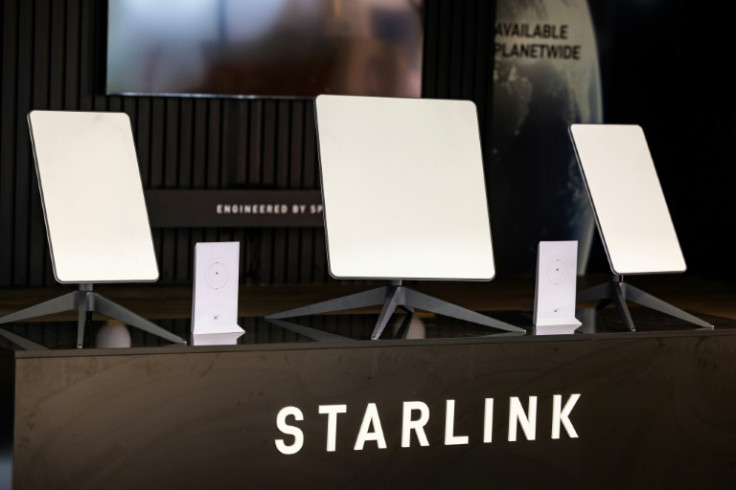
Industry analysts identify five primary competitors challenging Starlink this year: Amazon Leo (formerly Project Kuiper), Viasat, HughesNet, Eutelsat OneWeb and Telesat Lightspeed. While Starlink maintains advantages in scale and consumer accessibility, these rivals are carving niches through established infrastructure, enterprise focus, unlimited data plans and integration with major tech ecosystems.
1. Amazon Leo (Formerly Project Kuiper)
Amazon's rebranded Leo satellite network stands as the most direct and formidable long-term threat to Starlink. Backed by billions in investment and Amazon's vast logistics and cloud infrastructure, Leo targets high-speed, low-latency broadband with a planned 3,236-satellite LEO constellation, expandable to over 7,700.
As of April 2026, Amazon has deployed more than 240 satellites, with aggressive launch cadence continuing via United Launch Alliance Atlas V rockets and future New Glenn vehicles. CEO Andy Jassy announced commercial availability targeted for mid-2026, initially in select markets including the United States, Canada, the United Kingdom, France and Germany. Early private previews, including the Leo Ultra antenna touted for gigabit-class speeds, focus on enterprise and government users before broader residential rollout.
Leo promises download speeds up to 1 Gbps with tight integration to Amazon Web Services, appealing to businesses needing seamless cloud connectivity. Terminals are projected to cost under $400, undercutting Starlink's hardware in some scenarios. However, deployment lags Starlink significantly, and Amazon faces FCC milestones that could risk its license if not met. Still, analysts view Leo as the only near-term LEO rival capable of scaling to challenge SpaceX's consumer dominance.
2. Viasat
Viasat remains one of the strongest established alternatives, particularly for users seeking unlimited data without contracts. The company's high-throughput GEO satellites, bolstered by its acquisition of Inmarsat, deliver download speeds up to 150 Mbps with generous or unlimited data plans starting around $70 monthly.
In 2026, Viasat has shifted toward hybrid multi-orbit strategies, partnering with Telesat's upcoming Lightspeed LEO network to combine GEO reliability with lower latency. This approach suits maritime, aviation and rural residential customers who prioritize consistent performance over raw speed. Viasat's no-contract flexibility and strong customer service reputation help it retain users in areas where Starlink faces congestion or higher costs.
The company's ViaSat-3 satellites enhance capacity, addressing past complaints about data throttling. While latency remains higher than LEO services (typically 450-700 ms versus Starlink's 20-60 ms), Viasat excels in coverage stability and enterprise solutions, making it a go-to for users wary of Starlink's variable performance in dense areas.
3. HughesNet
Hughes Network Systems, a longtime player in rural broadband, continues to compete on affordability and reliability. Powered by its Jupiter-3 GEO satellite and partnerships, HughesNet offers plans starting as low as $50 monthly with speeds from 25-100 Mbps.
Known for near-universal U.S. coverage and soft data caps that rarely result in hard throttling, HughesNet appeals to budget-conscious households in remote locations. In 2026, the service emphasizes consistent speeds and straightforward pricing, contrasting with Starlink's occasional deprioritization during peak usage.
Though lacking LEO's low latency, HughesNet has modernized its network to support streaming and basic online activities more effectively than earlier generations. It remains a solid choice for users prioritizing low upfront costs and predictable billing over cutting-edge performance.
4. Eutelsat OneWeb
Eutelsat OneWeb operates a mature 648-satellite LEO constellation focused primarily on enterprise, government, maritime and aviation markets rather than direct-to-consumer residential service. With roughly 630 operational satellites, OneWeb delivers speeds around 200 Mbps and lower latency than traditional GEO systems.
The merged Eutelsat-OneWeb entity reported strong revenue growth in 2025-2026, leveraging partnerships with telecom operators and governments for backhaul and mobility services. OneWeb's polar orbits provide excellent high-latitude coverage, benefiting users in Alaska, northern Canada, Europe and polar routes.
Unlike Starlink's direct sales model, OneWeb sells capacity through resellers and integrators, making it less visible to individual consumers but highly valued in B2B segments where reliability and security take precedence. Its hybrid GEO-LEO approach with Eutelsat enhances flexibility for complex deployments.
5. Telesat Lightspeed
Canada's Telesat is preparing its Lightspeed LEO constellation for initial service in 2027, with pathfinder satellites slated for December 2026 deployment. The reduced 198-satellite network, supported by Canadian government funding and SpaceX launch contracts, targets enterprise and rural broadband with emphasis on secure, low-latency connections.
Lightspeed satellites, manufactured by MDA, aim for high-capacity links optimized for government, defense and telecom backhaul. Telesat has secured multi-year deals, including with Viasat, and maintains a growing backlog that now exceeds its traditional GEO business.
While full global consumer service remains further out, Lightspeed's focus on resilient infrastructure and partnerships positions it as a strategic player in sovereign connectivity and hybrid networks. Its delayed but deliberate rollout reflects a conservative approach to quality and funding stability.
Emerging Mentions and Market Dynamics
Other players, such as AST SpaceMobile for direct-to-cell connectivity and Chinese constellations like GuoWang, add pressure from different angles. Traditional resellers like EarthLink package Viasat or HughesNet services with competitive mid-tier pricing.
The broader satellite internet landscape in 2026 reflects rapid evolution. Starlink's massive scale enables aggressive pricing and rapid iteration, but congestion in popular areas has prompted some users to explore alternatives. New LEO entrants promise to increase capacity and drive innovation in terminals, software and pricing.
Regulatory hurdles, launch availability and manufacturing scale remain key challenges for challengers. Amazon Leo's integration with AWS, Viasat's unlimited plans and OneWeb's enterprise reliability highlight diverse strategies against Starlink's all-in-one consumer appeal.
For rural and remote users, the competition translates to more choices: faster LEO options where available, more affordable GEO plans, or hybrid solutions blending strengths. Maritime and aviation sectors benefit from expanded mobility offerings across providers.
As deployments accelerate, 2026 could mark the beginning of genuine multi-player competition that benefits consumers through improved service, lower costs and broader coverage. Analysts predict continued consolidation and technological convergence, with multi-orbit networks becoming standard.
SpaceX shows no signs of slowing, with ongoing Starlink launches and Gen2 satellite improvements. Yet the entrance of well-resourced rivals like Amazon, combined with modernization by incumbents, signals a maturing market where monopoly concerns give way to dynamic rivalry.
For now, Starlink retains the lead in subscriber numbers and performance for most residential users. But with Amazon Leo's mid-year target, Viasat's flexibility and others filling specialized roles, the satellite broadband sector enters a more competitive era that could reshape connectivity for millions in underserved regions worldwide.
© Copyright 2026 IBTimes AU. All rights reserved.