

TSA's CT Scanners Now Installed at Hundreds of US Airports in 2026, but Liquid Rules Remain Inconsistent
CT Scanners Enhance Security and Passenger Experience at U.S. Airports
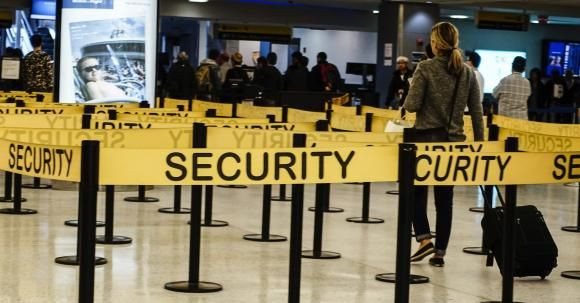
Advanced computed tomography scanners, first tested by American Airlines and the Transportation Security Administration at New York's John F. Kennedy International Airport, have now expanded to hundreds of airports across the United States as of 2026, part of a years-long rollout that has fundamentally reshaped what travelers can and cannot leave inside their carry-on bags at security checkpoints, even as enforcement of the technology's benefits remains inconsistent from airport to airport.
The CT scanner program traces back to a pilot that began at JFK's Terminal 8 security checkpoint, where American Airlines partnered with the TSA to install the three-dimensional imaging technology as an upgrade over traditional two-dimensional X-ray equipment. TSA Administrator David Pekoske said at the time the technology would substantially improve the agency's threat detection capability, while American's chief security officer, Jose Freig, described the partnership as part of the airline's broader effort to raise security standards while improving the customer experience. The scanners use algorithms similar to medical CT technology, allowing security officers to virtually rotate a bag's image 360 degrees to inspect its contents from every angle, a significant improvement over the flat, single-perspective images produced by older X-ray machines.
That early JFK pilot, along with parallel testing at airports in Phoenix and Boston, has since grown into a nationwide deployment spanning hundreds of checkpoints. As of 2026, CT scanners are now installed at major hubs including Hartsfield-Jackson Atlanta International Airport, Chicago O'Hare International Airport, Los Angeles International Airport, Dallas/Fort Worth International Airport and JFK itself, among many others. The scanners create detailed three-dimensional images of carry-on bag contents, and at properly equipped checkpoints, they eliminate the need for travelers to remove laptops, liquids, gels and aerosols from their bags during screening, a change from the standard procedures that have defined air travel security since the mid-2000s.
The rollout has been backed by substantial federal investment. According to reporting on the program's expansion, the TSA has committed roughly $781 million toward the CT scanner initiative, funding that has supported both the purchase of new equipment and the training needed to operate it effectively across the agency's nationwide checkpoint network. Officials have said the technology reduces the need for manual bag checks and helps speed up security lines overall, even as the pace and consistency of the full rollout continues to depend on funding availability, staff training timelines and performance validation at each individual airport.
Despite years of expansion, the practical experience for travelers has remained notably inconsistent depending on which airport, and even which specific terminal or checkpoint, they happen to pass through. Because CT scanners have not been installed uniformly across every checkpoint at every airport, the traditional 3-1-1 liquid rule, which limits travelers to containers of 3.4 ounces or less packed within a single quart-sized bag, technically remains in effect at most airports nationwide even as select checkpoints equipped with CT technology have begun exempting travelers from those restrictions. That patchwork has produced widely varying experiences for passengers moving through security. Online travel communities have documented numerous accounts of inconsistent enforcement, including travelers who successfully carried full-sized toiletries through one terminal at a major airport only to have identical items confiscated weeks later at a different terminal within the same airport, depending on which specific checkpoint happened to be equipped with the newer scanning technology on any given day.
Beyond the inconsistency in liquid enforcement, the shift to CT scanning has introduced a handful of unexpected consequences for certain travelers. Photographic film has proven particularly vulnerable to the new scanners, since the more powerful imaging technology used in CT machines can damage or destroy unprocessed film in a single pass, a risk that traditional lower-powered X-ray equipment did not pose to the same degree. Travelers carrying undeveloped film are generally advised to request manual inspection rather than allowing their film to pass through a CT scanner.
The physical design of the new machines has also introduced a more subtle change affecting carry-on luggage generally. CT scanners typically feature slightly smaller entry tunnels than many older X-ray systems, a design choice that helps optimize image quality and screening performance but also means that oversized bags, which travelers had previously been able to squeeze through security checkpoints even when they exceeded official airline carry-on dimensions, may now simply fail to fit through the machine at all. For years, enforcement of carry-on size limits often depended inconsistently on gate agents or occasional spot checks using sizing frames, allowing many travelers to informally push the boundaries of stated size restrictions. The narrower physical footprint of CT scanners has effectively introduced a new, hard mechanical limit on bag dimensions at equipped checkpoints, regardless of how loosely airlines themselves may enforce their own posted size restrictions at the gate.
Beyond bag screening changes, the TSA has continued rolling out other security-related policy updates alongside the CT scanner expansion. Beginning in May 2025, travelers flying without a REAL ID or another TSA-approved form of identification have faced the possibility of a new biometric verification fee, along with potential delays or denied boarding at security checkpoints, a separate but concurrent shift in the agency's broader identity verification requirements.
Homeland Security Secretary Kristi Noem indicated in July 2025 that further changes to the agency's liquid restriction policies could be on the horizon as CT scanner coverage continues to expand, though as of 2026 the baseline 3-1-1 rule remains fully enforced at the large majority of U.S. airports that have not yet completed their CT scanner installations. Aviation security analysts have said the technology's full potential, including the possibility of eliminating liquid restrictions entirely on a nationwide basis, will likely remain unrealized until CT scanners are installed consistently across every checkpoint lane at every major U.S. airport, a milestone officials have not provided a specific target date for reaching.
For now, travelers passing through major hubs including JFK, Atlanta, Los Angeles, Chicago and Dallas-Fort Worth are advised to check directly with their specific airport, and ideally their specific terminal, regarding current CT scanner availability before assuming they will be permitted to leave laptops and liquids inside their carry-on bags, given how significantly screening procedures continue to vary even within the same airport depending on which checkpoint happens to be equipped with the newer technology on any given travel day.
© Copyright 2026 IBTimes AU. All rights reserved.