NVIDIA Shares Rise Nearly 3% as AI Chip Demand and Favorable Seasonality Support Rebound Ahead of Earnings
NVIDIA's stock gains momentum with strong AI infrastructure demand and anticipation of upcoming earnings report.
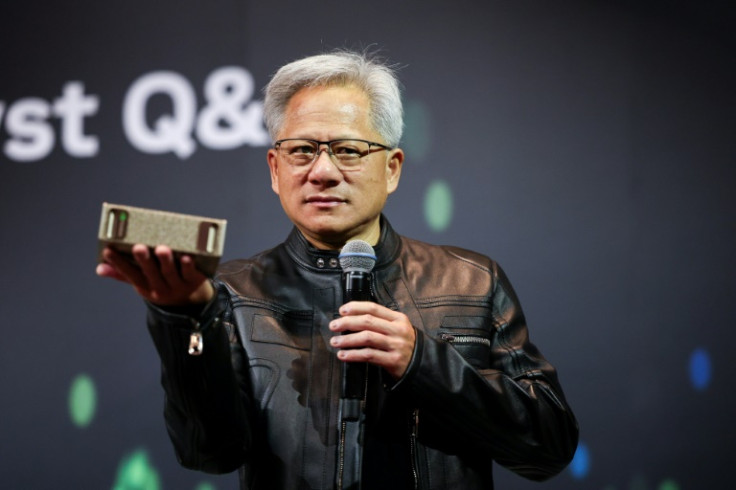
NVIDIA Corp. shares advanced nearly 3% in morning trading Monday, extending a rebound in semiconductor stocks as investors positioned for continued strength in artificial intelligence infrastructure demand ahead of the company's next earnings report later this month.
The stock traded near $206.71, up $5.96, amid broader gains in the chip sector and positive seasonal patterns that have historically favored NVIDIA in August. The move comes after a period of consolidation following strong fiscal first-quarter results earlier in the year and as the market anticipates the company's fiscal second-quarter report scheduled for late August.
NVIDIA remains the dominant supplier of graphics processing units and networking solutions powering large-scale AI training and inference systems used by hyperscalers, cloud providers, enterprises and sovereign AI initiatives. Demand for its Blackwell-generation systems has been robust, while the company has advanced its next-generation Vera Rubin architecture into production.
Chief Executive Jensen Huang has emphasized the scale of current and upcoming output. "Vera Rubin is already in production," Huang said recently, adding that there are "giant amounts of production incoming." In earlier commentary accompanying results, Huang described the environment as one in which "computing demand is growing exponentially — the agentic AI inflection point has arrived."
In its most recent reported quarter, NVIDIA delivered record revenue of $81.6 billion, up 85% from the year-earlier period, with data center revenue reaching $75.2 billion. The company guided for second-quarter revenue of approximately $91 billion, plus or minus 2%, a figure that exceeded prior Wall Street expectations at the time. Gross margins have remained elevated in the mid-70% range, supported by high-value AI systems and networking products.
The company has also returned significant capital to shareholders, including an expanded share repurchase authorization of $80 billion and a substantial increase in its quarterly dividend. These actions followed the strong cash generation that accompanied the AI-driven revenue surge.
Market participants are focused on several near-term factors. Analysts expect the upcoming earnings report to show continued sequential growth driven by Blackwell shipments and early contributions from newer platforms. Guidance for the subsequent quarter will be closely watched for signals on the pace of AI capital spending by major cloud providers and any updates on supply chain conditions, including memory availability.
Broader semiconductor stocks have shown resilience, with peer shares also advancing as investors reassess valuations after recent pullbacks. NVIDIA's forward valuation has compressed relative to earlier peaks in the AI cycle, prompting some analysts to describe the shares as more attractive on a relative basis while still reflecting premium growth expectations.
Competition remains a point of discussion. Custom AI accelerators developed by large cloud companies and alternative GPU or accelerator designs from other semiconductor firms continue to evolve. Export restrictions affecting sales into certain markets, particularly China, have limited one potential revenue stream, and management has excluded China data center compute revenue from recent outlooks. Despite these constraints, diversification across hyperscale, enterprise, industrial and sovereign customers has helped sustain overall data center momentum.
Networking solutions, including InfiniBand, Spectrum-X Ethernet and NVLink interconnects, have become an increasingly important contributor, with revenue in that category rising sharply as larger AI clusters require higher bandwidth and lower latency. Edge computing and professional visualization segments have provided additional, if smaller, growth contributions.
Looking further ahead, NVIDIA is positioning its platform for agentic AI applications, robotics, automotive and other physical AI use cases. Partnerships and infrastructure deployments announced in recent months have reinforced the company's role at the center of large-scale AI factory buildouts.
Seasonality data cited by market technicians shows August has historically been one of NVIDIA's stronger months over multi-year periods, adding a technical tailwind to the fundamental narrative. The stock's proximity to key moving averages after recent consolidation has also drawn interest from longer-term investors viewing the levels as potential entry points within a broader uptrend.
Risks include the high concentration of revenue among a relatively small number of large customers, potential shifts in capital spending plans by those customers, execution on successive product transitions, and geopolitical or regulatory developments affecting technology supply chains. Inventory management and component costs, particularly memory, remain areas of ongoing attention.
As trading continued Monday, the focus stayed on the durability of AI infrastructure investment and NVIDIA's ability to convert that demand into sustained revenue and margin performance. The company's next earnings release is expected to provide updated visibility into order trends, product mix and the ramp of newer architectures.
NVIDIA's scale, software ecosystem and full-stack approach to accelerated computing have cemented its position as a primary beneficiary of the ongoing buildout of AI data centers. The modest advance in the shares reflects a combination of sector-wide support, favorable historical patterns for the month and anticipation of further confirmation that demand remains intact as the company prepares to update investors later in August.
© Copyright 2026 IBTimes AU. All rights reserved.
- Recommended For You