Krystal Biotech Shares Fall Over 10% After Q2 Results Despite VYJUVEK Revenue Growth and Pipeline Progress
Gene therapy leader Krystal Biotech reports robust Q2 revenue growth, but investor concerns over growth pace and international expansion impact stock performance.
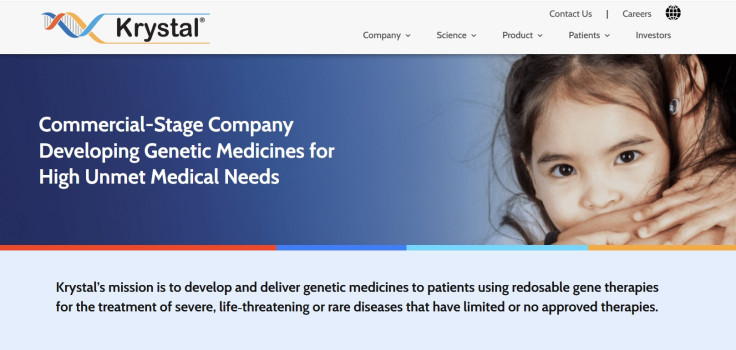
Krystal Biotech Inc. shares declined more than 10% in morning trading Monday after the gene therapy company reported second-quarter results that showed continued growth in sales of its lead product but fell short of some investor expectations for sequential acceleration.
The Pittsburgh-based firm recorded $119.2 million in global net product revenue from VYJUVEK, its topical gene therapy for dystrophic epidermolysis bullosa, or DEB, in the three months ended June 30. That figure represented a 24% increase from the same period a year earlier and brought cumulative revenue since the product's launch to $965.9 million. Gross margin remained high at 95%.
Net income for the quarter reached $54.8 million, or $1.85 per share on a basic basis and $1.79 on a diluted basis, compared with $38.3 million, or $1.33 and $1.29 per share, respectively, in the year-earlier period. The company ended the quarter with $1.1 billion in cash, cash equivalents and investments.
Despite the year-over-year gains and profitability, the stock sold off sharply. Market participants appeared focused on the pace of U.S. uptake and the timeline for broader international reimbursement, even as management highlighted durable demand and expanding prescriber reach.
"Our second quarter reflects the strength of the Krystal model: a global commercial product that continues to perform, a strong balance sheet, and a pipeline now moving toward multiple registrational readouts," Chairman and Chief Executive Krish S. Krishnan said. "VYJUVEK is not only changing the standard of care for DEB patients around the world, it is also giving us the ability to advance high-conviction rare disease programs across the eye, lung, and skin with focus and discipline. We believe the next 12 to 18 months have the potential to mark an important transition for Krystal from a commercial success story to a multi-product genetic medicines company."
In the United States, the company reported more than 730 reimbursement approvals and an expanded prescriber base of over 640 unique physicians. Patient support programs are helping integrate treatment into ongoing wound care routines following a label update that increased administration flexibility. Management described demand as durable and use of VYJUVEK as a lifelong therapy continuing to grow.
Internationally, VYJUVEK is gaining traction in Germany, France and Japan. Pricing and reimbursement discussions remain ongoing in several European markets, with launches in Spain and Italy still expected before year-end. The product received United Kingdom approval earlier in the year, and additional marketing authorization applications are planned for Switzerland and Australia in the second half of 2026.
The pipeline provided several updates. The registrational IOLITE study of KB803 for corneal abrasions in DEB patients completed enrollment in April and remains on track for top-line data in the fourth quarter. Enrollment continues in the EMERALD-1 registrational trial of KB801 for neurotrophic keratitis, with completion of roughly 60 patients targeted before year-end.
In respiratory programs, dosing continues in a repeat-dose study of KB407 for cystic fibrosis patients ineligible for or not benefiting from modulator therapies, with interim results expected later this year. Work is underway with the FDA and Cystic Fibrosis Foundation on a potential registrational design that could incorporate natural history data. KB408 for alpha-1 antitrypsin deficiency lung disease continues enrollment in a repeat-dose cohort.
Dermatology candidate KB111 for Hailey-Hailey disease has begun enrolling patients in an open-label study, with interim results also targeted before year-end. In oncology, interim data from the KYANITE-1 study of inhaled KB707 in advanced non-small cell lung cancer showed an objective response rate of 31% in combination with pembrolizumab and durable responses. Enrollment in the final expansion cohort is expected to finish later this year, with updated results and potential registrational plans in the first half of 2027. Early signals in Gorlin syndrome patients are also under evaluation.
Operating expenses remained disciplined. Research and development costs were $14.5 million, while selling, general and administrative expenses rose to $39.9 million, reflecting commercial expansion. For the first six months of 2026, product revenue totaled $235.6 million and net income reached $110.7 million.
The company maintains a substantial cash position that supports both commercial activities and pipeline advancement without near-term financing needs. Full-year guidance on non-GAAP research and development plus selling, general and administrative expenses was previously set in a range that management has not altered in the latest update.
Krystal Biotech has built its platform around a proprietary herpes simplex virus type 1 vector that enables redosable gene delivery. VYJUVEK remains the primary commercial driver, but the breadth of clinical programs in ophthalmology, respiratory disease, dermatology and oncology is intended to diversify the portfolio over time.
The share price reaction Monday illustrates the high expectations that have accompanied the stock's strong performance over the past year. Investors have rewarded commercial execution and pipeline progress, yet any perception of moderating growth or delayed catalysts can prompt rapid profit-taking in a sector known for volatility.
Upcoming milestones include the fourth-quarter data from the KB803 study, enrollment completion and later readouts from KB801, interim updates across respiratory and dermatology programs, and further international launches of VYJUVEK. How these programs convert into additional approved products will determine whether the company successfully transitions into the multi-product genetic medicines firm its leadership envisions.
Trading volume was elevated as the market digested the quarterly figures and the outlook for the balance of the year. While the fundamental picture of revenue growth, high margins, profitability and a robust cash balance remains intact, near-term sentiment has shifted on the precise trajectory of commercial momentum and the timing of the next wave of clinical catalysts.
© Copyright 2026 IBTimes AU. All rights reserved.
- Recommended For You