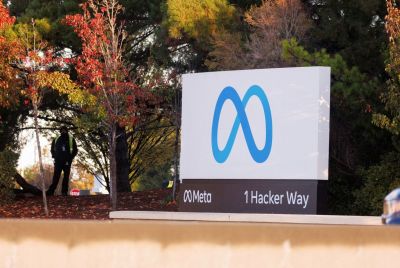
Meta Platforms Stock Jumps 7% Today as Bloomberg Reports Company Plans to Enter the Cloud Business
Meta Platforms transforms its data center strategy, entering the cloud market to compete with industry giants.

Meta Platforms shares surged more than 7% Wednesday morning after Bloomberg reported the social media giant is developing plans to sell its artificial intelligence computing capacity to external customers, a move that would transform the company's massive data center buildout from a pure cost center into a new revenue-generating business and position it as a direct competitor to Amazon Web Services, Microsoft Azure and Google Cloud.
Meta Platforms shares jumped as much as 8% Wednesday morning following a Bloomberg report that the tech giant plans to enter the cloud infrastructure market by selling its excess AI computing capacity. The move sets up direct competition with established hyperscale giants like Amazon Web Services, Microsoft Azure, and Google Cloud Platform.
Shares of the Menlo Park, California-based company were trading at $603.00 as of 9:52 a.m. EDT, up $39.71, or 7.05%, on the day, building on Monday's 2.36% advance and pushing the stock back toward levels it had occupied before a difficult stretch earlier in June.
The move would transform Meta's sprawling and expensive data center buildout into a direct revenue-generating business. The announcement did not come entirely out of nowhere. CEO Mark Zuckerberg had signaled at Meta's annual shareholder meeting in late May that selling excess compute capacity was "definitely on the table," and today's reporting indicates those plans have since taken concrete shape.
The cloud business plan represents the most significant potential strategic evolution for Meta since it pivoted its public identity around the metaverse before ultimately refocusing on artificial intelligence. Meta has been among the most aggressive spenders in the technology sector on AI infrastructure, guiding toward full-year 2026 capital expenditures of between $125 billion and $145 billion, a figure that has repeatedly drawn investor scrutiny over whether the company can generate returns commensurate with that level of spending. The cloud business announcement is a direct answer to that concern, suggesting Meta sees a path to monetizing the infrastructure it has been building rather than simply absorbing the costs internally.
Adam Crisafulli, analyst and founder of Vital Knowledge, detailed the sharply contrasting viewpoints driving market sentiment following the news. On the positive side, Crisafulli noted the shift directly answers long-standing investor concerns regarding Meta's aggressive capital expenditures. "Meta has been one of the heaviest spenders and many feared it was building way more capacity than it could ever use internally, so this external cloud business will help monetize all that infrastructure, bolstering revenue, margins, and cash flow," Crisafulli wrote. "Since the industry in aggregate still seems to be capacity constrained, this Meta compute infrastructure will likely be quickly utilized by others."
The cloud entry also positions Meta to compete in one of the technology sector's most valuable and fastest-growing markets. Cloud infrastructure services generated roughly $400 billion in annual revenue globally in 2025 according to industry estimates, with AWS, Azure and Google Cloud holding the dominant share of that market. Meta's entry, backed by the extraordinary computing infrastructure the company has built specifically for AI model training and inference, could give it a credible offer for enterprise and AI-focused customers, particularly given that Meta's hardware investments have centered on the same Nvidia GPU clusters that AI companies across the sector depend on most heavily.
While the news sent Meta shares surging, it weighed heavily on other hyperscaler and neocloud stocks as a major new competitor entered the arena. Shares of CoreWeave, a GPU cloud provider that went public earlier this year, slipped in early trading as investors reassessed the competitive implications of a company with Meta's infrastructure scale entering the market for AI computing capacity.
Wednesday's rally comes after a difficult stretch for Meta heading into the final week of June. A federal judge ruled on June 29 to allow a multi-state child addiction lawsuit to proceed against the company, adding to a string of legal headwinds that have shadowed Meta's stock throughout 2026. The company has also faced mounting scrutiny over its decision to replace some human content moderation with generative AI systems, a transition that independent reporting indicated had experienced systemic glitches in its initial rollout. Those concerns had weighed on the stock during June, contributing to a period in which Meta's shares declined even as the broader technology sector strengthened.
Meta faces challenges in the first half of 2026, with a 15% decline in stock price amidst a strong push into AI. The company is exploring cloud services to monetize excess AI capacity, while legal troubles continue to mount regarding its platforms' impact on children.
Against that backdrop, Wednesday's cloud business announcement offers a narrative reset for a company whose investment story had started to center more heavily on costs and legal risks than on growth opportunities. Meta's most recent quarterly results showed revenue of $47.5 billion for the second quarter, up from a year earlier, with capital expenditures of $17 billion for the quarter alone, reflecting the scale of infrastructure spending that the cloud business plan is now designed to partially offset.
The company's next earnings report is scheduled for July 29, a date that will give investors their first structured opportunity to hear management discuss the cloud strategy in detail alongside the company's advertising revenue trends, AI product development timeline and broader financial outlook for the back half of the year. Analysts widely expect the earnings call to be heavily focused on the cloud business announcement, with questions about pricing strategy, target customer segments, the competitive moat Meta can build relative to established hyperscalers and the timeline for generating meaningful cloud revenue likely to dominate investor questioning.
Wall Street's consensus view on Meta heading into Wednesday remained broadly bullish, with the average 12-month price target across major research firms sitting well above the stock's pre-announcement trading range. Wednesday's rally, if sustained, would help repair some of the technical damage Meta's chart accumulated during a difficult June and position the stock more favorably heading into what many analysts expect will be a pivotal second-half earnings season for the broader artificial intelligence sector.
© Copyright 2026 IBTimes AU. All rights reserved.
- Recommended For You