

Is LaGuardia Airport Open Now? Airport Remains Closed Monday Morning After Fatal Air Canada Collision
New York — LaGuardia Airport stayed shut early Monday, March 23, 2026, following a late-night collision between an Air Canada Express regional jet and a Port Authority fire truck on a runway, an incident that killed two pilots and injured at least four others, authorities and sources confirmed.
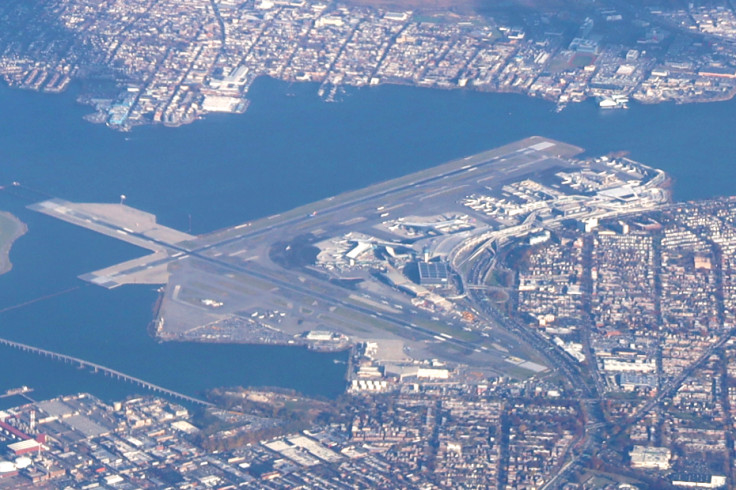
The crash happened around 11:38 p.m. Sunday when Jazz Aviation Flight 8646, operating as Air Canada Express from Montreal-Trudeau International Airport, struck the emergency vehicle on Runway 4 while slowing after landing. The Bombardier CRJ-900 sustained major front-end damage, with photos showing the nose crumpled and the aircraft stationary on the tarmac surrounded by emergency responders.
The Federal Aviation Administration issued a ground stop shortly after the incident, halting all arrivals and departures. Officials indicated the airport would remain closed until at least 2 p.m. ET on Monday to allow for emergency response, debris removal, runway inspection, and the start of a National Transportation Safety Board investigation. As of mid-morning Monday, no reopening had occurred, and flight tracking sites showed no active arrivals or departures, with diversions continuing to nearby hubs like Newark Liberty and John F. Kennedy International.
The Port Authority of New York and New Jersey, which operates LaGuardia, confirmed the collision involved a Jazz Aviation flight and a Port Authority Aircraft Rescue and Firefighting vehicle responding to an unrelated airfield matter. "Emergency response protocols were immediately activated," a Port Authority spokesperson said. "The airport is currently closed to facilitate the response and allow for a thorough investigation."
Initial reports varied on casualties, but sources familiar with the matter told NBC News and the New York Post that the plane's pilot and co-pilot died in the impact. Two Port Authority officers or firefighters sustained serious injuries, including broken limbs, though they remained stable at a hospital. Four people total were reported injured in early accounts, with no immediate confirmation of passenger harm. The flight carried about 72 passengers and four crew members; passengers were evacuated orderly, many deplaning from the rear, and videos showed the aircraft's nose lifting slightly after disembarkation.
The New York Fire Department and Port Authority Police responded swiftly, with fire trucks positioning around the scene. No fire broke out, but the low-speed collision—estimated at around 24 mph based on flight data—still caused significant structural damage to both the aircraft and vehicle.
LaGuardia, one of the nation's most congested airports with tight airspace and short runways, faced added strain from the closure. The incident compounded existing disruptions, including TSA staffing shortages during a partial federal government shutdown that had already led to long security lines in prior days. Travelers reported widespread cancellations and diversions, with 18 flights affected according to Flightradar24. Airlines urged passengers to check status before heading to the airport, warning of major delays across the Northeast.
The FAA's National Airspace System status page listed LaGuardia as closed due to the "aircraft emergency," with high likelihood of extension beyond initial estimates. Some notices suggested potential reopening as late as 6 p.m. GMT (1 p.m. ET), but on-the-ground assessments took precedence. Cleanup crews worked through the night to clear the runway, while NTSB investigators arrived to examine wreckage, review air traffic control communications, cockpit voice and flight data recorders, and witness statements.
Aviation safety experts highlighted runway incursion risks at busy facilities like LaGuardia, where ground vehicle movements require precise coordination. The firefighting truck was on the runway for a separate response, raising questions about clearance protocols, visibility in nighttime conditions, and communication breakdowns. The FAA has pushed enhanced ground surveillance and training in recent years, but incidents persist amid rising traffic.
Air Canada and Jazz Aviation expressed deep concern and full cooperation with authorities. "We are devastated by this tragic event and our thoughts are with those affected," the airline said in a statement. The carrier worked to rebook passengers and provide support.
The collision drew immediate attention from federal regulators and congressional leaders, who called for swift answers on prevention measures. LaGuardia's history of operational challenges—exacerbated by its location near dense urban areas—amplified scrutiny.
As Monday progressed, airlines rerouted flights, and ground transportation options swelled with demand. Travelers faced uncertainty, with some opting for trains or driving amid the shutdown. The Port Authority promised updates as recovery advanced.
The incident underscored vulnerabilities in airport ground operations, even at low speeds. With fatalities confirmed, the focus shifted to supporting victims' families and preventing recurrence. LaGuardia, a key gateway for domestic travel, remained offline into the day, disrupting thousands of itineraries in one of the busiest travel periods.
Final determinations on reopening depended on NTSB and FAA clearance. Officials emphasized safety over speed, vowing a comprehensive probe into the causes.
© Copyright 2026 IBTimes AU. All rights reserved.