Is Apple Better Off Without Tim Cook as CEO? Debate Intensifies After 15 Years at the Helm
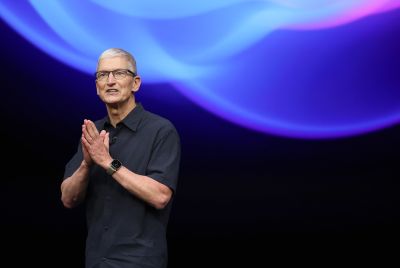
CUPERTINO, Calif. — As Tim Cook prepares to step down as Apple CEO after 15 years and transition to executive chairman, with hardware engineering chief John Ternus set to take over on Sept. 1, the question of whether Apple is better off without Cook's steady leadership has sparked intense debate among investors, analysts and tech historians.

Cook took the reins from Steve Jobs in 2011 when Apple was already a Silicon Valley powerhouse valued at roughly $350 billion. Under his watch, the company's market capitalization swelled to more than $4 trillion, revenue nearly quadrupled, and the services business exploded into a high-margin powerhouse generating over $100 billion annually. Apple became the world's most valuable company for much of his tenure, crossing the $1 trillion, $2 trillion and $3 trillion milestones for the first time.
Yet critics argue that while Cook excelled at operational excellence and scaling, he has not delivered a breakthrough product on the scale of the iPhone. The Apple Watch and AirPods were successful extensions of the ecosystem, but the Vision Pro mixed-reality headset has seen limited mainstream adoption. Some analysts contend that Cook's methodical, collaborative style has optimized Jobs' creations rather than inventing new categories that reset the competitive landscape for the next decade.
Supporters counter that comparing Cook to Jobs is unfair. Jobs returned to a near-bankrupt Apple in 1997 and transformed it with revolutionary products. Cook inherited a thriving giant and focused on execution, supply-chain mastery, and sustainable growth. He navigated geopolitical tensions, pushed for greater manufacturing investments in the United States, and emphasised privacy and environmental initiatives. Under Cook, Apple returned hundreds of billions to shareholders through dividends and buybacks while maintaining sky-high profit margins.
Leadership styles could not be more different. Jobs was charismatic, demanding and visionary, often pushing teams to impossible standards with his famous "reality distortion field." Cook is data-driven, collaborative and focused on long-term sustainability. He prioritised diversity, supplier responsibility and steady product iteration over dramatic reinvention. Many credit Cook with proving that Apple did not need another Jobs-like showman to thrive; disciplined management was sufficient for sustained prosperity.
By the numbers, Cook's record is impressive. Apple's revenue grew from $108 billion in fiscal 2011 to around $416 billion in fiscal 2025. The services segment, which barely existed when he took over, now provides stable, high-margin recurring revenue. The transition to Apple Silicon chips has improved performance and efficiency across Mac and other devices. Cook also steered the company through the COVID-19 pandemic and supply disruptions with remarkable resilience.
However, the lack of a major new product category since the iPhone has become a frequent point of criticism. Some investors worry that Apple has become overly reliant on the iPhone, which still accounts for the majority of revenue. The Vision Pro, while ambitious, has not yet achieved mass-market success. Questions remain about Apple's progress in artificial intelligence, where rivals like OpenAI and Google have moved faster in some areas.
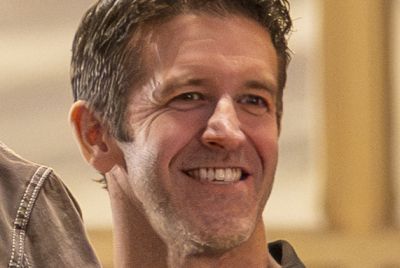
As Ternus prepares to assume the CEO role, the debate over Cook's legacy has intensified. Supporters argue that Cook's greatest achievement was proving Apple could thrive without Jobs. He built a robust executive bench, strengthened the balance sheet, and created a culture of operational excellence that has sustained the company's dominance. Detractors say the stock's multiple has contracted in recent years because growth has slowed and the innovation pipeline feels less revolutionary.
For Australian investors holding Apple shares in superannuation funds or personal portfolios, the transition raises practical questions. Cook's era delivered exceptional total shareholder returns, but the stock has traded in a narrower range in recent years compared with the explosive growth of the Jobs-to-Cook handover period. Many Aussies benefited from Apple's strong dividend growth and buyback program, which Cook consistently expanded.
Looking ahead, the post-Cook Apple will be judged on whether it can deliver the next big thing while maintaining the operational discipline Cook perfected. Ternus, who has led hardware engineering for years, is seen as a safe pair of hands with deep product knowledge. The question is whether he can combine that technical expertise with the visionary spark that defined the Jobs era and the scaling mastery that defined Cook's.
History suggests Apple has thrived under both leaders precisely because they complemented each other. Jobs provided the soul and breakthrough moments. Cook gave the company longevity, financial might and global scale. Their combined legacies have made Apple not just a technology company but a cultural and economic force.
The debate over whether Apple is better off without Tim Cook ultimately depends on the metric. If measured by revolutionary products and cultural impact, Jobs remains unmatched. If judged by shareholder returns, operational excellence and sustainable growth, Cook's record is unparalleled. Most analysts believe the ideal future Apple CEO would blend both: Jobs' creative spark with Cook's operational mastery.
Cook leaves behind a vastly larger, more diversified and financially stronger company than the one he inherited in 2011. He has repeatedly said his goal was to ensure Apple would thrive long after he was gone. The coming years under Ternus will test whether that vision holds.
For now, the transition appears orderly. Cook will remain executive chairman, providing continuity and strategic guidance. The company enters its 50th anniversary year in 2026 with record results and a strong balance sheet. Whether Apple can maintain its dominance without Cook's daily leadership will be one of the most closely watched corporate stories of the decade.
Australian investors, many of whom hold Apple as a core long-term holding in their portfolios, will be watching the succession closely. The stock's performance under Cook delivered exceptional compounded returns, but the next chapter will determine whether that growth story can continue or whether the lack of a new breakthrough product becomes a limiting factor.
As Cook steps back from day-to-day operations, the question lingers: Was Apple better off with Tim Cook at the helm? The answer, most likely, is that it was better off with both Jobs and Cook — each in their time — and the true test now lies in whether the company can evolve beyond them while preserving what made it extraordinary.
© Copyright 2026 IBTimes AU. All rights reserved.
- Recommended For You