Steve Jobs vs Tim Cook: Who Was the Better Apple CEO?
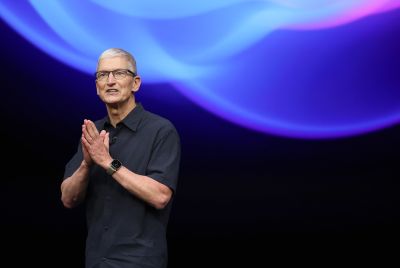
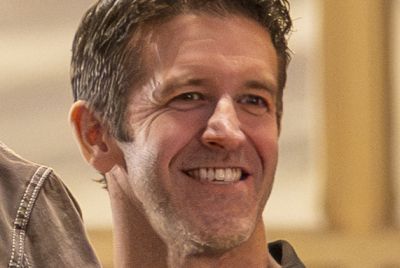
CUPERTINO, Calif. — As Tim Cook steps down as Apple CEO after 15 years to become executive chairman, with hardware engineering chief John Ternus set to take over on Sept. 1, the debate over who proved the superior leader — visionary co-founder Steve Jobs or operations master Cook — has reignited among investors, analysts and tech historians.
The comparison pits Jobs' transformative product innovation against Cook's unmatched ability to scale a company into the world's most valuable corporation. Both delivered extraordinary results, yet in starkly different ways. Jobs rescued Apple from near-bankruptcy and redefined entire industries. Cook inherited a thriving giant and turned it into a $4 trillion cash machine with disciplined execution and ecosystem expansion.
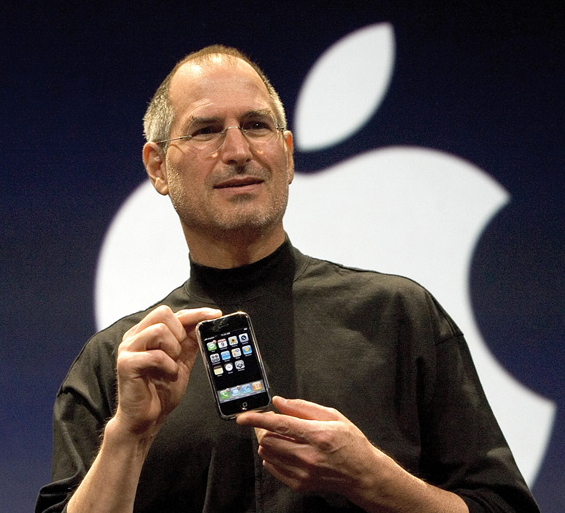
Steve Jobs returned to Apple as CEO in 1997 when the company was struggling, with a market value around $2.5 billion. By the time he resigned in August 2011 due to health issues, Apple's market cap had soared to roughly $350 billion — a staggering 13,900% increase. He oversaw the launches that reshaped technology: the iMac, iPod, iTunes Store, iPhone and iPad. These products not only revived Apple but revolutionized personal computing, music consumption, mobile phones and tablets.
Jobs' leadership style was legendary for its intensity, perfectionism and "reality distortion field." He obsessed over design details, user experience and marketing, famously unveiling the iPhone in 2007 as a device that combined an iPod, phone and internet communicator. Under his watch, Apple introduced the App Store, Apple Stores and Pixar's success under his earlier leadership influenced storytelling in animation. His second stint is widely credited with saving and reinventing the company.
Tim Cook, handpicked by Jobs as his successor, took over in 2011 when Apple was already a Silicon Valley powerhouse valued at about $350 billion. Over the next 15 years, Cook engineered explosive growth. Apple's market capitalization swelled to more than $4 trillion by early 2026 — roughly a 1,000% to 20-fold increase depending on exact starting points — while annual revenue nearly quadrupled from $108 billion in fiscal 2011 to around $416 billion in fiscal 2025.
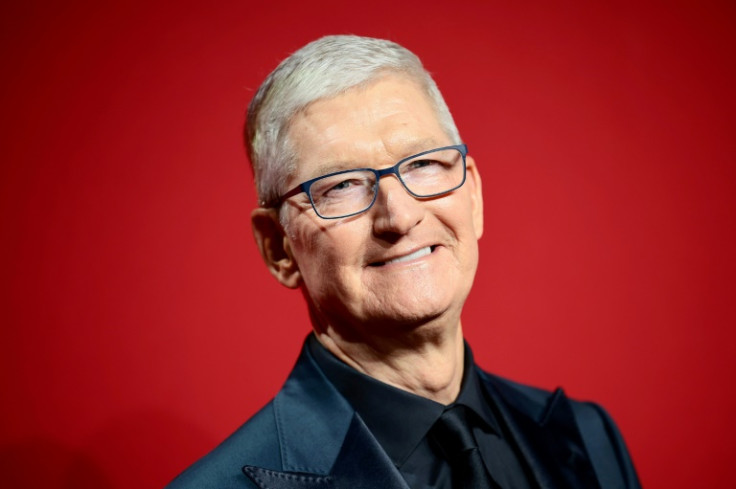
Cook's strengths lay in operational excellence. As chief operating officer, he had already streamlined Apple's supply chain, making it one of the most efficient in the world. As CEO, he focused on execution, expanding the services business — now generating over $100 billion annually with high margins from Apple Music, Apple TV+, iCloud and Apple Pay — while launching successful wearables like the Apple Watch and AirPods. He also oversaw the transition to Apple Silicon chips, boosting performance and efficiency across Mac and other devices.
Critics argue Cook has not delivered a breakthrough product on the scale of the iPhone. The Apple Vision Pro mixed-reality headset, while ambitious, has seen limited mainstream adoption. Some observers note that Cook excels at optimizing and monetizing Jobs' creations rather than inventing new categories that "reset the competitive position for the next two decades."
Yet Cook created more absolute shareholder value. A $1,000 investment in Apple when Cook became CEO would have grown dramatically, with the company crossing $1 trillion, $2 trillion and $3 trillion market cap milestones for the first time. He navigated geopolitical challenges, including U.S.-China tensions, pushed for manufacturing investments in America and emphasized privacy and environmental initiatives. Apple became a services powerhouse under his watch, providing recurring revenue stability.
Leadership styles differed sharply. Jobs was charismatic, demanding and visionary, often pushing teams to impossible standards. Cook is methodical, collaborative and data-driven, focusing on long-term sustainability. He prioritized diversity, supplier responsibility and steady product iteration over dramatic reinvention. Many analysts credit Cook with proving that Apple did not need another Jobs-like showman to thrive; disciplined management sufficed for sustained prosperity.
By the numbers, Cook surpassed Jobs as Apple's longest-serving CEO in 2025, logging more than 5,000 days in the role. During his tenure, Apple returned hundreds of billions to shareholders through dividends and buybacks while maintaining sky-high profit margins. The iPhone remains the dominant revenue driver, but services and wearables have diversified the business successfully.
Supporters of Jobs point to exponential percentage growth from a smaller base and category-defining innovation. Detractors of Cook sometimes lament a perceived lack of bold risks, noting that Apple has faced criticism for slower AI integration compared to rivals. Yet Cook steered the company through the COVID-19 pandemic, supply disruptions and economic volatility with remarkable resilience, keeping Apple as the world's most valuable company for much of his tenure.
The debate often boils down to context. Jobs built and transformed Apple when it needed a savior and disruptor. Cook scaled it into a mature, ultra-profitable global powerhouse when stability and optimization were paramount. As one recent analysis noted, the ideal future Apple CEO might blend both: Jobs' creative spark with Cook's operational mastery.
As Ternus prepares to lead, Apple celebrates its 50th anniversary in 2026 amid record results. Cook has reflected on the company's journey, emphasizing its spirit of imagination and impact on daily life. He leaves behind a vastly larger, more diversified enterprise than the one he inherited.
Ultimately, declaring a "better" CEO depends on the metric. If measured by revolutionary products and cultural impact, Jobs stands unmatched. If judged by shareholder returns, operational scale and sustainable growth, Cook's record is unparalleled. Both were essential: Jobs provided the vision that created the foundation; Cook delivered the execution that built an empire.
Their combined legacies have made Apple not just a technology company but a cultural and economic force. As the post-Cook era begins, the question evolves from "who was better" to whether Apple can continue blending innovation with impeccable operations under new leadership.
In the end, the two men complemented each other perfectly. Jobs gave Apple its soul and breakthrough moments. Cook gave it longevity and unprecedented financial might. Together, they delivered one of the greatest corporate success stories in history.
© Copyright 2026 IBTimes AU. All rights reserved.
- Recommended For You