Apple Marks 50 Years of Innovation: From Garage Startup to Tech Giant on April 1, 2026
CUPERTINO, Calif. — Apple Inc. is approaching a historic milestone: 50 years since its founding on April 1, 1976, by Steve Jobs, Steve Wozniak and Ronald Wayne in a Los Altos garage. The company, once a scrappy partnership building personal computers, has grown into one of the world's most valuable and influential corporations, reshaping technology, culture and daily life for billions.

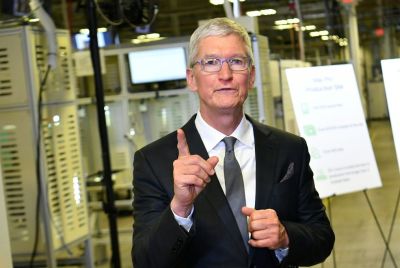
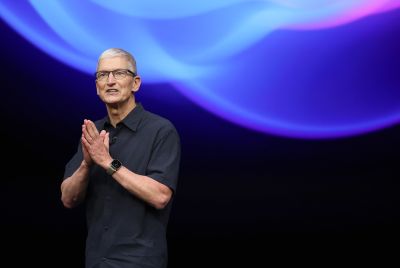
As the anniversary nears — just weeks away on April Fool's Day 2026 — anticipation is building for how Apple will commemorate the occasion. CEO Tim Cook has promised a significant celebration, telling employees in a recent all-hands meeting that the company has been "unusually reflective" about the moment.
"I've been unusually reflective lately about Apple because we have been working on what do we do to mark this moment — 50 years," Cook said, according to reports from Bloomberg's Mark Gurman. "When you really stop and pause and think about the last 50 years, it makes your heart sing. It really does. I promise some celebration. ... Are we going to celebrate it? You better believe it. We're not ready to say exactly how yet, so stay tuned."
Apple has traditionally focused more on forward-looking innovation than retrospectives, but this half-century mark appears too momentous to overlook. Speculation ranges from special product releases and limited-edition designs to employee events, public tributes or even a major showcase blending Apple's past with its future in artificial intelligence and emerging technologies.
The journey began modestly. Jobs and Wozniak, college dropouts with a vision for accessible computing, launched Apple Computer Company as a partnership. Wayne, an experienced engineer, provided early guidance but sold his 10% stake for $800 shortly after incorporation in 1977. The Apple I, hand-built by Wozniak and sold as a circuit board, debuted in 1976, followed by the groundbreaking Apple II in 1977 — one of the first mass-market personal computers with color graphics and expandability.
The 1980s brought the Macintosh in 1984, introduced with the iconic "1984" Super Bowl ad directed by Ridley Scott, promising to break free from conformity. Though initial sales were strong, internal conflicts led to Jobs' departure in 1985. The company struggled through the 1990s until Jobs returned in 1997, steering it toward revival with the iMac, iPod (2001), iPhone (2007) and iPad (2010).
Under Jobs until his death in 2011, and then Cook, Apple achieved unprecedented success. It became the first U.S. company to reach $1 trillion, $2 trillion and $3 trillion market capitalizations. Today, headquartered in Cupertino's spaceship-like Apple Park, it employs over 160,000 people and generates hundreds of billions in annual revenue from hardware, services like Apple Music and iCloud, and an expanding ecosystem.
Key milestones include the iPhone's transformation of mobile communication, the App Store's creation of a new digital economy, and recent pushes into health tech, augmented reality with Vision Pro, and AI features across devices. Apple's design philosophy — emphasizing simplicity, integration and user experience — has influenced industries far beyond tech.
As 2026 unfolds, the anniversary coincides with a busy product roadmap. Reports indicate Apple is preparing a "product blitz" early in the year, potentially including the iPhone 17 series (with an entry-level "iPhone 17e"), refreshed iPads, MacBook Pro models with M5 chips, and enhanced Siri capabilities powered by advanced AI. Some analysts suggest anniversary-themed editions or nods to classic designs could tie into launches around April.
External celebrations are already underway. The Computer History Museum in Mountain View, Calif., launched "Apple@50," a major initiative honoring the company's legacy. The program features a temporary exhibition from March 11 through September 7, 2026, displaying rare prototypes including the Apple I, Apple IIc, Lisa, Macintosh, Newton, iPod and early iPhone models.
A sold-out launch event on March 11 featured Apple co-founder Ronald Wayne, now 92, as a headline guest. Wayne reflected on the early days alongside alumni and CBS News correspondent David Pogue, who launched his book "Apple: The First 50 Years." The museum offers digital stories, hands-on vintage computing experiences, and family-friendly activities like retro-themed parties with "Pin the iPod" games and music from Apple's history.
Other tributes include special programming, livestreams and community events highlighting Apple's cultural impact — from revolutionizing personal computing to popularizing portable music and smartphones.
Financially, Apple remains robust, with strong services growth offsetting any hardware slowdowns. Its stock performance and brand loyalty underscore its enduring dominance.
Looking ahead, the 50th anniversary serves as both a reflection and a launchpad. Cook has emphasized Apple's commitment to innovation while honoring its roots. Whether through subtle design homages, bold new categories like foldable devices, or AI-driven advancements, the company shows no signs of slowing.
As April 1, 2026, approaches, the tech world — and millions of users — will watch closely for Apple's next chapter in a story that began with a simple idea: computers should be personal.
© Copyright 2026 IBTimes AU. All rights reserved.
- Recommended For You