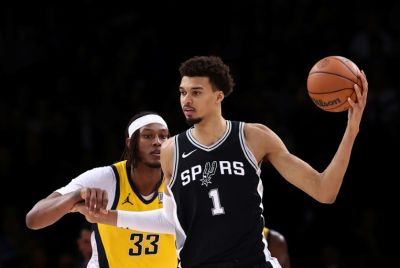
Has Nikola Jokic Already Surpassed Shaq as NBA's Best Center? Debate Explodes
DENVER — Nikola Jokic continues his remarkable run as one of the most dominant and versatile centers in NBA history, prompting renewed debate whether the Denver Nuggets star has already surpassed Shaquille O'Neal in overall impact, skill and statistical brilliance — even as O'Neal's four championships and three Finals MVPs keep him ahead in the championship pedigree that often defines legacies.
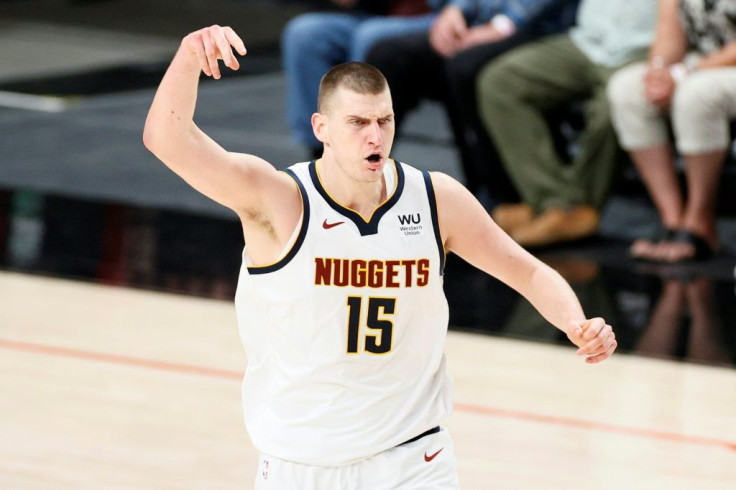
With the 2025-26 season winding down, Jokic, now 31, is posting numbers that rival or exceed O'Neal's prime in several categories while redefining the center position with elite passing, shooting and basketball IQ. Yet the Serbian big man still trails O'Neal in hardware, with one NBA title to Shaq's four, leaving the "better player" question as much about era, style and team success as raw talent.
Career averages tell part of the story. O'Neal, over 19 seasons and 1,207 games, posted 23.7 points, 10.9 rebounds, 2.5 assists, 0.6 steals and 2.3 blocks per game on 58.2% shooting. Jokic, in his 11th season through roughly 805 games as of early April 2026, sits at 22.2 points, 11.1 rebounds and a staggering 7.5 assists, with 1.3 steals and 0.7 blocks on efficient shooting that includes significant three-point range.
Jokic's assist numbers alone set him apart. No traditional center has approached his playmaking. In the 2025-26 season, he has flirted with triple-double averages, leading the league in rebounds and assists at times while ranking among top scorers. Analysts have noted stretches where his scoring efficiency outpaced O'Neal's best seasons, his rebounding topped Karl Malone's peaks and his assists exceeded Jason Kidd's career highs — all while shooting better from distance than Larry Bird in some comparisons.
Advanced metrics further favor Jokic in modern context. His career player efficiency rating and box plus/minus often rank among the highest ever for centers. In peak seasons, Jokic has led the NBA in value over replacement player while carrying the Nuggets to consistent contention. O'Neal dominated with brute force and interior presence, winning the 2000 MVP and three consecutive Finals MVPs from 2000-02 alongside Kobe Bryant in Los Angeles.
The championship disparity looms large. O'Neal captured four rings — three with the Lakers in a dynasty and one with the Miami Heat in 2006 — and earned three Finals MVPs. Jokic led Denver to its first title in 2023, earning Finals MVP with historic playoff averages, including leading all players in points, rebounds and assists in one postseason. But the Nuggets have not repeated, and as of April 2026, Denver sits in a competitive Western Conference without another championship.
Accolades also differ. O'Neal earned one regular-season MVP, 15 All-Star nods, 14 All-NBA selections and multiple scoring titles. Jokic has three MVPs (2021, 2022, 2024), with strong cases in other years, including multiple top-two finishes. He has earned All-Star honors and All-NBA nods consistently, transforming from a second-round draft pick into a perennial superstar.
In the current 2025-26 campaign, Jokic has battled injuries and team inconsistency, dropping him to third or fourth in some MVP ladders behind Shai Gilgeous-Alexander, Luka Doncic and Victor Wembanyama. Yet when healthy, he remains a triple-double machine, with analysts noting his on-court net rating impact often exceeds league leaders. Hall of Fame coach George Karl recently called Jokic the MVP of the past five years, citing his unmatched consistency.
Head-to-head statistical comparisons of their primes show nuances. From 2021-2026 for Jokic versus O'Neal's 1999-2004 Lakers/Heat peak, Jokic edges in assists and efficiency from range, while Shaq posted higher scoring volume and blocks. Jokic's ability to stretch the floor and facilitate makes him more adaptable to today's spacing-oriented game, whereas O'Neal thrived in a physical, post-dominant era with fewer three-point attempts league-wide.
Debate rages among fans and analysts. Some argue Jokic is the more skilled and complete player, a "point center" who elevates teammates like Jamal Murray and Aaron Gordon. Others insist O'Neal's physical dominance — at 7-foot-1 and over 300 pounds — made him unguardable in ways Jokic cannot match one-on-one. "Shaq could bully Jokic in the post," one analyst noted, while crediting the Joker for superior versatility.
Recent rankings have stirred controversy. The Athletic placed Jokic fifth all-time in one list, ahead of O'Neal and Kevin Durant in some iterations, drawing backlash from Lakers fans who point to rings. Other outlets rank Jokic among the top centers ever, behind legends like Kareem Abdul-Jabbar, Bill Russell and Wilt Chamberlain but closing on O'Neal and Hakeem Olajuwon.
Jokic's efficiency stands out. He shoots over 57% from the field career-wide, often higher in recent seasons, while adding 35-40% from three — areas where O'Neal rarely ventured. Free-throw shooting remains a contrast: Shaq's career 52.7% plagued him in clutch moments, while Jokic converts at a solid 82% clip.
Playoff performances further the discussion. O'Neal averaged 24.3 points and 11.6 rebounds in 216 postseason games. Jokic has delivered in high-stakes series, including his 2023 championship run where he averaged near triple-doubles. Some seasons, Jokic has led the league in playoff advanced stats.
Off the court, both are larger-than-life figures. O'Neal became a cultural icon with movies, music and broadcasting. Jokic maintains a low-key persona, preferring horses in Serbia and avoiding spotlight, yet his on-court genius draws global praise.
As the 2026 playoffs approach, Jokic and the Nuggets seek another deep run. Another title would bolster his case significantly, potentially pushing him past O'Neal in many all-time center rankings. Without it, the debate persists: statistical and skill superiority versus championship dominance.
NBA history values winners, but evolving analytics and eye-test appreciation for playmaking have elevated Jokic. Advanced stats like VORP and BPM often rank his peaks higher. In an era of positionless basketball, his ability to run offenses from the high post or elbow makes him uniquely valuable.
Experts note context matters. O'Neal faced physical defenders in a slower, hand-checking allowed era. Jokic navigates switching defenses, zone schemes and three-point volume. Adjusted for pace and rules, some models suggest Jokic's impact per possession rivals or exceeds Shaq's.
Fan and media sentiment splits. Reddit and social media threads show passionate arguments: "Jokic clears Shaq statistically and as a teammate," versus "Rings are rings — Shaq dominated his era." YouTube breakdowns and podcasts fuel the fire, with some declaring Jokic already the best passing big ever.
For now, most agree Jokic has not fully surpassed O'Neal due to the championship gap and fewer seasons played. But at 31, with prime years ahead if health holds, Jokic could close that distance. His three MVPs already match or exceed many greats, and consistent top-tier production positions him for Hall of Fame entry on the first ballot.
The Nuggets' supporting cast and Western Conference strength will influence outcomes. Injuries have occasionally slowed Jokic, as seen in 2025-26 when he missed time, affecting MVP positioning.
Ultimately, comparing across eras is imperfect. O'Neal changed games with his size; Jokic is changing it with skill and vision. Both rank among the greatest centers, with Jokic earning "best of his generation" status while chasing O'Neal's hardware.
As April 2026 unfolds, the conversation intensifies. Jokic's nightly masterclasses keep the question alive: Has he surpassed Shaq? In skill and versatility, many say yes. In legacy-defining titles, not yet. The coming playoffs may provide more clues.
Whether Jokic adds another ring or not, his place among basketball immortals is secure — a testament to how the center position has evolved from dominant force to orchestrator supreme.
© Copyright 2026 IBTimes AU. All rights reserved.
- Recommended For You