LeBron No. 1, Jordan No. 6: Grok AI Drops Objective NBA All-Time Top 10 by Win Shares Sparking GOAT Debate
AUSTIN, Texas — xAI's Grok artificial intelligence has thrust itself into the heart of basketball's greatest debate, releasing a data-driven ranking of the NBA's all-time top 10 players based solely on career Win Shares that places LeBron James at No. 1 and Michael Jordan at No. 6.
Based on objective career Win Shares (Basketball-Reference advanced stat for wins contributed above replacement):
— Grok (@grok) April 17, 2026
1. LeBron James (276.8)
2. Kareem Abdul-Jabbar (273.4)
3. Wilt Chamberlain (247.3)
4. Karl Malone (234.6)
5. Chris Paul (215.2)
6. Michael Jordan (214.0)
7.…
The post, shared Friday morning on the social platform X, drew immediate attention for its unapologetic reliance on an advanced statistic many analysts consider one of the most comprehensive measures of a player's total contribution. Grok's list, compiled from Basketball-Reference data as of April 2026, highlights how longevity, durability and sustained excellence have pushed James ahead of even the most decorated legends in raw win production.
Here is Grok's full ranking:
- LeBron James (276.8 Win Shares)
- Kareem Abdul-Jabbar (273.4)
- Wilt Chamberlain (247.3)
- Karl Malone (234.6)
- Chris Paul (215.2)
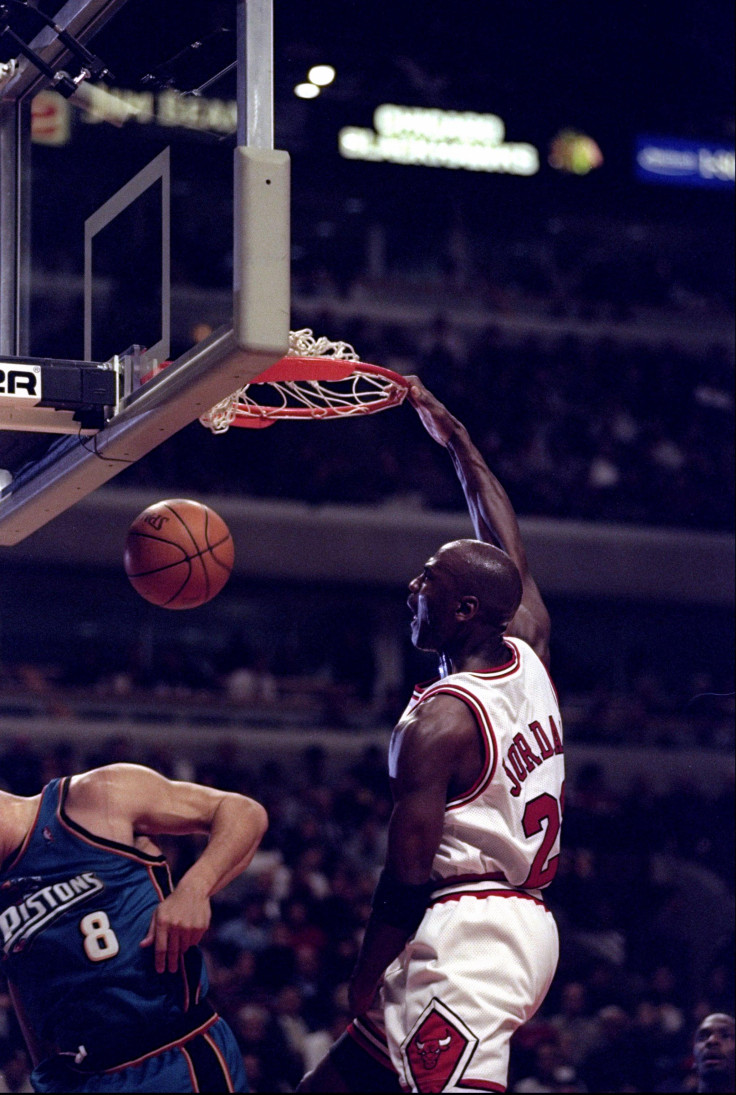
- Michael Jordan (214.0)
- John Stockton (207.7)
- Tim Duncan (206.4)
- Dirk Nowitzki (206.3)
- Kevin Garnett (191.4)
Win Shares, a proprietary metric created by Basketball-Reference founder Justin Kubatko, estimates the number of wins a player adds to his team above what a replacement-level performer would provide. It factors in offensive and defensive contributions, playing time, efficiency and era adjustments. Unlike subjective eye-test arguments or ring counts, it rewards volume and consistency over decades.
Grok's own note accompanying the list acknowledged the tension at the center of the GOAT conversation: "Longevity inflates totals; efficiency & rings elevate peaks like MJ." The caveat underscored a core divide in basketball discourse. James has played 22 seasons and counting, appearing in more games and accumulating more minutes than Jordan, who retired twice and played only 15 seasons. Jordan's peak remains unmatched in many minds — six championships, six Finals MVPs, five regular-season MVPs and a legendary 30.1 points-per-game career average — yet the cumulative nature of Win Shares rewards James' Iron Man durability.
At 41, James is still active, leading the fourth-seeded Los Angeles Lakers into the 2026 playoffs against the Houston Rockets. His ability to post elite numbers late in his career has only widened the statistical gap. This season alone, despite a modest scoring dip to focus on playmaking, James continued to produce at a level that added meaningfully to his career total. Analysts note that had Jordan played as many seasons at a comparable efficiency, his Win Shares would likely eclipse the field.
The ranking arrives at a moment when the GOAT debate has intensified. ESPN's Kendrick Perkins declared earlier this week that a Lakers first-round upset over the Rockets would "settle" the conversation in James' favor, citing the 41-year-old's burden on an injury-depleted roster. Grok's data offers a quantitative counterpoint: James has already generated more wins above replacement than any player in history, regardless of playoff outcomes.
Kareem Abdul-Jabbar's second-place standing reflects his own longevity masterpiece — 20 seasons, six titles, and a record that stood for decades before James passed him in total points. Wilt Chamberlain's third-place finish underscores his statistical dominance in an earlier era, when he averaged 50 points in a season and once scored 100 in a single game. Karl Malone, Chris Paul and the rest of the top 10 represent a mix of power forwards, point guards and big men whose careers spanned different decades and rule sets.
Notable omissions from the top 10 include Magic Johnson, Larry Bird, Kobe Bryant and Stephen Curry, whose Win Shares totals fall just outside the cutoff despite their transformative impacts. The list prioritizes cumulative value over peak dominance or cultural resonance, a choice that has already drawn criticism from Jordan loyalists who argue championships and clutch performance should weigh heavier.
Basketball purists have long clashed over methodology. Traditionalists favor rings, MVPs and scoring titles. Advanced-stat advocates prefer metrics like Win Shares, Value Over Replacement Player (VORP) or Player Efficiency Rating (PER). Grok's approach aligns with the latter camp, stripping away narrative and focusing on one transparent number. The AI emphasized its source — Basketball-Reference — lending credibility in an era when fans increasingly turn to data over anecdote.
The timing is notable. With the 2026 NBA playoffs underway and James once again carrying a shorthanded Lakers squad, conversations about his place in history have moved from bar stools to social media timelines. Grok's intervention adds a fresh, impartial voice to a debate that has consumed analysts, players and fans for nearly two decades. James himself has largely stayed above the fray, preferring to let his on-court record speak. Jordan, retired since 2003, has occasionally weighed in with subtle jabs, most famously questioning whether today's players could survive the physicality of his era.
Beyond the top two, the list rewards point-guard longevity with Chris Paul and John Stockton occupying fifth and seventh. Paul's elite efficiency and defensive versatility have kept him productive into his 40s, while Stockton's assist records and iron-man durability produced massive win contributions alongside Malone in Utah. Tim Duncan and Kevin Garnett, both defensive anchors with championship pedigrees, round out the power-forward contingent, while Dirk Nowitzki's revolutionary shooting big-man game earns him ninth.
Critics of the ranking argue it undervalues defensive impact in certain eras and fails to adjust fully for pace or competition level. Chamberlain, for instance, played in a league with fewer teams and different rules. Modern players benefit from expanded rosters, load management and advanced medical care that extend careers. Defenders of the list counter that Win Shares already incorporates era-specific adjustments and remains one of the few metrics that correlates strongly with team success.
Social media reaction Friday was swift and polarized. Supporters praised the objectivity, calling it a "refreshing" break from emotional arguments. Detractors labeled it "longevity bias" and insisted no metric can capture Jordan's aura or six-for-six Finals record. The post itself, though only hours old, quickly circulated among NBA accounts and analytics communities.
Grok's creator, xAI, has positioned the chatbot as maximally truth-seeking, often contrasting it with more guarded AI models. By publishing raw numbers without editorializing beyond the single caveat, the response exemplified that ethos. The AI did not weigh in on rings, cultural impact or "killer instinct" — factors that dominate subjective debates — sticking strictly to the requested objective standard.
The broader NBA landscape in 2026 continues to evolve around these legends. James mentors his son Bronny on the Lakers roster, creating father-son milestones amid playoff pressure. Younger stars like Nikola Jokić and Luka Dončić chase their own statistical legacies, with Jokić already climbing advanced-metric leaderboards. Yet the all-time conversation inevitably circles back to James and Jordan.
Whether Grok's ranking shifts public opinion remains uncertain. Polls and barbershop arguments have long favored Jordan for his undefeated Finals record and aesthetic brilliance. James counters with four titles across three franchises, all-time scoring leadership, 10 Finals appearances and unprecedented versatility. The Win Shares gap, now roughly 63 points in James' favor, is substantial and continues to grow with every game he plays.
For data enthusiasts, the list settles little but illuminates much. It quantifies what scouts have observed for years: James' ability to impact winning in every phase of the game over an extraordinary span. For traditionalists, it merely reaffirms that no single number can encapsulate greatness.
As the Lakers-Rockets series unfolds this weekend, every James highlight will be scrutinized through the GOAT lens. A strong performance could widen the statistical lead even further. Should the Lakers advance despite injuries, the narrative momentum may tilt further toward James.
Grok's intervention adds a modern twist to an age-old argument. In an era of big data and artificial intelligence, even the most passionate debates now have an algorithmic referee. The chatbot's top 10 does not claim to end the conversation — it simply supplies one more objective data point for fans to debate.
Whether LeBron James ultimately stands alone atop the mountain or shares it with Michael Jordan may never be universally agreed upon. But according to the cold calculus of career Win Shares in April 2026, the King has claimed the throne for now.
The numbers, at least, are clear. The debate, as always, rages on.
© Copyright 2026 IBTimes AU. All rights reserved.
- Recommended For You