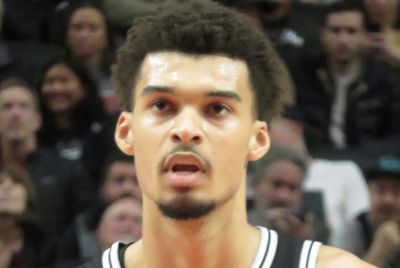
Is Victor Wembanyama Already the NBA's Best Player in 2026? Historic Playoff Dominance Fuels Debate
Wembanyama's two-way dominance in the playoffs ignites discussions about his status as the NBA's top player.

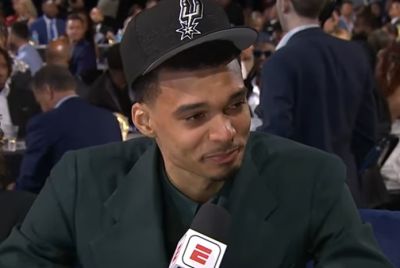
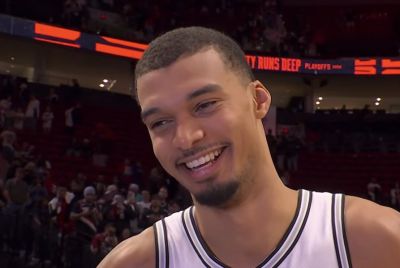
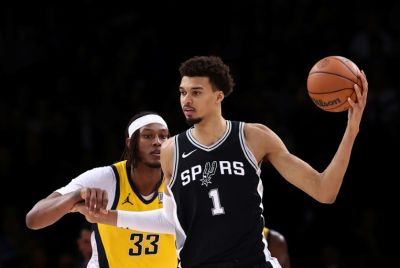
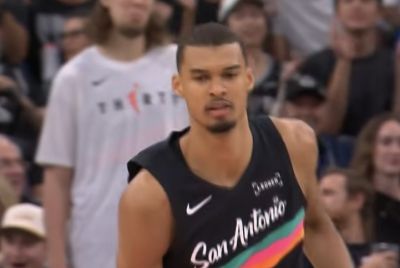
OKLAHOMA CITY — Victor Wembanyama's 41-point, 24-rebound masterpiece in a double-overtime Game 1 victory over the Oklahoma City Thunder on Monday night has intensified the debate: Is the 22-year-old San Antonio Spurs phenom already the best player in the NBA in 2026?
While Shai Gilgeous-Alexander claimed his second straight MVP award and Nikola Jokic finished as a finalist, Wembanyama's transcendent two-way impact — capped by unanimous Defensive Player of the Year honors — has many analysts, players and fans arguing he sits atop the league's hierarchy heading into what could be a long playoff run.
Wembanyama posted 25.0 points, 11.5 rebounds, 3.1 assists and a league-leading 3.1 blocks per game during the regular season while shooting 51.2% from the field. He became the first player since Shaquille O'Neal in 2000 to average at least 25 points, 10 rebounds and three blocks. The Spurs improved by a staggering 16-17 points per 100 possessions with him on the floor.
His defensive excellence earned every first-place DPOY vote, making him the youngest and first unanimous winner in the award's history. In the playoffs, Wembanyama has elevated further, delivering historic performances that evoke comparisons to all-time greats.
Monday's Game 1 against the defending champions was exhibit A. Facing Gilgeous-Alexander on the night the Thunder star received his MVP trophy, Wembanyama responded with a conference finals debut for the ages: 41 points, 24 rebounds, elite rim protection and clutch scoring that propelled the Spurs to a 122-115 victory. He became the youngest player ever to record 40 points and 20 rebounds in a playoff game and the first since Wilt Chamberlain in 1960 to do so in a conference finals debut.
"The message would be that we as a team are ready to go into any environment," Wembanyama said. When asked if watching Gilgeous-Alexander accept the MVP fueled him, he replied simply, "Yeah, for sure."
Spurs coach Mitch Johnson confirmed the motivation. "He's competitive. To see another competitor get rewarded with what you want, that's motivation."
Wembanyama's case as the league's best rests on unparalleled two-way dominance. No other player combines his size, skill, shooting range and defensive versatility. He anchors one of the NBA's top defenses while serving as a primary offensive option on a young, ascending team that returned to the postseason for the first time since 2019.
Critics point to team success and awards voting. Gilgeous-Alexander led the 64-win Thunder to the No. 1 seed with elite scoring efficiency and playmaking. Jokic continued his triple-double mastery. Wembanyama finished third in MVP voting, reflecting voter emphasis on team wins and traditional box-score accumulation.
Yet advanced metrics and on-court impact often favor Wembanyama. His defensive rating, block percentage, defensive win shares and defensive Box Plus/Minus all ranked among the league's elite. Multiple player polls named him the best defender in the NBA.
At 7-foot-4 with guard-like handles and shooting touch, Wembanyama represents basketball's evolution. He spaces the floor, protects the rim at an elite level and creates mismatches that few can counter. His presence alone warps opposing offenses and defenses.
The Western Conference finals matchup against Gilgeous-Alexander and the Thunder has become a proxy battle for supremacy. The Spurs took five of six meetings against Oklahoma City this season. Monday's Game 1 victory, powered by Wembanyama and rookie Dylan Harper's 24 points and seven steals, underscored San Antonio's potential to upend expectations.
NBA legends and analysts have taken notice. Comparisons to timeless greats — from Tim Duncan's fundamental brilliance to Kevin Garnett's versatility — underscore his trajectory. At 22, he has already achieved what many players chase over entire careers.
Off the court, Wembanyama's maturity and work ethic stand out. He approaches the game with intellectual curiosity, studying film and refining skills relentlessly. His impact extends beyond stats to elevating teammates and shifting franchise culture.
Still, questions remain about sustainability. Durability concerns surfaced with minor injuries, though he played 64 games. Playoff experience is growing rapidly, but championship pedigree takes time. Gilgeous-Alexander's efficiency and leadership in high-stakes moments give him a strong counterclaim.
For now, the debate enriches the sport. Basketball thrives on such conversations, and Wembanyama's emergence has injected fresh excitement into a league transitioning from its previous generation of superstars. Whether he claims the throne this year or in the near future, his ascent signals a new era.
Spurs fans and neutral observers see a player redefining possibilities. In Game 1, Wembanyama didn't just perform — he announced his arrival on the biggest stage with a performance that will be replayed for years. As the series continues, every possession offers another data point in the greatest-player conversation.
The NBA has seen rapid ascensions before, but few match Wembanyama's combination of physical tools, skill and basketball IQ. At an age when many stars are still developing, he already dictates games on both ends like a veteran. His Game 1 dominance wasn't an outlier but a continuation of a season filled with such moments.
Ultimately, "best player" remains subjective, blending individual brilliance, team success and intangibles. Wembanyama may not have the MVP trophy yet, but his on-court reality — historic production, defensive mastery and winning impact — makes a compelling case that he stands alone at the top in 2026. The coming weeks in these playoffs could provide the definitive answer.
© Copyright 2026 IBTimes AU. All rights reserved.
- Recommended For You