Wembanyama vs Duncan Legacy: Can Spurs Phenom Surpass Tim Duncan's Hall of Fame Career?
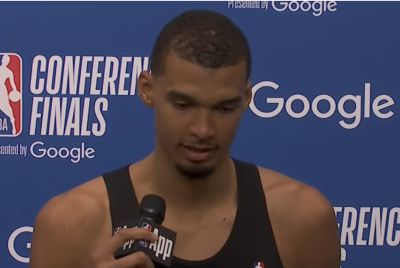
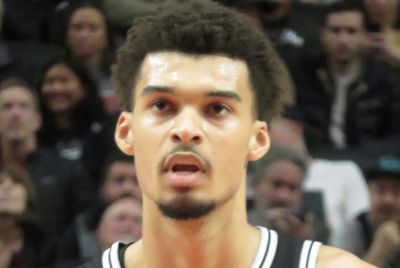
SAN ANTONIO — Victor Wembanyama's meteoric rise has ignited passionate debate across the NBA: when his career ends, will the 7-foot-4 French phenom stand taller in franchise and league lore than Tim Duncan, the quiet cornerstone who defined two decades of San Antonio Spurs excellence?

As the Spurs prepare for deeper playoff runs in 2026, Wembanyama, now in his third season, already owns several franchise records once held by Duncan and is posting per-game numbers that evoke the "Big Fundamental" while adding modern perimeter skills and rim protection unseen in previous eras. Yet Duncan's unmatched résumé — five NBA championships, two MVP awards, three Finals MVPs and 19 seasons of sustained dominance — sets an extraordinarily high bar that few players in league history have cleared.
Through 64 games in the 2025-26 season, Wembanyama averaged 25.0 points, 11.5 rebounds, 3.1 assists and a league-leading 3.1 blocks while shooting 51.2 percent from the field. He has recorded multiple 40-point games, surpassing Duncan's career total of five in far fewer contests. In March, he tied or broke marks for 25-point, 15-rebound, 5-block games not seen since Duncan's 2001-02 MVP campaign. By early April, he notched a fifth consecutive 15-rebound game, eclipsing Duncan and David Robinson's previous franchise best streaks.
Wembanyama also reached 4,000 career points and 600 blocks in his first 175 games, a milestone shared only with Robinson among Spurs greats. Advanced projections based on his current trajectory suggest he could finish with career totals approaching 28,000 points, over 14,000 rebounds and more than 4,200 blocks — numbers that would place him among the all-time greats in scoring and rebounding while potentially challenging for the NBA's career blocks record.
Duncan, by contrast, played 1,392 regular-season games over 19 years, averaging 19.0 points, 10.8 rebounds and 2.2 blocks. He led the Spurs to titles in 1999, 2003, 2005, 2007 and 2014, earning Finals MVP in the first three of those runs. His consistency was legendary: he made the All-NBA team 15 times, earned 15 All-Defensive selections and missed the playoffs only once in his entire career. Duncan's understated leadership and two-way reliability anchored Gregg Popovich's system through eras of roster turnover and rule changes.
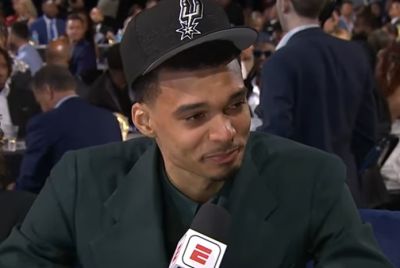
The comparison is inherently uneven in timing. Wembanyama entered the league at 19 as the No. 1 pick in 2023 after dominating in France and the G League Ignite. Duncan arrived at 21 after four college seasons at Wake Forest and immediately transformed a mediocre Spurs team into contenders. Both benefited from the Spurs' elite development culture, but Wembanyama operates in a faster-paced, more perimeter-oriented NBA with greater spacing and emphasis on three-point shooting and versatility.
Analysts note Wembanyama's offensive upside exceeds Duncan's. The younger star stretches the floor with a reliable three-point shot (around 35 percent this season) and creates for teammates at a higher rate early in his career. His shot-blocking, however, already rivals or surpasses Duncan's peak defensive impact, with elite length and timing that disrupt drives and alter shots across the paint.
Yet rings remain the ultimate currency in legacy debates. Duncan delivered five championships in an era that included Kobe Bryant, Shaquille O'Neal, LeBron James and other superstars. Wembanyama's Spurs returned to the playoffs in 2026 after several lottery seasons, hosting the Portland Trail Blazers in the first round. Early playoff performances, including a strong Game 1 showing that passed Duncan for most points by a Spur in a playoff debut, have fueled optimism, but sustained contention against stacked Western Conference foes will test whether he can match Duncan's winning pedigree.
Popovich, who coached Duncan for his entire career and now guides Wembanyama, has repeatedly praised the young center's basketball IQ and work ethic while cautioning against premature coronation. Robinson and Duncan themselves have appeared courtside during the 2026 playoffs, offering symbolic endorsement and quiet mentorship. Their presence reinforces the franchise expectation that individual brilliance must translate into team success.
Injuries and durability will factor heavily. Duncan played 82 games in 14 of his 19 seasons and rarely missed time due to major injury. Wembanyama has shown encouraging resilience but must prove he can withstand the physical toll of 30-plus minutes nightly over deep playoff runs in a league where big men face increasing load management.
Off the court, the two could hardly differ more in personality. Duncan was famously reserved, letting his play speak while building a reputation for professionalism and humility. Wembanyama is more expressive, engaging with fans and media while embracing his role as a global ambassador for basketball. Both embody the Spurs' core values of team-first play and continuous improvement.
Projections and early statistical dominance suggest Wembanyama has the talent to compile a résumé that rivals or exceeds Duncan in raw production and defensive versatility. He already leads the league in blocks and ranks among the top in rebounding while scoring efficiently in an era that rewards spacing. If he stays healthy and the Spurs build a championship core around him — potentially adding All-Star talent in coming off-seasons — multiple titles and individual awards appear plausible.
Still, many observers, including some longtime Spurs fans and analysts, hesitate to declare Wembanyama the heir apparent to Duncan's throne. Championships are team accomplishments, and the modern NBA's parity and superteam dynamics make repeating Duncan's sustained excellence extraordinarily difficult. Duncan benefited from perfect timing with Popovich, Parker and Ginobili; Wembanyama must help construct his own supporting cast in a salary-cap era that favors star clustering elsewhere.
As the 2026 playoffs unfold, every Wembanyama highlight — a chasedown block, step-back three or dominant interior sequence — invites fresh comparison. His playoff debut already passed Duncan in scoring for a Spurs rookie in the postseason, signaling the torch is being passed in real time.
Ultimately, the question may remain unanswerable until Wembanyama's career concludes in the 2040s or beyond. Duncan's legacy is cemented in hardware, longevity and quiet greatness. Wembanyama's path offers higher individual peaks in a more athletic, skill-oriented game but demands similar championship validation to claim supremacy within Spurs lore.
For now, San Antonio fans enjoy the rare luxury of debating two generational big men in the same franchise uniform. Robinson handed the baton to Duncan; Duncan's shadow now looms over Wembanyama. Whether the 22-year-old phenom ultimately stands tallest will depend on health, teammates, coaching continuity and the unpredictable alchemy that turns great talent into enduring legend.
One thing is certain: the conversation itself honors both players. Duncan set an impossibly high standard of excellence. Wembanyama, through relentless improvement and transcendent skill, is forcing the NBA to reconsider what peak big-man dominance looks like in the 2020s and beyond. The Spurs' future — and the answer to this generational question — rests in how far that evolution carries them together.
© Copyright 2026 IBTimes AU. All rights reserved.
- Recommended For You