(VIDEO) Xiaomi 18 Fold Review Roundup: Critics Praise Passport-Style Design, 6,000mAh Battery and 200MP Camera
The wide-screen foldable features a 6,000mAh battery, Leica cameras and Xiaomi's own XRING O3 chip, but global availability and long-term testing remain uncertain.

Early reviews of the Xiaomi 18 Fold, the company's first wide-screen foldable in its main numbered flagship line, are largely positive on design, battery and cameras, with the main complaints centering on a visible crease, extra thickness compared with Samsung's rival and availability that so far is limited to China. The phone starts at 10,999 yuan, or about $1,639, according to Android Central.
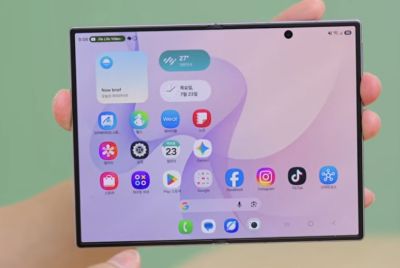
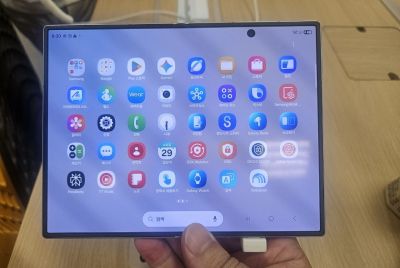
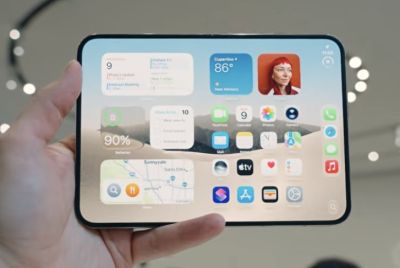
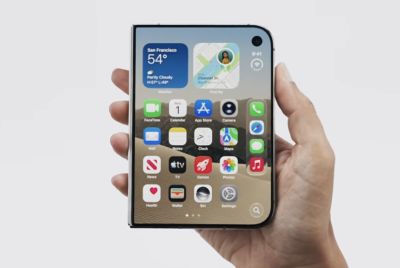
The 18 Fold has a "passport" format: both screens share a squat aspect ratio of roughly 1.4 to 1, making the phone shorter and wider than most book-style foldables, according to Mobidevices and Forbes. The inner display measures 7.58 inches at 2,364 x 1,672 pixels and the cover screen 5.38 inches at 1,712 x 1,168, with adaptive refresh rates up to 120Hz, Digital Trends reported. Engadget said both panels are the first from Xiaomi to use its HyperRGB technology with a full RGB subpixel structure, peak at 4,000 nits of brightness and use LTPO panels that run from 1Hz to 120Hz. The screens are protected by Xiaomi's Shield Glass 3.0 and sit in an aluminum alloy frame with a new three-link hinge, Engadget added.
Reviewers were most consistent about the hardware feel. Digital Trends, after a week with the phone, wrote that it "does not feel like I am carrying a small tablet around." The phone measures 117.8 by 83.6 by 10.68 millimeters and weighs 219 grams when closed, according to Mobidevices, and about 5 millimeters thick when open, Digital Trends said. In a separate month-long review, Digital Trends noted that the weight is similar to an iPhone 17 Pro and well above the 167 grams of a Galaxy S26, so anyone prioritizing the lightest possible phone has a reason to pick a regular slab. Engadget, which handled the phone at IFA 2026, said the hinge feels solid, "stronger than rival foldable hinges," and that the Xiaomi phone is noticeably a little thicker than Samsung's Galaxy Z Fold 8 but has a much bigger battery.
That battery is a selling point. The 18 Fold carries a 6,000mAh silicon-carbon battery that Engadget described as currently the largest capacity for a foldable, with support for up to 67W wired and 50W wireless charging with compatible chargers. The coverage reviewed did not include comprehensive battery-life tests. Mobidevices cautioned that journalists at the launch event did not have enough time to test battery life, cameras and performance, and that the early hands-on coverage should not be treated as full reviews.
The phone also debuts Xiaomi's in-house silicon. It is the first Xiaomi flagship to run on the company's own XRING O3 chip, which Engadget said is built on a 3-nanometer process and combines a 10-core all-big-core CPU with a 16-core GPU. Igeekphone concluded that pairing the chip with Changxin LPDDR6 memory shows Xiaomi's progress in developing core components and improving performance and efficiency. Memory options are 12GB or 16GB of RAM, and storage runs up to 1TB on UFS 4.1, Mobidevices reported, and the phone runs Xiaomi's HyperOS, according to Android Central.
Cameras are another area where Xiaomi is not cutting corners despite the slim body, according to Engadget. The Leica-branded system includes a 200-megapixel main camera with a 1/1.56-inch sensor and a 50-megapixel periscope telephoto, along with a 50-megapixel camera and a 16-megapixel front camera, according to Engadget and Notebookcheck. Engadget noted the main sensor is smaller than the one on the Xiaomi 17 Ultra. Image quality remains largely untested: Mobidevices said Android Central was not allowed to keep its own photos and that Android Authority limited its coverage to the camera interface, so conclusions about photos are premature.
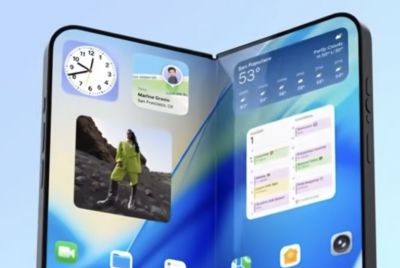
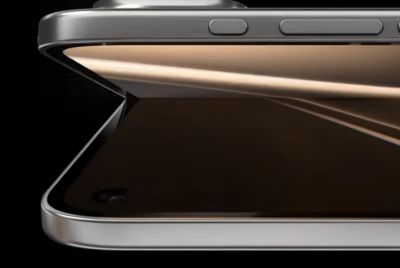
The competitive context is a large part of the story. Android Authority said the phone arrives shortly after Samsung launched its first wide-screen Galaxy Z Fold 8 and just days before Apple is expected to unveil its first folding iPhone, and that it can already see why Samsung might want to pay attention. The outlet added that if Xiaomi brings the 18 Fold to global markets, Samsung has a serious new competitor on its hands. Forbes' hands-on framed the phone as a direct rival to the Z Fold 8 and used it to set out what its writer wants from Apple's foldable, and it said the consistent aspect ratio on both screens is good for video playback with minimal letterboxing.
There are drawbacks. The most cited is availability: the phone is launching only in China for now, with no word on a global release, Android Central reported, noting that the earlier Xiaomi Mix Fold 4 from 2024 was also China-exclusive, though Xiaomi has been expanding its lineup in Europe. Reviewers also flagged a noticeable crease, slightly greater thickness than the Fold 8 and the lack of sales outside China, Mobidevices reported. Engadget said Xiaomi did not share an IP rating, which remains a concern with foldables, and Digital Trends said durability is a worry although foldables it has used have survived rough falls. Engadget also said Xiaomi is teasing a special silicon nitride ceramic edition that would resist bumps and scratches better and weigh about 50% less than traditional zirconia.
Price is the other question. At 10,999 yuan, the phone sits at the pricier end of the foldable market, according to Android Central. Digital Trends' month-long review asked what a compact phone should look like, or even cost, arguing that the 18 Fold's proportions make the question particularly interesting, with its cover screen suited to quick interactions such as calls, notifications and short replies while the larger inner screen handles more involved tasks.
Notebookcheck's collection of reviews summarizes the reception as strong on performance, versatile cameras, storage options and a distinctive format. Whether the phone reaches buyers outside China will determine how much of that praise translates into competition for Samsung and Apple, and readers should treat the early verdicts as provisional until longer tests are published.
© Copyright 2026 IBTimes AU. All rights reserved.
- Recommended For You