LeBron James Could Be Worth Up to $430 Million to Philadelphia's Economy, New Estimates Suggest This Year
LeBron James's signing with the 76ers is projected to significantly boost Philadelphia's economy, with potential impacts on tourism, retail, and more.

LeBron James signed with the Philadelphia 76ers this summer for just $8 million over two seasons, a deep discount from the maximum contract he could have commanded elsewhere. But according to new economic projections, the true value of his arrival to the city of Philadelphia could dwarf his actual salary many times over.
Consulting firm The Boyd Company estimated that James's first full season with the 76ers could generate between $250 million and $430 million in total regional economic activity, a figure the firm shared in a post on X. "A move to Philly is more than a blockbuster sports story — it reinforces one of America's premier sports and business markets, generates enormous media attention, fan engagement, tourism and economic impact," the firm wrote. "The Boyd Co. knows that the biggest location decisions — whether made by Fortune 500 companies or superstar athletes — can reshape regional economies and propel a city's national profile."
The Boyd Company's projection does not represent direct revenue for the 76ers organization itself. Instead, it reflects the broader ripple effect James's presence is expected to have across the wider Philadelphia regional economy, spanning everything from ticket sales and hotel stays to restaurant spending and retail purchases tied to increased tourism and fan travel throughout the season.
James signed a two-year veteran's minimum contract worth a total of $8 million, walking away from what would likely have been a maximum contract paying him in excess of $50 million annually had he signed elsewhere. His salary for the 2026-27 season specifically will total $3.9 million, according to reporting on the deal. That stark gap between James's modest actual salary and his projected economic value has led some analysts to describe the signing as potentially the biggest bargain in professional sports history, even before accounting for the on-court talent he brings to a Philadelphia roster that already included Joel Embiid, Tyrese Maxey, VJ Edgecombe and newly acquired forward Jaylen Brown.
Not every economist is comfortable putting a precise number on James's expected impact this early. Ethan Conner-Ross, an economist with the Philadelphia-based consulting firm Econsult Solutions Inc., cautioned against overstating the certainty of any single projection. "It's hard to precisely quantify, sitting here today, what that exact number is going to be," Conner-Ross told The Philadelphia Inquirer. Conner-Ross pointed to several distinct components that would ultimately factor into James's overall economic footprint in the region, including his own personal spending as a high-earning professional relocating to the area, any local and state taxes he would pay on his income, and the money he would spend on housing, whether renting or purchasing property in the Philadelphia region. That housing question remains unresolved, with some reports suggesting James might instead choose to commute to games from New York City rather than establish a primary residence in the Philadelphia area.
The largest single driver of the projected economic impact is expected to come from home game attendance. Thousands of fans are anticipated to travel to Philadelphia from across the United States, and potentially internationally, specifically to watch James play, a dynamic that would be further amplified if this proves to be the final season of his playing career. Beyond ticket purchases themselves, those visiting fans would generate additional spending on hotels, restaurants, transportation and other tourism-related activity throughout the city during game weekends.
Early evidence of James's drawing power has already shown up in ticket pricing data. According to TickPick, the average purchase price for a 76ers game last season was $68. Following James's signing, the cheapest available ticket for the team's first preseason home game had already climbed to $283, according to the same source, illustrating the immediate shift in market demand tied directly to his arrival on the roster.
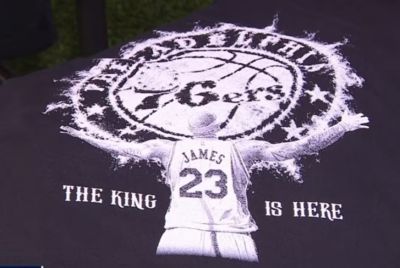
James's move to Philadelphia is also expected to make him the league's top-selling jersey this season, with fans expected to purchase his new No. 23 76ers jersey in significant numbers. While Milwaukee Bucks star Giannis Antetokounmpo's new No. 7 jersey with the Miami Heat is also expected to sell well following his own offseason move, analysts do not expect it to match the demand generated by a new LeBron James jersey.
James's arrival has also elevated Philadelphia's championship odds for the coming season. With James joining an already talented core, the 76ers now hold the fourth-best odds to win the 2027 NBA championship, according to reporting on the team's outlook, though economic projections tied to James's presence remain far more certain than any on-court outcome, since a deep playoff run or championship, while not guaranteed, would likely add substantially to the economic activity already projected for his first season with the team.
James's move to Philadelphia echoes a similar high-profile relocation from earlier in his career, when he left the Miami Heat in 2014 to return to the Cleveland Cavaliers, a decision that similarly generated significant economic attention and analysis regarding its impact on Cleveland's local economy at the time. With James now beginning a new chapter of his career in Philadelphia, economists and city officials are likely to continue closely tracking ticket sales, tourism figures and broader regional spending data throughout the season to determine how closely the actual economic impact of his arrival ultimately aligns with the Boyd Company's initial $250 million to $430 million projection.
© Copyright 2026 IBTimes AU. All rights reserved.
- Recommended For You