KOSPI Tops 7,100 for Third Straight Session as Nasdaq Record and Eased Mideast Tensions Lift Global Mood
The benchmark index extended its sharp weekly rally, supported by gains in US technology shares, strong demand for Korean semiconductor stocks and improved geopolitical sentiment.
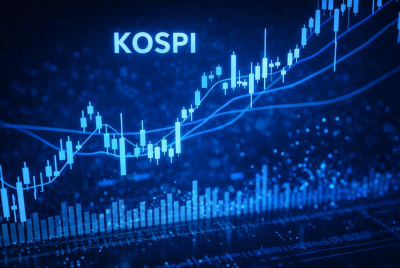
SEOUL — South Korea's benchmark KOSPI index traded above 7,100 for a third consecutive session Wednesday, standing at 7,100.45 by mid-morning, up 82.54 points, or 1.18%, as gains on Wall Street's technology-heavy Nasdaq Composite and easing tensions in the Middle East continued to lift sentiment across Asian markets.
The index opened sharply higher Wednesday, jumping 136.08 points, or 1.94%, to 7,153.99 at the opening bell, before paring some of those gains through the morning session. The rally tracked another record close for the Nasdaq Composite overnight, which rose 0.45% to notch its second consecutive all-time high, driven by continued strength in technology shares. The Philadelphia Semiconductor Index also posted a sharp advance, climbing more than 4% in the prior U.S. session, further reinforcing the bullish tone carrying into Wednesday's trading in Seoul.
Foreign and institutional investors led the buying that pushed the index back above the 7,100 level Wednesday, according to local market reports, continuing a pattern of strong overseas and institutional demand for Korean equities that has characterized much of the past week's rally. The KOSDAQ, South Korea's smaller technology-focused exchange, also advanced Wednesday, climbing back above the 840 mark alongside the broader KOSPI's gains.
Wednesday's advance extends a rapid climb for the KOSPI over the past three trading sessions. The index first reclaimed the psychologically significant 7,000 level on Monday, closing at 7,007.72, up 1.65%, after seven consecutive sessions below that threshold. That initial breakout was driven primarily by a sharp rise in Samsung Electronics shares, following data from the Korea Customs Service showing South Korea's total exports reached $71.4 billion between September 1 and 20, up 78.3% from a year earlier. Semiconductor exports specifically more than tripled to $34.12 billion over the same period, a 259.4% increase that marked a new monthly record for the category.
The rally continued Tuesday, when the KOSPI climbed a further 1.71% to close near 7,127, briefly touching above 7,100 during the session. That advance was fueled in part by growing enthusiasm around Meta's artificial intelligence agent product, known as Muse, whose reported popularity helped drive the Nasdaq to a fresh record high overnight and, in turn, lifted sentiment toward AI-linked technology stocks in Seoul. Easing concerns about the trajectory of tensions in the Middle East also contributed to the improved mood among investors heading into Wednesday's session.
That easing in Middle East tensions follows a significant diplomatic development this week, with a senior Iranian official telling Reuters that Iran had offered to reopen the Strait of Hormuz within seven days if the United States eases military pressure and lifts its blockade on Iranian ports. While the offer remains conditional and unconfirmed by Washington, the report has contributed to a broader improvement in global risk appetite, with oil prices falling and equity markets, including the KOSPI, benefiting from reduced geopolitical risk premiums priced into asset markets over the past week.
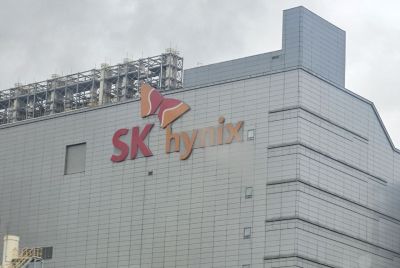
South Korea's chip sector has remained the primary engine behind the broader index's advance. Samsung Electronics has continued climbing alongside rival SK Hynix as global demand for high-bandwidth memory chips used in artificial intelligence accelerators has shown no signs of slowing. Other notable gainers across recent sessions have included Samsung Electro-Mechanics, LG Electronics, SK Inc, and several of the country's major financial institutions, including KB Financial Group, Shinhan Financial Group and Hana Financial Group, reflecting broad-based strength extending well beyond the index's two dominant chipmakers.
The KOSPI's rapid ascent this week caps an extraordinary year for South Korean equities more broadly. According to Trading Economics, the index was up more than 104% compared with the same period last year as of Tuesday's close, with gains of more than 6% recorded over just the past month alone. The KOSPI, first introduced in 1983 with a base value of 100 as of January 4, 1980, now represents a market capitalization of roughly 4,135 trillion won, or approximately $2.8 trillion, based on the most recent available figures, cementing its position as one of the world's most closely watched emerging-market equity benchmarks amid the ongoing global boom in artificial intelligence infrastructure investment.
With Wall Street continuing to post fresh record highs and the diplomatic situation surrounding the Strait of Hormuz still evolving, investors in Seoul are likely to remain focused in the coming sessions on whether the current rally can be sustained above the 7,100 level, or whether some of the sharp gains recorded over the past three trading days will give way to renewed volatility as markets digest both the pace of the AI-driven chip rally and any further developments tied to the fragile diplomatic opening in the Middle East.
© Copyright 2026 IBTimes AU. All rights reserved.
- Recommended For You